Concrete placement is a very important task, since if it is not done correctly, the concrete may not meet the technical specifications for which it was designed and manufactured. Below, we’ll look at five methods for performing this task correctly.
The spilled of concrete It consists of a series of operations performed to place fresh concrete—whether just delivered or freshly mixed—into the appropriate molds or formwork. This placement must be carried out in such a way as to prevent the separation of the mixture's components, so we'll go over some recommendations and guidelines that we'll need to follow during this operation.
There are various methods for pouring concrete, so we will always choose the most appropriate one based on the available resources and the accessibility to the place. Let's go!
1. Concrete Pouring: Crane with Bucket
This system involves loading a cube or cupola and, with the help of a crane, move it to the exact location on the job site where the pour is to take place. At that location, a worker will be on hand to receive the cupola and position it properly so that the pour—which can be carried out through the the bottom of the bucket or on one side so that it proceeds correctly.
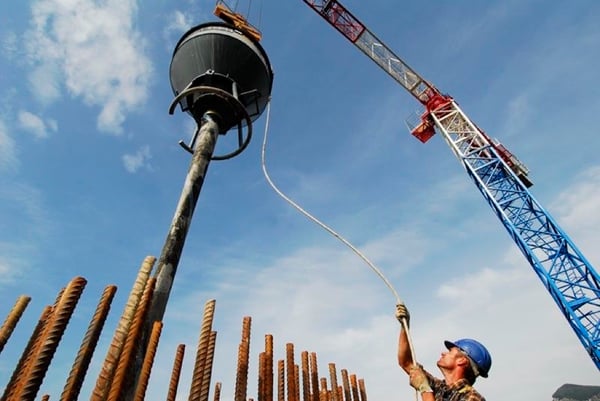
This concrete pouring system is very common in construction projects, since it can be performed using any type of crane truck, or even tower cranes, which are frequently found on construction sites. The capacity of the buckets can range from 0.5 to 8 m3, where the most commonly used 1-meter ones3. In any case, the material should be poured from a reasonable height to prevent it from separating as it falls.
2. Casting method: Blondin with a cupola
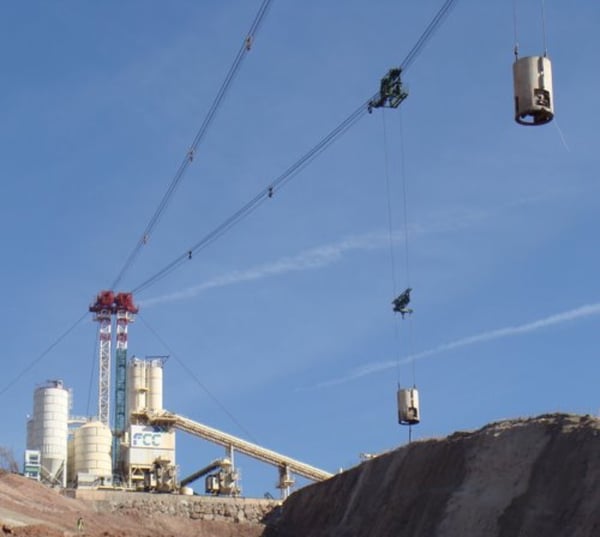
It is based on raising the cupola by means of the use of cables. To do this, two pillars are embedded in the ground and connected by a support cable along which a trolley moves, carrying the cupola. This concrete-pouring system is widely used in large dams, where access by land is difficult.
3. Placing Concrete Using Conveyor Belts
The conveyor belt concrete placement system allows for continuous concrete pouring, unlike the two methods described above. The tape allows us to place concrete with maximum aggregate size increased, although we must keep in mind that in order to use this system, the concrete used must have a plastic consistency.
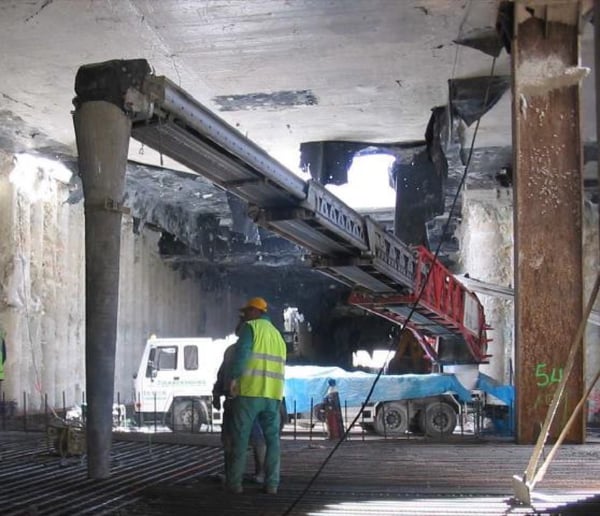
If you use this method, it is recommended that you set up some «horns»or chutes that prevent the concrete from falling freely from a certain height, which would cause it to break up.".
4. Pouring concrete from the transport equipment
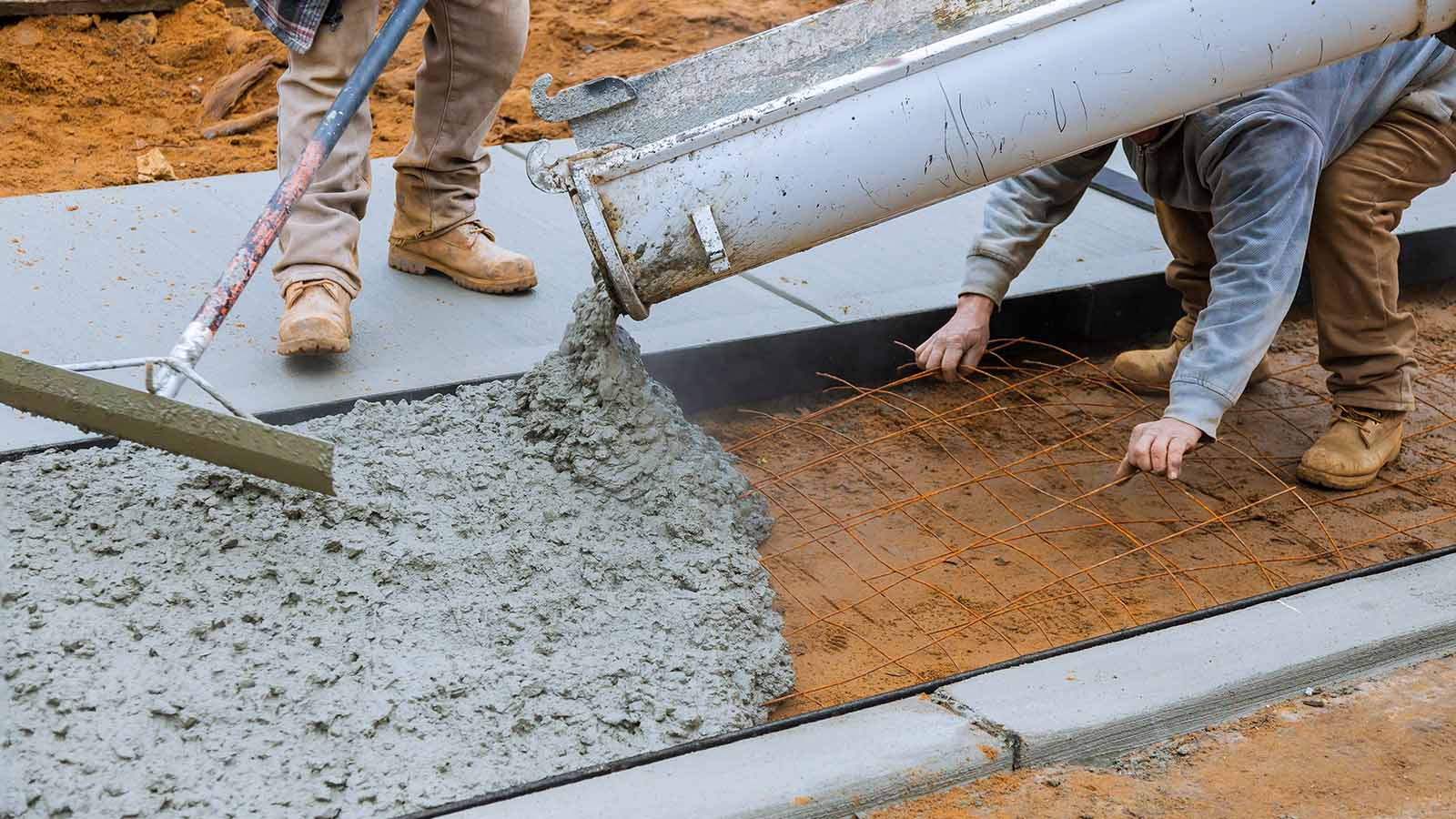
One of the simplest and most common methods for placing concrete. It involves pouring the material directly from the concrete mixer truck in which it has been transported through a chute.
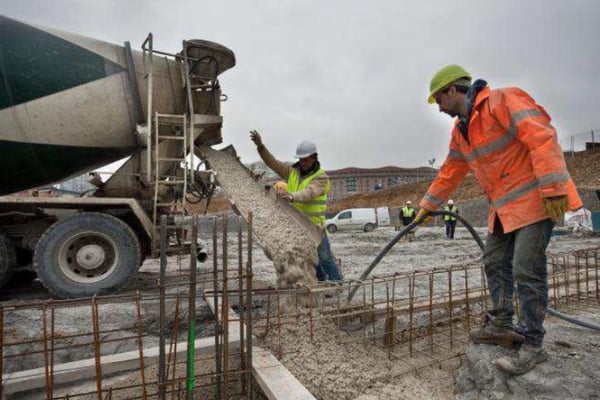
In order to carry out this concrete pouring process, we must position the concrete mixer truck very close to the formwork, which requires having the sufficient space and accessibility to run it correctly. This system, like the previous one, allows for the continuous concrete placement.
5. Pumped Concrete
In this case, the concrete is transported through a pipe from the truck carrying it to the construction site to the point where it will be poured, driven by a pump rotary or piston.
For concrete to be pumpable, it must have a number of specific characteristics that ensure the success of the operation. Thus, the placement of the Abrams cone (consistency test) must be between 8 and 20 cm to prevent segregation of the coarse aggregate and blockage of the concrete inside the pipe. As for the aggregates, the sand must correspond to the 40-45% of the total aggregate, while the proportion of fine must be between 350 and 400 kg/m3, in addition, the relationship water-cement must be between 0.5 and 0.6.
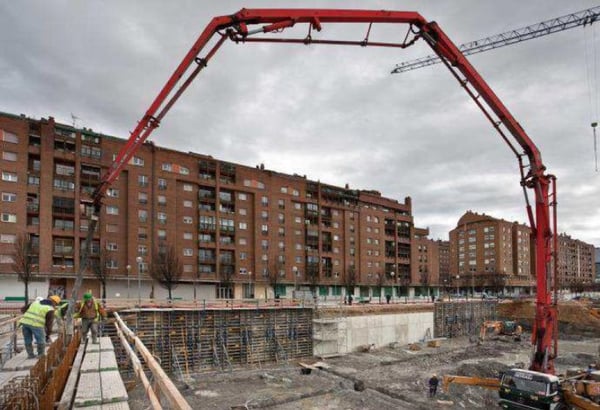
It should be noted that the pumps allow for a continuous concrete placement, resulting in good returns and reaching hard-to-reach areas, and it is also a technology that is constantly evolving and allows you to choose from a wide variety of pumps. However, there are also a number of drawbacks to consider when selecting this method, such as the fact that, to make it economically viable, we will need to pour concrete around 30–150 m3/h, since it involves a complex installation process that requires specialized personnel and detailed planning, which ultimately drive up the cost.
6. Recommendations for Pouring Concrete
And finally, a few simple recommendations:
- Pouring the Concrete It should not be done from a great height, preventing it from falling freely and ensuring that it remains vertical. Similarly, we must ensure that the mass does not shift horizontally.
- The concrete must be channeled during pouring, using chutes or other devices that prevent them from colliding freely against the formwork or rebar.
- The concrete will be placed by horizontal slits, of sufficient thickness to allow for proper compaction. The various layers will be compacted one after another, each bonded to the one before it, without allowing too much time to elapse between layers to prevent the mixture from drying out or beginning to set.
- Concrete It should not be spread with rakes, as this would lead to its disintegration.
- According to the regulations, the time elapsed between adding water to the mixture and placing the concrete must be less than an hour and a half depending on the temperature.