Originally published on January 21, 2015, Updated on October 29, 2024.
The Paris Smart City Master Plan for 2050, He promises to make the French capital a global model of sustainability and quality of life.
2050 Paris Smart City: Smart Towers for the French Capital
In the World Cities Day, it is vital to reflect on the path that cities—both large and small—must take to help protect the environment and improve the quality of life for their residents. The smart cities represent that promising future, combining technology, sustainability, and efficiency. An excellent example of this paradigm is the master plan proposed by Belgian architect Vincent Callebaut for transform Paris into a smart city by the year 2050, known as 2050 Paris Smart City.
Vincent Callebaut's Master Plan
Architect Vincent Callebaut has unveiled a bold and visionary plan for Paris, aiming to transform it into a a model of urban sustainability and efficiency. The main objectives of the 2050 Paris Smart City project are reduce the carbon footprint, increase energy efficiency, and improve quality of life for Parisians through the integration of advanced technologies and eco-friendly solutions. This plan centers on a series of innovative towers that will not only transform the urban landscape but also the way we interact with our environment.
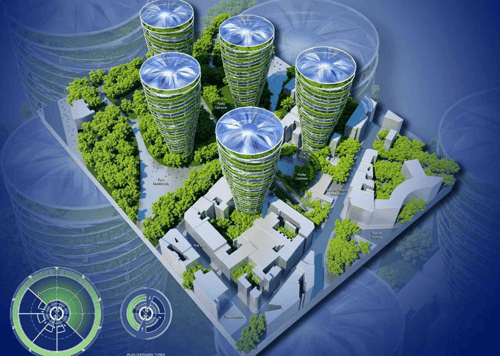
Bioclimatic and positive-energy buildings included in the Paris Smart City 2050 Master Plan. Esmartcity
Innovations and Sustainable Design
The towers proposed by Callebaut, each with a unique design, share two fundamental concepts: the integration of natural elements and the use of renewable energy. The «Mountain Towers»They stand out for their large sunshades with dual functionality—thermal and photovoltaic—that produce electricity and hot water. The landscaped balconies These towers reuse water and waste from the housing complex for irrigation and composting, creating a sustainable resource cycle.
On the other hand, the «Photosynthesis Towers»are designed as true vertical gardens, incorporating bioreactors algae on their facades. This algae is a a source of biomass with a yield seven times higher than that of corn, generating clean energy and absorbing carbon dioxide as they grow. The «Anti-Smog Towers»stand out for their internal wind turbines and a photovoltaic material coating that acts as an air pollution filter. Finally, the «Bridge Towers»They connect the east and west banks of the Seine with twin buildings that generate energy from the river's current, reinforcing the vision of '2050 Paris Smart City' as a a self-sufficient and eco-friendly urban ecosystem.
The Integration of Technology and Nature
Each of these towers is not only an architectural marvel but also one synergy between advanced technology and nature. Incorporating natural elements not only beautifies the urban environment, but also creates microclimates that improve air quality and provide green spaces for residents. These innovations are a crucial step toward the realization of 2050 Paris Smart City, where technology and nature coexist in harmony for the well-being of all.
Challenges in the Transition to a Smart City
Paris's transition toward a smart city is not without its challenges. Among the main challenges are the project funding, the adaptation of existing infrastructure, and public acceptance of new technologies. It is crucial that the local governments, private companies, and the public work together to overcome these barriers and ensure the successful implementation of the 2050 Paris Smart City plan. Urban planning must be flexible and resilient, capable of adapting to changes and new demands.
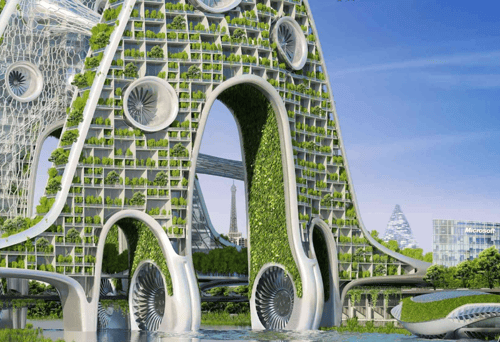
Bioclimatic and positive-energy buildings included in the Paris Smart City 2050 Master Plan. Esmartcity
In conclusion, Vincent Callebaut's 2050 Paris Smart City project is not only an inspiring vision for the The Future of Paris, but also a model for other cities around the world. As engineers and architects, it is essential Do not stop pursuing continuing education and specialization in topics that contribute to the society of the future. Structuralia offers a wide range of online courses and master's programs in engineering and innovation, including the Master's Degree in Smart City Management. Let's take advantage of these opportunities to lead the way toward a more sustainable and efficient tomorrow.