Art Nouveau in Architecture He was a symbol of style and avant-garde design in the last century and left his mark on modern architecture.
Art Nouveau in Architecture: Style and the Avant-Garde
Architecture is a reflection of the society and culture in which it unfolds. To fully understand the contemporary architectural landscape, it is crucial to immerse oneself in the currents of the past that have left an indelible mark on the urban fabric. Among these currents, the Art Nouveau, a movement that emerged in the late 19th century and revolutionized the way we think about architectural design. Explore Art Nouveau in architecture It's like stepping into a world of organic shapes, sinuous lines, and a lush ornamentation, elements that still resonate in contemporary architecture. Thus, understanding Art Nouveau in architecture It is like opening a window onto the past to shed light on the present, for its legacy lives on in the aesthetics and innovation that characterize our era.
Art Nouveau in Architecture
Art Nouveau was an artistic and architectural movement which emerged in the late 19th century and reached its peak in the early decades of the 20th century. This movement was characterized by its I reject the academic styles of the past and its search for a new form of expression that would reflect modernity and the essence of the era. In architecture, Art Nouveau manifested itself through a distinctive style that broke with established conventions, featuring organic shapes, sinuous lines, and exuberant ornamentation inspired by nature and Eastern decorative elements.
A historic moment that paved the way for Art Nouveau in architecture
The historical context in which Art Nouveau flourished was a time of profound social, political, and technological changes in Europe and the Americas. The Industrial Revolution had radically transformed urban life, giving rise to a growing middle class and a new demand for housing, shops, and public spaces. In addition, the development of new construction techniques, such as Wrought iron and glass gave architects greater freedom a creative way to experiment with shapes and materials. Against this backdrop of excitement and change, Art Nouveau emerged as an innovative and bold response, seeking to reflect the essence of modernity through a unique and avant-garde aesthetic.
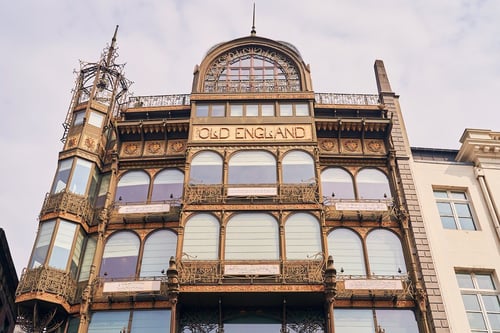
Key Elements for Identifying Art Nouveau in Architecture
Identifying the Art Nouveau architectural style involves recognizing a series of distinctive features that characterize it and set it apart from other schools of thought. Among these key elements are:
1. Sinuous and organic lines
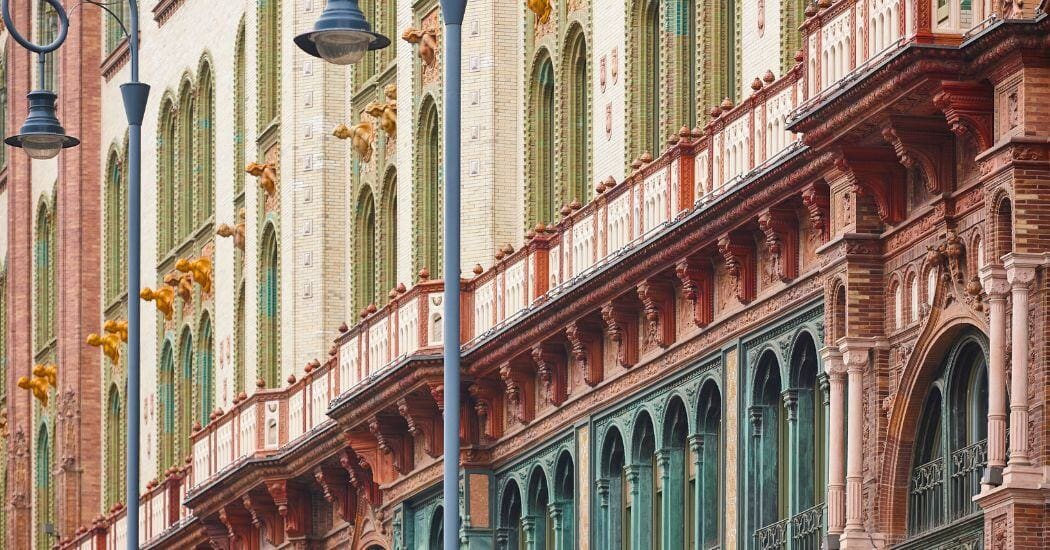
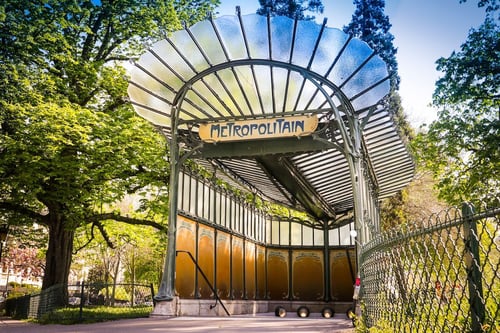
One of the most distinctive features of Art Nouveau architecture is the use of curved and sinuous lines, inspired by organic forms found in nature, such as plants, flowers, and marine forms. These flowing lines are reflected in the very structure of the building, as well as in its ornamentation and decorative details.
2. Exuberant ornamentation
Art Nouveau is characterized by elaborate and exuberant ornamentation, which seeks to create a sense of beauty and wonder in the viewer. This ornamentation may include natural motifs such as flowers, leaves, and animals, as well as stylized geometric elements and motifs inspired by Eastern cultures.
3. Use of modern materials
Although Art Nouveau drew inspiration from nature and organic forms, architects of this movement also experimented with modern materials such as wrought iron, glass, and reinforced concrete. These materials made it possible to create lighter, more transparent structures, as well as to incorporate innovative decorative elements.
4. Integration of Architecture and the Applied Arts
Art Nouveau promoted the idea that architecture and the applied arts should merge to create a cohesive, holistic environment. Therefore, architects of this movement not only designed the buildings themselves but also took charge of creating furniture, lighting, ceramics, and other decorative elements, thereby ensuring a unified aesthetic experience.
5. Emphasis on individuality and originality
Unlike earlier architectural styles, which tended toward uniformity and the repetition of patterns, Art Nouveau valued individuality and originality in design. Architects of this movement sought to create unique, personalized works that reflected their own creative vision and were tailored to the needs and tastes of their clients.
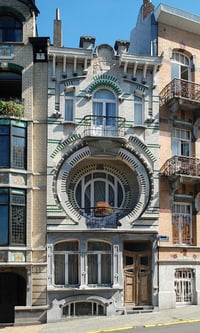
In today's ever-changing world, architecture serves as a reflection of our aspirations, values, and concerns as a society. As we look toward the future of this discipline, it is important that we not forget the lessons of the past, particularly the lessons from the Art Nouveau in Architecture. This movement reminds us of the importance of innovation, creativity, and the integration of the arts into architectural design. If we aspire to build a sustainable and aesthetically enriching future, we must embrace the creative freedom and experimentation that characterized Art Nouveau, adapting them to the challenges and opportunities of our time.
For these reasons and more, we invite our readers to explore the vast catalog of high-quality online training Available on Structuralia for professionals in the architecture and construction industry. In an increasingly interconnected world, Continuing education is essential for staying up to date with the latest trends, technologies, and practices in the field of architecture. Whether they are looking to expand their knowledge in sustainable construction, whether it's innovative construction technologies or smart cities, Structuralia offers a wide range of specialized courses and programs that can help you expand your horizons and achieve new professional goals.