Hyperion is the name of the project consisting of six eco-buildings, a complex designed by Belgian architect Vincent Callebaut. Here are the details of this new example of sustainable construction.
It was submitted in 2009 for the Jaypee Sports Green City, the first urban development plan focused on sports use ever undertaken in India. The available space covers 2,500 hectares, and the plan is to bring together such diverse projects as a hockey stadium and a Formula 1 racetrack, as well as various commercial and financial districts.
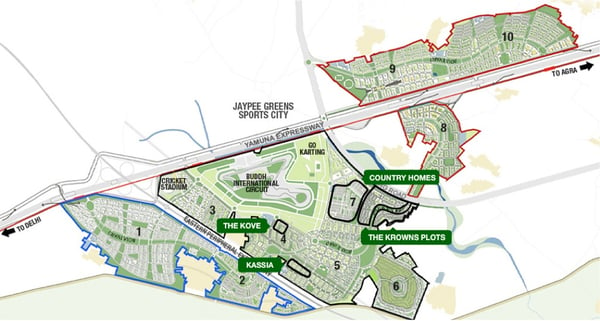
It is precisely in this latter land use that this eco-friendly neighborhood—which was never built—would have played a prominent role. Despite this, this unique urban complex has some notable features, as it is in line with the latest trends in bioarchitecture, trends that will undoubtedly shape the future of major construction projects.
In the words of its author, the main goal of Hyperion is «reconcile urban sprawl and agriculture on a small scale with the protection of the environment and biodiversity«.
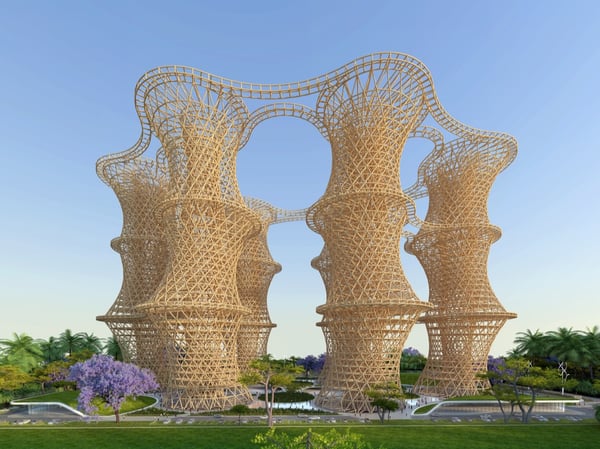
Each of these 6 buildings features 36 plants consisting entirely of elements of wood. This is because “the material has the best environmental footprint throughout its life cycle—from harvesting to recycling, including transportation, manufacturing, installation, maintenance, and reuse.».
However, the structure must be reinforced with reinforced concrete elements to ensure its stability. Structural elements such as foundations and seismic-resistant systems are indispensable.
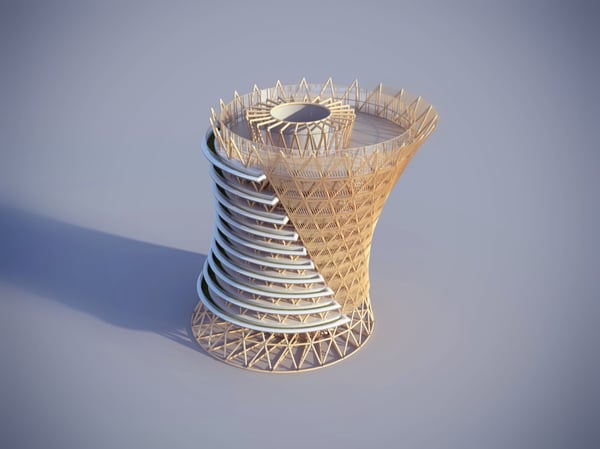
In terms of energy, it is worth noting that the development would generate electricity from streetlights, which would involve the installation of some wind turbines. In addition, the buildings are designed to make the most of the the Earth's thermal inertia, since it would use the outside air temperature to naturally cool the entire structure.
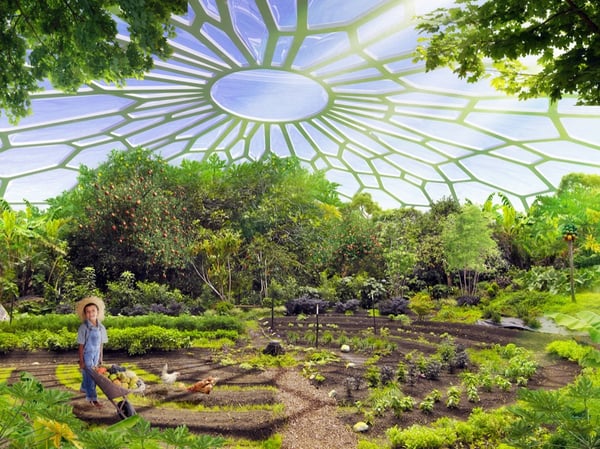
Finally, a network of walkways would span the highest part of this project, connecting the rooftops of these unique buildings. On these walkways, the following would be installed: organic gardens which would provide food for the entire community.
As you can see, more and more projects are incorporating sustainability and respect for the environment, with energy conservation in construction and the efficient management of resources being of paramount importance. This is setting the trend for the future of construction.