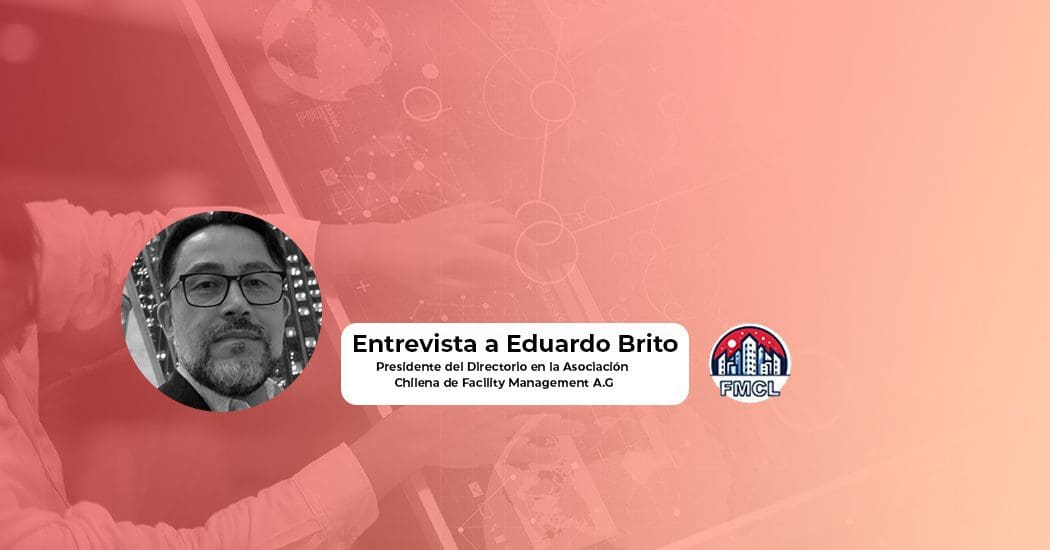
Given your experience as a consultant in Management, Real Estate, Facilities, and Property Management. How do you view the evolution of facility management practices in recent years, and what trends would you highlight for the future?
.jpeg) «In Chile and Latin America, I see that as an industry we have been focused primarily on providing soft and hard maintenance services (maintenance and cleaning). I see many opportunities on the horizon to position FM as a core activity within a company. The path ahead involves More and better training for professionals and technicians (ideally with a certificate of competency), greater access to industry data, older interference in the development of rules and standards.
«In Chile and Latin America, I see that as an industry we have been focused primarily on providing soft and hard maintenance services (maintenance and cleaning). I see many opportunities on the horizon to position FM as a core activity within a company. The path ahead involves More and better training for professionals and technicians (ideally with a certificate of competency), greater access to industry data, older interference in the development of rules and standards.
I think the scarcity of rules and regulations that apply throughout the life cycle of buildings (96% or more of their useful life) compared to those that exist for construction (4% of the useful life, at most) is a sign of how far behind we are. «
As Chairman of the Board of Directors of the Chilean Facility Management Association A.G. What is the main objective of this association, and how does it contribute to the development of the sector in Chile?
 «Our objectives are: To represent the association's members who work in the field of facility management or corporate real estate management and general or support services, in order to ensure formal representation.".
To contribute to the education and promotion of the field of facility management in Chile, seeking to achieve the highest national and international standards and to professionalize the field.
To organize or conduct academic events, research courses, and studies in the field of FM, and to promote or participate in seminars, conferences, or lectures on the subject.
We want to position this activity as a viable alternative for development and business.«
What are the main challenges facing facility management in Chile, and how are they being addressed by the association and other key industry players?
«Initially, it is evident that limited knowledge of the specialty and the value it brings to a business. Depending on how it is managed, it can be very closely tied to a company’s “core,” enhancing and even creating a competitive edge—whether it’s a restaurant chain, a network of clinics or hospitals, a series of multifamily buildings, or a data center hub.«
How does facility management impact the sustainability and operational efficiency of organizations?
«It has an impact in various ways; for example, with increased competition and concerns about productivity, we see that FM is strongly linked to practices such as Lean and/or Six Sigma. The workspace is critical for supporting “failure-free” processes (just think of the 5S model). Let’s consider digital factories and their agile methodology; one of the requirements for applying this methodology is the configuration of the space, which must facilitate interaction and easy access to information sources.
Whether we’re talking about sustainability from an environmental perspective, compliance (with standards and regulations), or community relations, we’re entering another area of importance for organizations (and their stock market value): ESG. Many of the measures taken and implemented in these areas are conceived and managed within the FM.
If we consider the human capital of companies, their engagement, workplace culture, Once again, we're back on FM.
Notwithstanding the above, decision-makers do not seem to fully appreciate this.«
Speaking specifically about the Chilean context. What growth opportunities do you see for the facility management sector in the coming years?
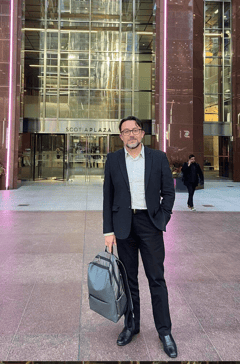 «I see that The construction industry is at a turning point. I think the business model as we knew it will never be the same again.
Credit restrictions for developers and buyers, new regulations, changes to zoning plans, delays in processing applications, and the steady rise in land prices—all of this suggests that The situation has become more difficult, and while there may be some improvement, there will be no return to the previous situation.
Cities must be repurposed and operated differently, Seeking efficiency, focusing on revenue streams from leases rather than sales. I see the FM strongly supporting developers in creating infrastructure that is more durable, easier to operate, more rational, and more technologically advanced. We will shift the paradigm from creating real estate on a project-by-project basis—to avoid the consequences of defects—to a model where the developer remains in charge, which will require highly competent professionals and technicians.
»It is in this world of ideas that I see many opportunities for those who are prepared and adaptable."
In your opinion. What are the key skills and competencies a professional needs to excel in the field of facility management?
«An FM's technical knowledge is diverse and depends on the industry and the role they play. From a technical standpoint, the use of new technologies and the processing of large amounts of data in a short period of time will be key. The same goes for new technologies for project development, such as visualizations using AI or BIM.
I also see adaptive skills that are not widely taught at the professional and technical levels but are very necessary, such as: leadership, conflict management, customer focus, negotiation.«
We're so glad you trained with us years ago—tell us about it and… What motivated you to choose this master's program and study with Structuralia?
«That's right, I took the Master's Degree in Facility Management In 2013, I decided to pursue this path as a way to expand my knowledge of the field, which I had learned through practical experience; at that time, there were very few (practically none) master’s-level specialization programs available in Chile. The situation hasn’t changed much in terms of the programs offered.
The The experience was very positive because it allowed me to delve deeper into topics that I didn't fully understand or know much about. »I also realized that my desire to learn more was shared by many professionals in Latin America."
Why would you recommend studying at Structuralia? Can you mention some highlights of your experience in terms of the quality of education?
«There are several reasons, including: Top-notch teachers, up-to-date knowledge, one extensive network of contacts, flexibility in program options and one recognized institution.«
Finally. What advice would you give to those who are considering a career or getting involved in the field of facility management, both in Chile and internationally?
«FM is both an art and a science at the same time, challenges you both in terms of technical knowledge and adaptability. It’s demanding and sometimes thankless, but it allows you to grow as a professional and as a person because it constantly forces you to step outside your comfort zone. If you enjoy challenges, aren’t afraid to face difficulties, have the flexibility to constantly reinvent yourself, are committed to lifelong learning, and enjoy working with others, this is a great profession. FM is a mindset.»
We want to to thank Eduardo Brito, president from the Chilean Facility Management Association (FMCL) and alumnus of Structuralia for sharing with us in this interview the current state of the facility management sector in Chile. And if, like him, you’re interested in specializing with a master’s degree in the field of Facility Management, we encourage you to explore our program, which features a new curriculum we launched a few months ago—based on IFMA’s key guidelines—and developed by a faculty of professors currently working at top-tier companies. Don’t miss the opportunity to learn more on the Master's Degree in Facility Management.