Originally published on March 5, 2018, Updated on October 21, 2024.
The Internet of Things It has come to improve our lives and make them more sustainable; a clear example of this is the Smart Meters.
In a world where energy conservation is crucial to the future of our planet, technology plays a vital role. Every October 21, we celebrate the World Energy Conservation Day, an opportunity to reflect on our practices and seek innovations that will help us reduce our environmental impact. The Smart Meters, or smart meters, are emerging as essential tools in this fight, thanks to its ability to optimize energy consumption through the Internet of Things (IoT).
What is a smart meter, and how does it work with the Internet of Things?
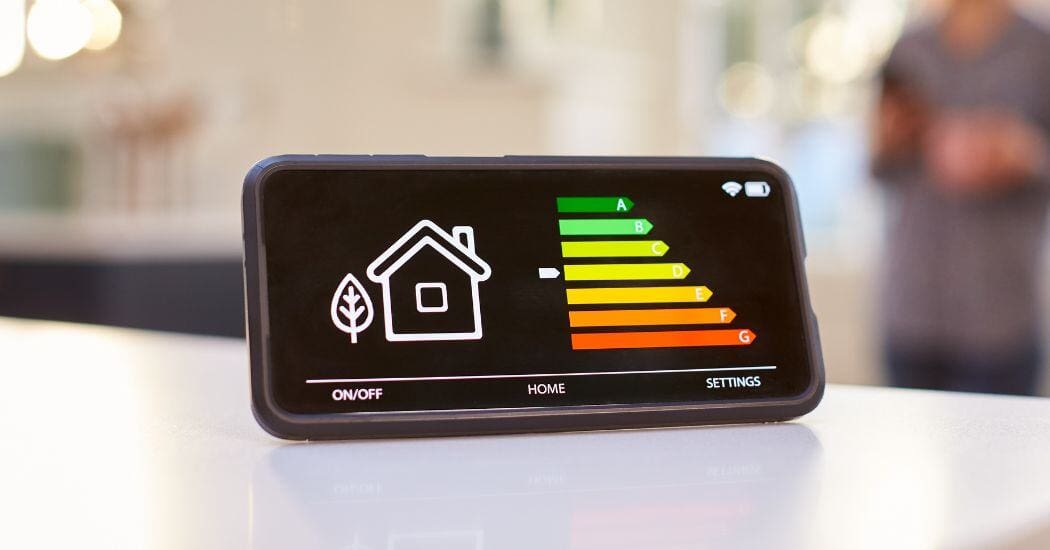
A Smart Meter is an advanced device that records energy consumption at frequent intervals, typically every hour or less, and transmits this information to energy providers for monitoring and management. Unlike traditional meters, which provide only monthly readings and require a manual visit for data collection, the Smart Meters They enable real-time data collection and transmission. This process not only improves the accuracy of energy bills but also facilitates a better understanding of and control over energy consumption.
The IoT (Internet of Things) complements the operation of the Smart Meters to the connect these devices to a broader network of energy management systems. Through sensors and interconnected devices, the IoT enables the exchange of data between the Smart Meter and other systems, such as smart home appliances and power grids. This integration makes it possible to more efficient energy management, identifying consumption patterns and enabling automatic adjustments to optimize energy use and reduce waste.
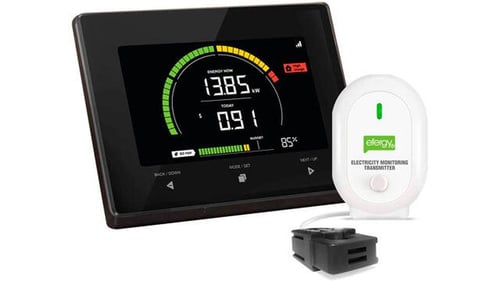
Example of a smart meter for residential use. El Confidencial
Benefits of Smart Meters
In Spain, there are approximately 28 million electrical service connections with a capacity of less than 15 kW, which must have Smart Meter before the end of 2018. This scenario is playing out in several European countries, as it stems from a European Commission on Energy initiative.
The benefits The benefits that the use of smart meters brings to an electric power grid are wide-ranging; among them, the following stand out: fault detection by utility companies, as well as the the economic benefits derived from control and management based on the information provided. But the use of these devices also represents a major advance for network customers, since it allows them to monitor their usage in near real time. As we know, understanding our own consumption is one of the most important pillars when it comes to promote energy efficiency.
However, for the adoption of smart meters to have a positive effect on consumer habits, these must be accessible, which can be achieved in three different ways:
-
Online publication of the collected data by distribution system operators, as is the case in Spain, where customers must register on their distributor’s website to view their consumption with a one-day delay
-
Existence of a a single platform that centralizes data of all consumers, as is the case in the United Kingdom.
-
Direct access to the meter by the customer. To do this, the meter must have an accessible communication port enabled—such as Wi-Fi or a LAN connection—that is different from the one used by the utility company for meter reading and operation. This method is the most complex because it requires a more advanced meter and physical access, but it is also, of course, the most powerful provides real-time information.
-
Help Protect the Environment By promoting more efficient energy use, smart meters play a crucial role in reducing greenhouse gas emissions. Lower energy consumption means there is less need to generate energy from fossil fuels, which helps mitigate climate change. Furthermore, by facilitating the integration of renewable energy sources into the power grid, the Smart Meters support the transition to a more sustainable energy system.
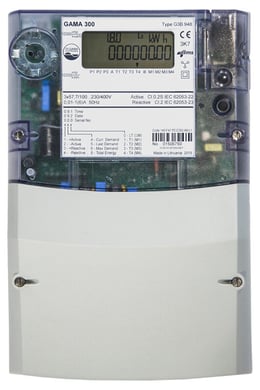
Example of a smart meter for industrial use. LingYang
In conclusion, the Smart Meters represent a crucial innovation in the search for a greater energy efficiency and sustainability. As engineers, it is vital that we continue to educate ourselves and specialize in these emerging technologies to make the most of their potential. On this World Energy Conservation Day, let’s reflect on how each of us can contribute to a more sustainable future by using Smart Meters and other innovative technologies.
In this context, we invite you to eExplore the catalog of online courses and master's programs offered by Structuralia, which specializes in topics related to energy and sustainability, to keep us at the forefront in this era of technological transformation. In particular, the Master's Degree in Energy Efficiency and Renewable Energy.