The The earliest known sewer system was built in Nippur (Iraq) around 3750 BC. From that point on, it has gradually evolved and been refined over the course of history into the version we have today.
This development has made it possible to prevent health problems that can occur if there is no proper sewer system that enable the collection and transport of wastewater, becoming a essential service in cities.
Below, we'll tell you about the Characteristics and Components of a Sanitation Network current:
Types of Sewer Systems
Within the networks that make up a city's sewer system, we can find two main types depending on how the water is collected and transported:
- Separation networks or systems
They are the consisting of two independent networks, one system for collecting domestic and industrial wastewater, and another for stormwater and street-cleaning runoff.
- Networks or unitary systems
This type of network It has only one pipe that collects and carries wastewater and stormwater. They also have spillways that allow a portion of the water to be released into the natural environment in the event of torrential rains.
In the case of very extensive sewer systems, especially in large cities, you may come across mixed systems in which both types coexist depending on the area.
Morphology of a sewer system
The final network configuration A city's sewer system will be influenced by various factors, including the topography and geology of the land and the urban characteristics of the area.
Whenever the topography permits, it will be It is a priority that the entire network—or at least the majority of it—allow for gravity-fed water flow, since otherwise it would be necessary to use pumps, which entails technical difficulties and high costs.
Another important factor in the construction of the network will be the type of terrain in the area, which It will affect both the design and the construction methods used. Encountering hard soil that is difficult to excavate can significantly increase costs.
Finally, the sewer system must correspond to the city's streets and spaces, so land use, zoning classification, and potential future developments will need to be taken into account during its development.
Network Components
Next, we'll take a look at the components that make up a sewer system, and which are divided into four categories:
They are the responsible for collecting the water, including both wastewater and stormwater, and discharge them into the sewer system.
In the case of wastewater, Private connections are used to link the drainage systems of buildings to the public sewer system. They consist of three parts: a manhole located along the building's facade, a connecting pipe, and a connection point to the public sewer system.
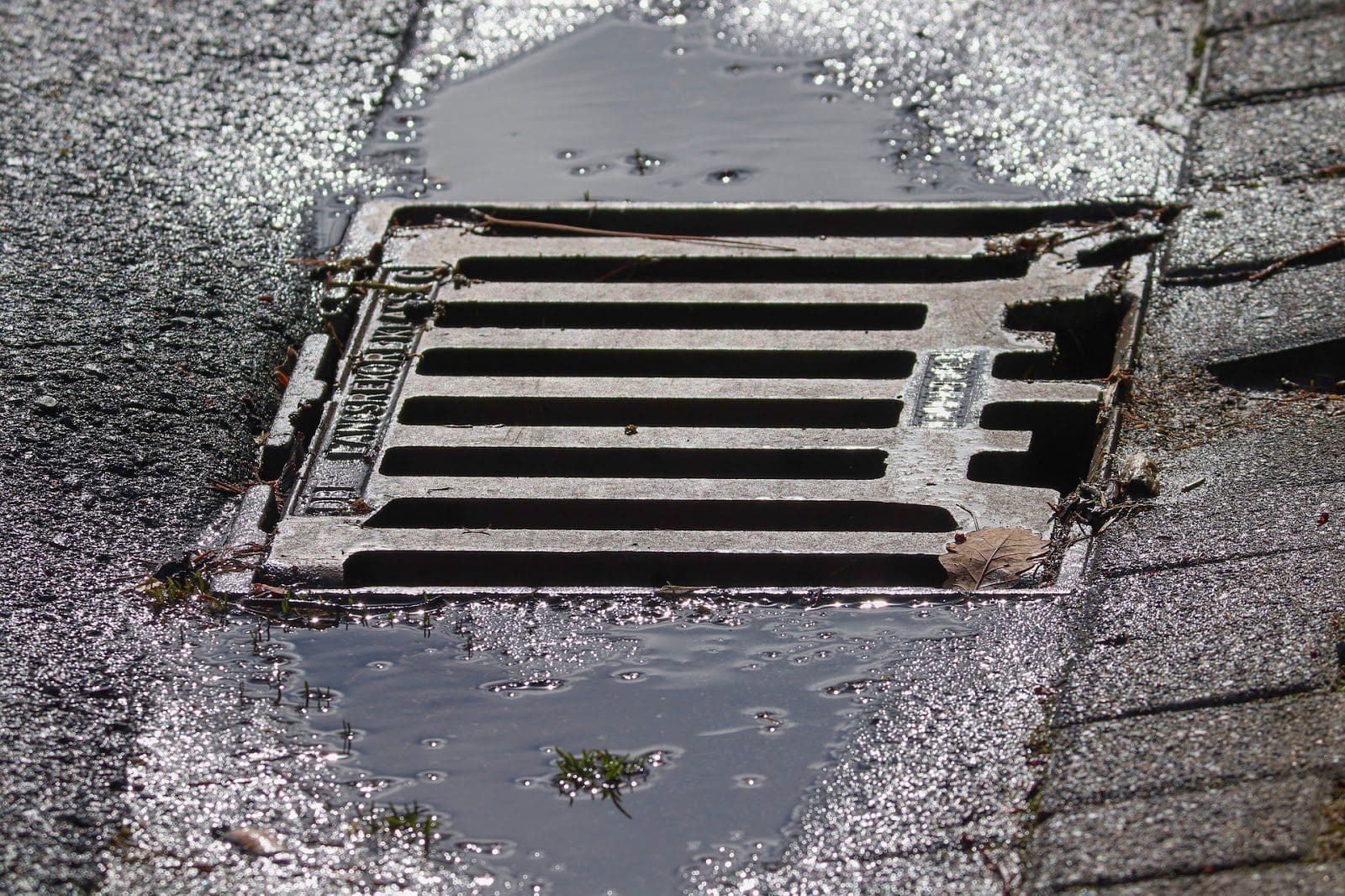
As for stormwater, we find that the drains, located at the surface and designed to collect stormwater and carry it to the collectors. They are divided into three parts: the intake grille, the connecting channel, and the connection to the collector.
- Elements of Visits and Inspections
The manholes They may be accessible—in the case of large-diameter collectors—or inaccessible; they are used for the access for cleaning and inspection crews through these areas.
They are linear channels which are designed to ensure the proper conveyance of the water collected by the intake structures. They may have different types of sections, and some are open to visitors while others are not.
Finally, there are special components that are not present in all sewer systems and that will be used in specific situations to address critical issues, by retaining and regulating flow rates and serving as a control for its operation.
Some of these components are: speed bumps, rapids, spillways, stormwater retention basins, pumping stations, discharge chambers, etc.
Sewer Pipelines
For the network to function properly, the pipelines that make up the network must meet certain requirements regarding hydraulic and structural conditions.
In this regard, it will be All components must be leak-tight to prevent any losses, and to have a Low roughness to minimize pressure drop as much as possible.
As for the structural characteristics, it must withstand both ground loads and loads from moving objects, as well as the effects of pollutants physical and chemical properties. To meet all these requirements, the concrete for the construction of the network.
If you're interested in water management and services, Please feel free to ask for information about our related courses.