Since the Earth Summit held in Rio de Janeiro in 1992, when the United Nations Framework Convention on Climate Change was adopted, numerous actions have been taken in the area of sustainable development, as set forth or promoted by a wide variety of documents (framework policies, regulations, laws, standards, etc.) that define, describe, or quantify how to implement or comply with certain requirements deemed sustainable. Construction activities have significant impacts across the three dimensions of sustainability (environmental, social, and economic), necessitating a reevaluation of the vast number of related aspects throughout the entire life cycle—ranging from the extraction of raw materials used to manufacture construction products to the point when the building or infrastructure finally reaches the end of its operational life. The second module of the Sustainability Course, the fourth and final year of the Master's Degree in Construction Materials and On-Site Quality Control organized by ANDECE and STRUCTURALIA, is dedicated to providing a framework for the increasingly broad regulatory landscape of sustainable construction. This module delves into the details of those documents that, in terms of sustainability, we consider to have a decisive influence on construction in general, and on industrialized construction using precast concrete elements in particular.
Sustainable Development Goals (SDGs)
They stem from the so-called 2030 Agenda: a universal call to action to end poverty, protect the planet, and ensure that all people enjoy peace and prosperity. It consists of 17 goals that build on the achievements of the Millennium Development Goals and include new areas such as climate change, economic inequality, innovation, sustainable consumption, and peace and justice, among other priorities.
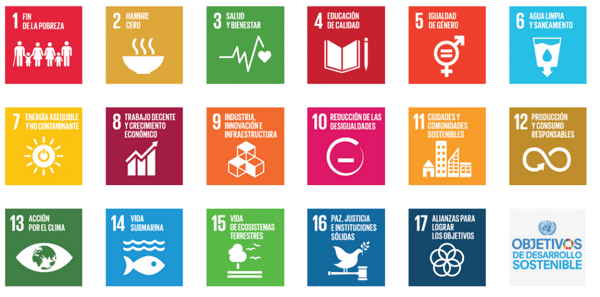
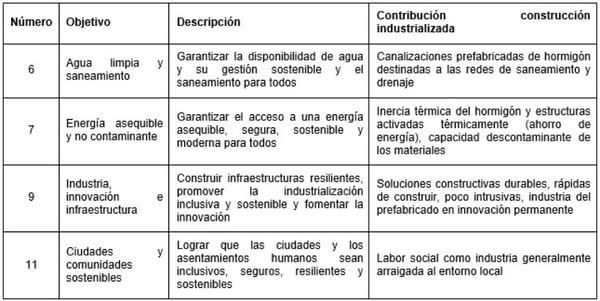
Of these 17 goals, several have a direct impact on the construction, operation, and maintenance of buildings and infrastructure—areas in which industrialized construction can make a positive contribution:
Energy Efficiency
Energy scarcity, rising energy consumption, production costs, and the cost of delivering energy to the end user represent one of the greatest challenges facing humanity today. Therefore, energy efficiency in all activities—and especially in the construction sector, given its enormous impact (accounting for up to 40% of primary energy consumption in Europe)—represents one of the main lines of action within sustainable development.
In this context, it is worth noting the European Energy Performance of Buildings Directive (EPBD), adopted in 2002 and subsequently updated in 2010, which falls under the so-called 20/20/20 target, which sets the goals of reducing the European Union’s primary energy consumption by 20%, reducing greenhouse gas emissions by 20%, and increasing the share of renewable energy to 20% of total consumption. This Directive stipulates that public buildings constructed starting in 2019 and private buildings starting in 2021 must be nearly zero-energy buildings (NZEB). The EPBD serves as the basis for various updates to national building codes, as is the case in Spain with the DB-HE section of the Technical Building Code, which is currently under review and whose new version is expected to be published in early 2018.
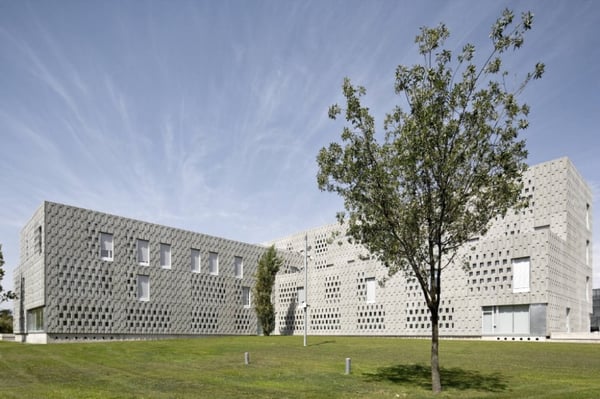
In the case of the Basic Document on Energy Conservation DB-HE-1, “Limiting Energy Demand,” thermal inertia is presented as a characteristic to be taken into account. In previous articles, we have already explored the role of concrete as a massive material with high thermal mass, which helps increase the thermal inertia of buildings. With the right design strategies, this can reduce the need for heating and cooling, especially during the hottest seasons and/or in the hottest regions.
Circular Economy
In 2002, chemist William McDonough and architect Michael Braungart, in their book *Cradle to Cradle: Redesigning the Way We Make Things,“ proposed a new philosophy distinct from the well-known ”three Rs“ (reduce, reuse, and recycle), oriented toward a nature-inspired zero-waste model. Based on this philosophy, the concept of the circular economy emerged as an economic model centered on reuse and indefinite recycling, rather than on the use of primary raw materials. Among all the policies and initiatives currently being implemented, we must highlight the circular economy action plan approved by the European Commission, which aims to make more efficient use of resources, minimizing consumption and reintegrating them into a new production process, while setting a series of targets for the period 2015–2030 (recycling 65% of municipal waste, reducing landfill disposal to a maximum of 10% of all waste, promoting economic instruments to discourage landfill disposal (fees and fines), etc.)
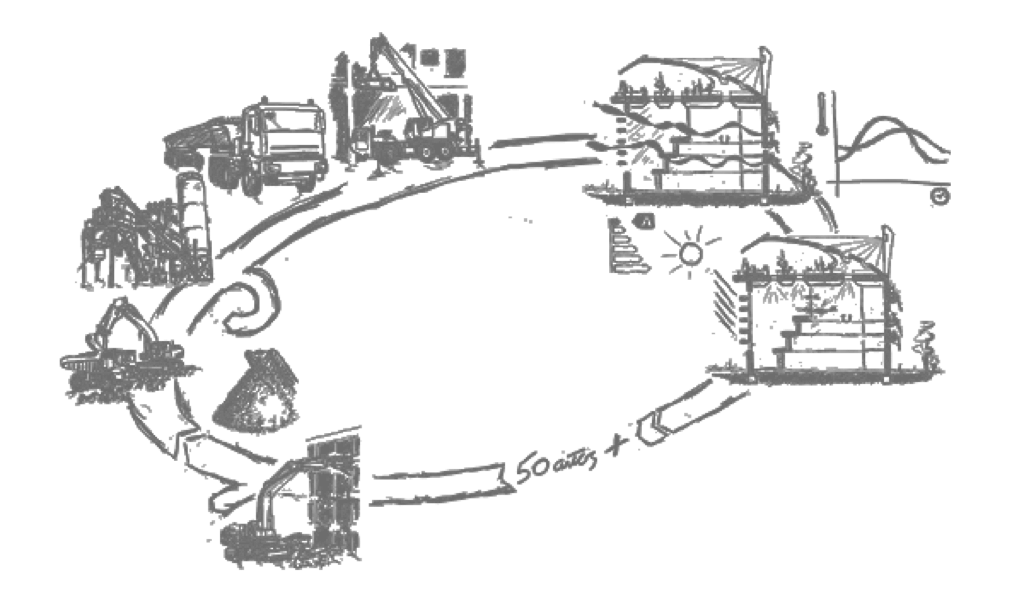
The very concept of prefabrication—as an industrialized form of concrete construction—offers a number of inherent characteristics that ensure better alignment with the requirements of this circular economy model:
- Waste: There are two direct consequences of working in an industrial environment where the production process is highly controlled: 1) less waste is generated; and 2) if waste is generated, it is produced within the factory itself, making its reuse simpler and more cost-effective, its composition more uniform, and its reintroduction into a new production cycle more efficient. We also highlight concrete’s capacity as an ideal material for utilizing waste from numerous sources (cement substitutes, recycled aggregates, etc.).
- Durability: The durability of precast concrete components, especially those used for structural purposes, is one of their most recognized characteristics. The fact that they are manufactured in an environment protected from adverse weather conditions and are the result of an industrial process under a factory production control system ensures a service life longer than that required by regulations (50 or 100 years). As a result, the potential generation of waste and/or the need to extract new resources to produce new elements for new construction projects are offset over a longer period of time.
Environmental Performance Certification
There are various tools available that allow manufacturers of construction products to demonstrate their compliance with sustainability requirements, particularly in the environmental sphere. One example is Environmental Management Systems certified according to the ISO 14001 standard, which offer a simple way to systematize the environmental aspects generated by each of the activities carried out within an organization, while also promoting environmental protection and pollution prevention in a way that strikes a balance with socioeconomic considerations.
Above all, however, it is important to highlight Environmental Product Declarations (EPDs), which are intended to provide quantitative information on the environmental impacts of a product or service throughout its life cycle. EPDs are increasingly being referenced in regulations and in procurement specifications for construction materials, especially in the case of buildings certified under sustainability schemes (LEED, BREEAM, etc.). In this regard, it is worth noting the March 2016 publication of the UNE 127757:2016 IN Report «Product Category Rules for Obtaining Environmental Product Declarations for Precast Concrete Products,» developed by the AENOR national committee AEN/CTN 127, which is responsible for standards related to precast concrete products and whose technical secretariat is managed by ANDECE, which decided to get a head start on the development of the equivalent European standard and undertake the development of a national-scope document that would serve as a reference model for companies wishing to prepare their Environmental Product Declarations (EPDs) and have this information available. Recently, the European standard EN 16757 was approved and will replace the national report before the end of the year.
Methods for Evaluating Sustainable Construction
Most of the progress made regarding standardized methods for quantifying the sustainability of construction has focused primarily on buildings rather than infrastructure, particularly in the residential sector. Residential construction has the greatest overall impact of all, as it involves all three pillars of sustainability: environmental (greenhouse gas emissions resulting from the use of heating and/or cooling to achieve comfortable indoor conditions), social (housing is a basic necessity for people), and economic (it typically represents the largest expense a person faces over the course of their life).
There are already a number of methodologies for assessing how sustainable a building or piece of infrastructure is. These can be classified as either private methodologies or standardized procedures.
With regard to private certification systems, BREEAM (originally from the United Kingdom)—which was the first method for assessing the sustainability of buildings—and the LEED tool (United States) are worth highlighting. Both certification systems are widely used worldwide. Other well-known systems include SBTool (Canada), HQE (France), and DGNB (Germany). As for infrastructure sustainability assessment models, the CEEQUAL and SUNRA programs are particularly noteworthy.
The recent proliferation of these types of methods makes it difficult to draw meaningful comparisons between different programs—and even between green building and traditional construction. To address this wide variety of methods for quantifying sustainability, the two leading global standardization organizations, CEN (Europe) and ISO (International), have begun to develop their own standards:
- The European standardization committee responsible for developing standards that establish methods for assessing the sustainability of buildings is CEN/TC 350. It has already developed more than 10 standards. It is worth noting here the strategic importance of sustainability for ANDECE, as it serves as the secretariat for the national committee on sustainability standards for buildings, AEN/CTN 198/SC1.
- In the case of ISO, the committees that deal with aspects of sustainable construction are TC207, TC59/SC17, and TC71/SC8. The most important of these is probably TC59/SC17, which has published 8 standards to date and has an equal number currently under development.
Other Approaches to Sustainability in Construction
Module 2, «Sustainable Construction,» also reviews other interesting approaches aimed at sustainability in construction, and it can be said that the precast concrete industry is gradually adapting to these approaches as a way to improve its external competitiveness and internal operations. Notable among these is corporate social responsibility (CSR), defined as the active and voluntary contribution by companies to social, economic, and environmental improvement, generally with the goal of enhancing their competitive position, market valuation, and added value.
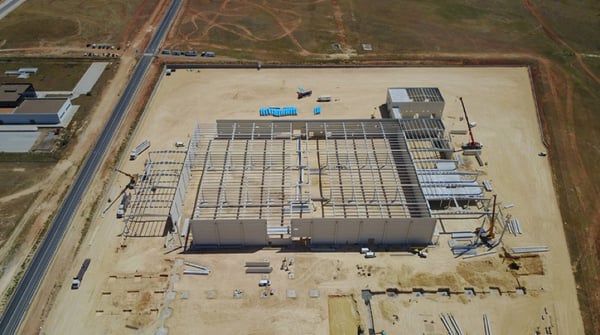
Local laws and regulations should also be mentioned, as local governments are increasingly playing a key role in promoting sustainable development. Furthermore, Green Public Procurement (GPP) is a process through which public and quasi-public authorities decide to acquire products, services, construction projects, and contracts in specific sectors that have a reduced environmental impact throughout their life cycle. This is the case in the Basque Country, which introduced a Green Public Procurement and Contracting Manual in 2011 that establishes a series of criteria, notably the maximization of the use of standardized, prefabricated, and/or industrialized products and construction elements.
Author of the post: Alejandro López Vidal.
Technical Director, ANDECE – Director of the International Master’s Program in Construction Solutions Using Precast Concrete Elements www.capacitacionprefabricados.com
If you'd like to learn more about prefabrication in construction, check out our graduate program: