When beginning the construction of a tunnel (or other type of underground excavation), it is vitally important to determine its stability, since the face of the structure could collapse during construction if the pressure applied is not adequate, with fatal consequences.
Understanding face stability is becoming increasingly important because tunnels are being constructed in more complex ground conditions every day, increasing the risk of collapse. This phenomenon of excavation face instability occurs primarily in tunnels constructed using traditional methods in soft rock (without the use of a tunnel boring machine or other mechanisms to stabilize the face).
It is important to assess the collapse of the face because it can have very serious consequences during construction: it can cause a complex three-dimensional fracture, forming a chimney that leads to major problems at the surface and could even cost workers their lives.
Of all existing collapses, the HSE (Health and Safety Executive) has determined that the causes fall into these three categories:
- Collapses caused by stability issues at or near the face.
- Collapses caused by temporary shoring.
- Collapses due to other causes.
Most of these crashes (50 %) fall under the first category, so it is It is very important to ensure the stability of the front.
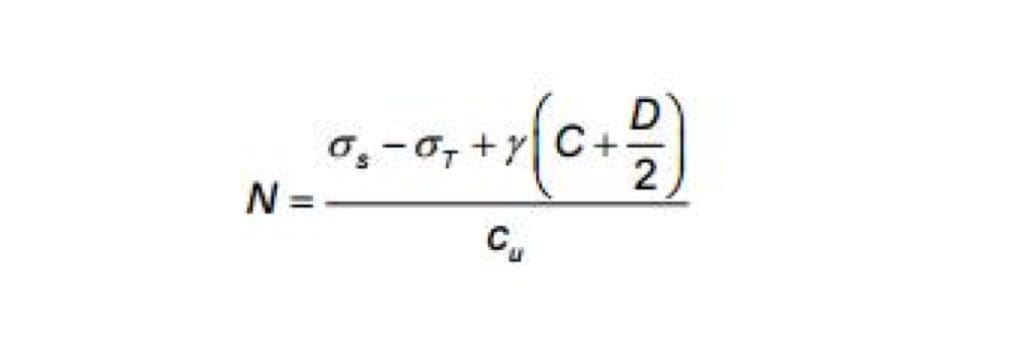
Once we have the geotechnical parameters of the ground and the geometry of the tunnel we want to excavate, a reasonable approach to analyzing the stability of a tunnel face is to use the classical equation proposed by Broms and Bennermark, as modified by Davies et al. and Atkinson and Mair years later:
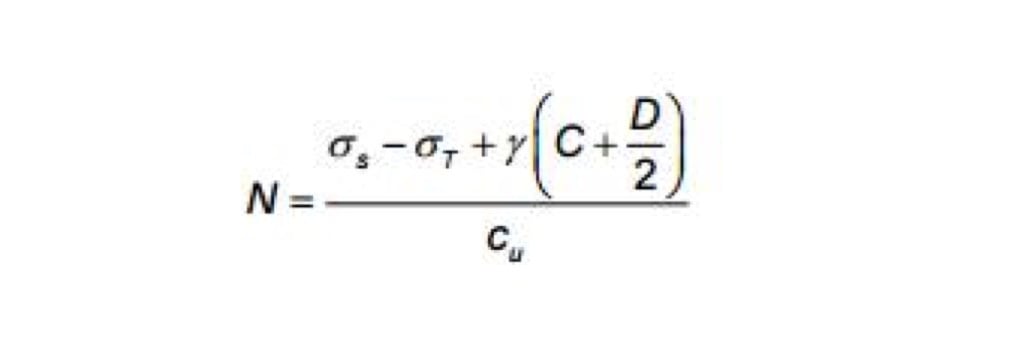
Where:
N = number of stability conditions.
σs = surface overpressure (kPa).
σT = internal pressure of the tunnel (kPa).
γ = bulk density of the soil (kN/m³).
C = Cover to the tunnel base (m).
D = tunnel diameter (m).
cu = shear strength without drainage (kPa).
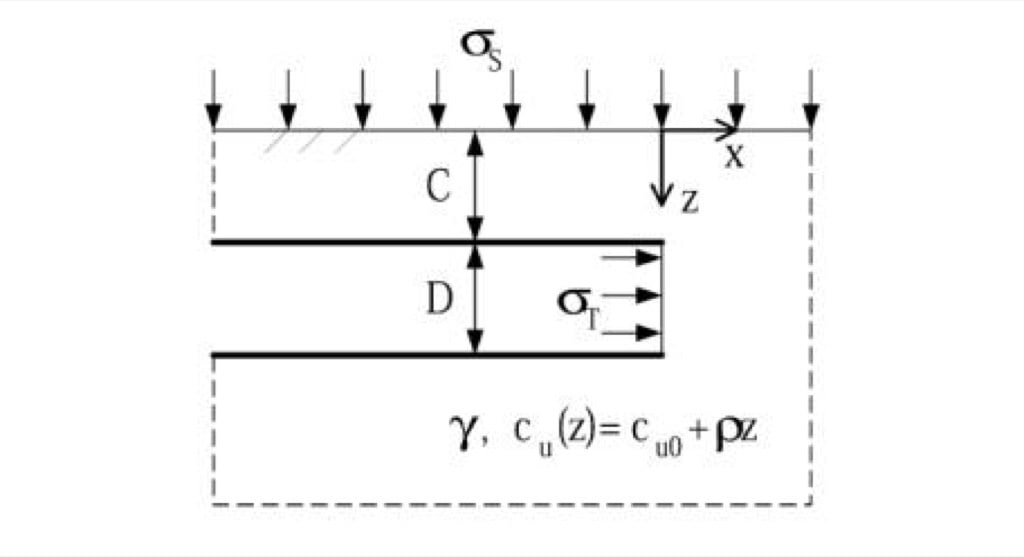
If the value obtained from the equation is less than 6.0, The front can be considered stable. If the value of the equation is greater than this number, instability issues may arise.
As we mentioned, this equation is a simplified representation of reality, since it does not take into account that the actual phenomenon occurs in three dimensions; however, it allows us to obtain a fairly accurate rough estimate of a tunnel face’s stability.
In addition, there are other three-dimensional numerical methods that allow for the calculation of front stability with much more accurate results using advanced software programs.