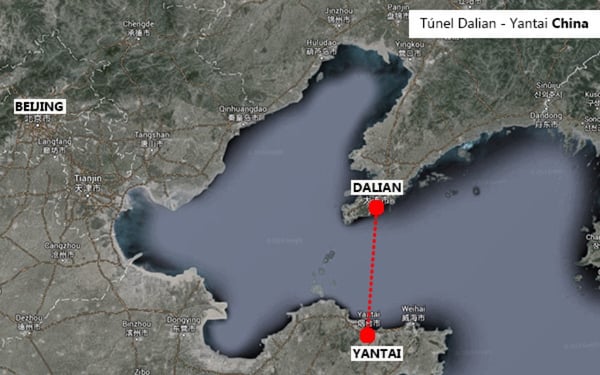
China has launched a project to build an undersea tunnel between the port cities of Yantai and Dalian in Bohai Bay, in the northeast of the country. The tunnel, which will be 123 kilometers long, will be twice as long as Japan’s 54-kilometer-long Seikan Tunnel and the 50.5-kilometer-long Channel Tunnel.
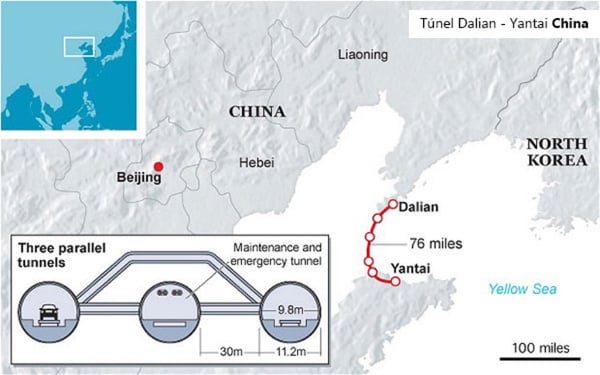
With an estimated budget of 30 billion euros, the project presents numerous challenges. It will consist of three tunnels, each 12 meters in diameter: one for vehicles, another for rail, and a third for maintenance work. The corridor will run 30 meters below the seabed, excavated through rocky terrain and crossing two seismic faults.
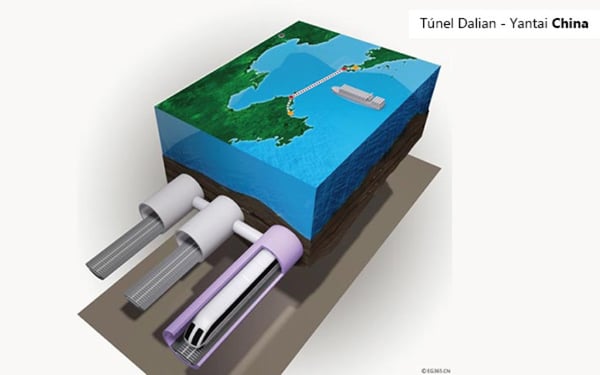
Construction would begin in 2016 and is expected to take a decade to complete. The journey between Yantai and Dalian is currently covered by traveling 1,400 kilometers along the coastal highway or by an 8-hour ferry ride. The train traveling through the tunnel would reach speeds of 220 km/h, reducing the total travel time to less than an hour. The project would promote the development of industrial cities in the northeast of the country and is intended to meet the growing demand for travel, estimated at 200 million passengers by the year 2020.
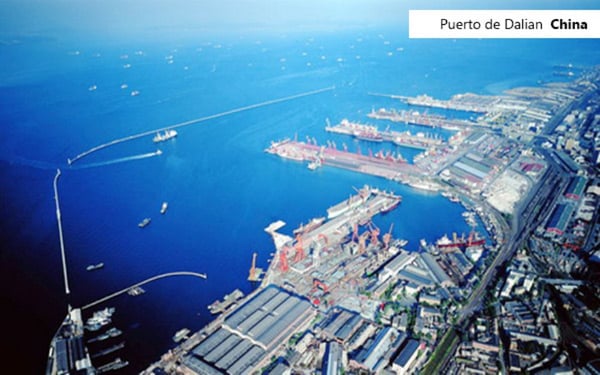
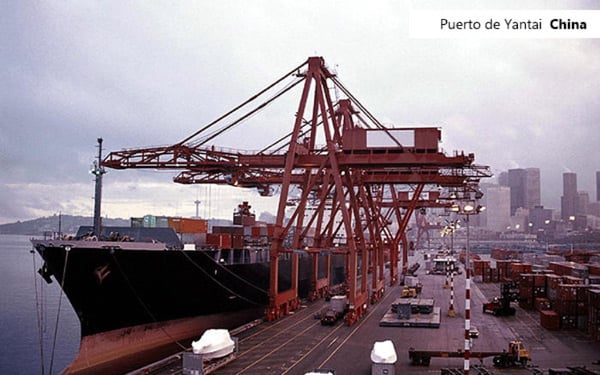
China has a long tradition of large-scale infrastructure projects, and this tunnel will be no exception, joining the ranks of the longest bridges, tallest buildings, and largest airports that the Asian giant boasts—all of which stand as icons of its unstoppable economic growth.