Find out how the Bessemer converter It revolutionized steel production and spurred industrial and technological progress.
The Bessemer Converter: Operation and Applications
Throughout human history, technology has played a vital role in transforming the world. Ingenious and efficient methodologies such as the Bessemer converter have marked a turning point in industrial and technological progress. This article focuses on the Bessemer converter, an invention that revolutionized steel production and, as a result, significantly changed the landscape of engineering and construction worldwide.
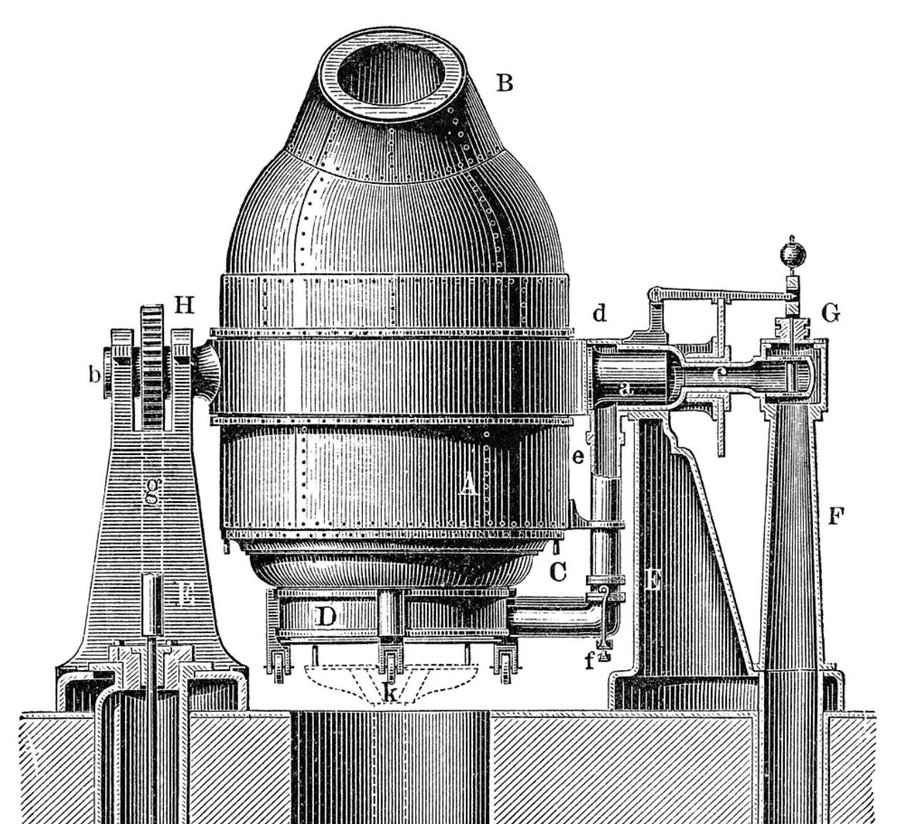
Historical blueprints of the Bessemer converter. Ana Vega
Henry Bessemer: An Industrial Pioneer
Henry Bessemer, born in 1813 in Charlton, England, was a a self-taught engineer and inventor whose curiosity and creativity led him to develop several patents throughout his life. From an early age, Bessemer showed a keen interest in mechanics and engineering, working on various inventions that ranged from improvements ranging from printing to metal production methods. However, his most significant contribution came in 1856 when he introduced his innovative Bessemer converter, a revolutionary method for producing steel that radically transformed the metallurgical industry. This invention not only enabled faster and more economical steel production, but it also opened up new possibilities in construction and engineering.
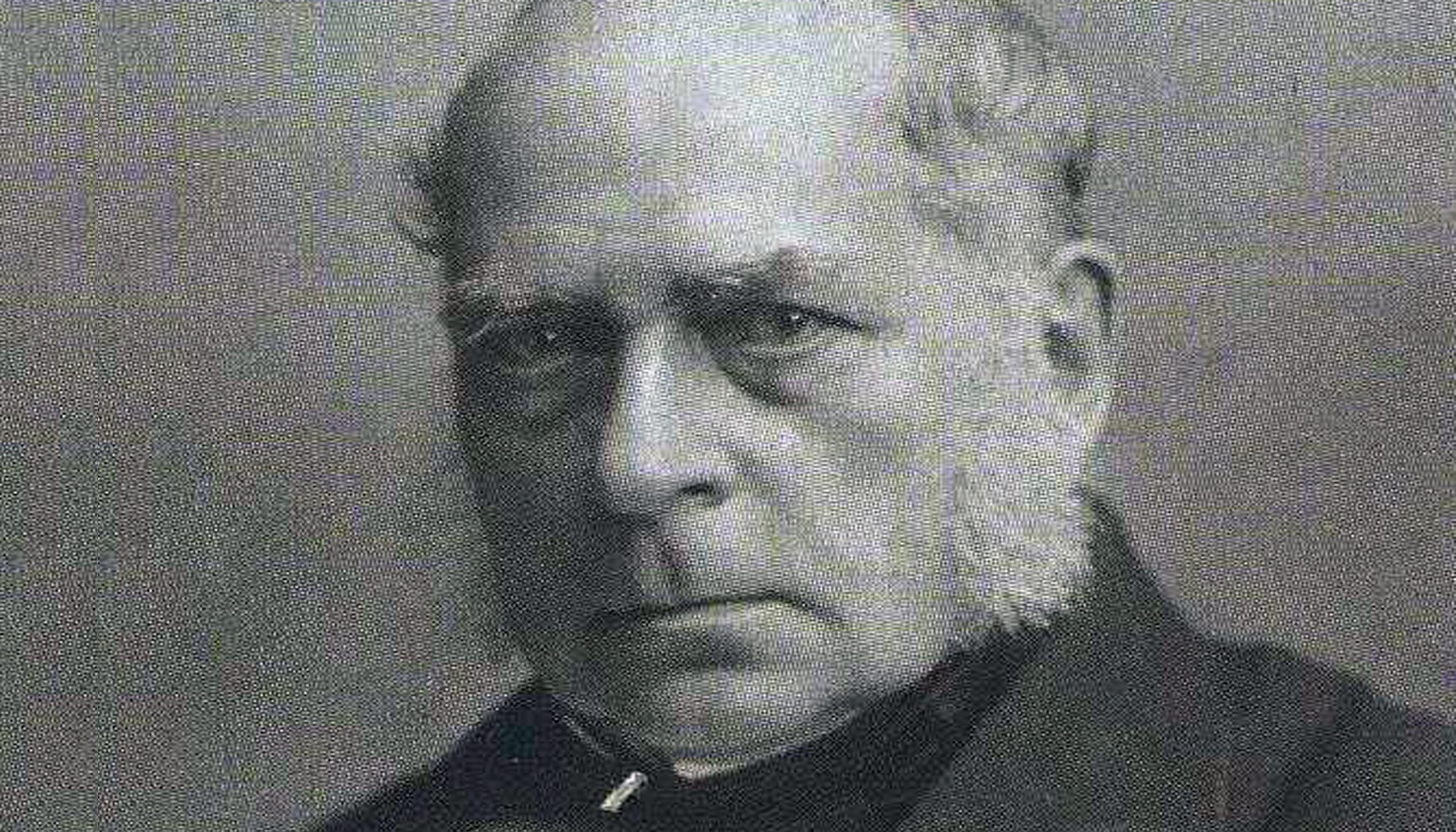
Photograph of the inventor of the Bessemer converter: Henry Bessemer. Inter-company
The Bessemer Converter
The Bessemer converter is a pear-shaped vessel, lined internally with a refractory material, where breathes into air through cast iron. This process removes impurities from iron by oxidizing them and turning them into slag, while the carbon content is reduced to the desired level, resulting in high-quality steel. The Bessemer converter revolutionized the steel industry by making the manufacturing process faster and more efficient, allowing for the mass production made of steel at significantly lower costs.
The use of the Bessemer converter spread rapidly due to its efficiency and effectiveness. It was essential in the production of railroad tracks, bridges, buildings, and a wide variety of structures that required sturdy and reliable steel. The ability to produce large quantities of inexpensive steel enabled an unprecedented expansion of infrastructure and spurred urban and industrial development. The impact of the Bessemer converter was such that it made possible the construction of iconic structures such as the The Eiffel Tower and the Brooklyn Bridge, demonstrating this technology's ability to turn architectural dreams into tangible realities.
Modern Technologies Thanks to the Bessemer Converter
The Invention of the Bessemer Converter laid the groundwork for many modern technologies that we take for granted today. For example, the mass production of steel made it possible to build skyscrapers, suspension bridges, and a global rail infrastructure. Without the Bessemer converter, urban growth and industrialization in the 19th and 20th centuries would have been much slower and more costly.
Furthermore, the influence of the Bessemer converter extends into our daily lives in less obvious ways. The automotive industry, aviation, and the manufacture of household appliances depend on efficiently produced steel. Information and communication technologies have also advanced thanks to the structures and devices made of high-quality steel. Today, we continue to benefit from the foundations laid by Henry Bessemer and his Bessemer converter.
The evolution of steel production methods has continued since the invention of the Bessemer converter, with innovations that have further improved efficiency and quality. However, the fundamental principle of to produce steel through the oxidation of impurities It remains a cornerstone of the metallurgical industry. Sustainability and material recycling have also taken center stage, reflecting the industry's ongoing adaptation to current needs and challenges, while always building on the foundations laid by the Bessemer converter.
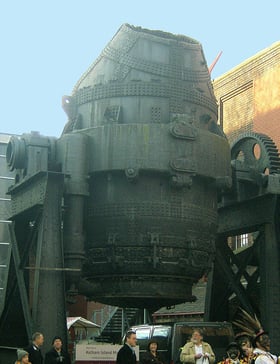
Photograph of a preserved Bessemer converter. Wikipedia
In conclusion, the Bessemer converter not only revolutionized steel production, but also laid the groundwork for many of the technologies and structures that are part of our modern life. Henry Bessemer's innovation and dedication serve as a reminder of the lasting impact that engineering can have on society. We invite all engineers and architects to Do not neglect continuing education and specialization on topics that contribute to the society of the future. For those looking to advance their careers, it is essential to explore the catalog of online courses and master’s programs offered by Structuralia on engineering and innovation.
This final reflection underscores the importance of staying up to date on a constantly changing world, where emerging technologies and innovative methods can radically transform our professional practices. The history of the Bessemer converter teaches us that A revolutionary idea can change the course of an industry and, ultimately, the world.