The supervised and unsupervised learning These are two machine learning techniques used to teach computer systems to “learn.”.a and even nutrition. What is the difference between these two techniques of machine learning? Where does each one apply? Here is the information.
Two techniques used in data science
The supervised and unsupervised learning are different techniques from machine learning used to “train” computer systems and achieve specific results.
Supervised learning or supervised algorithms
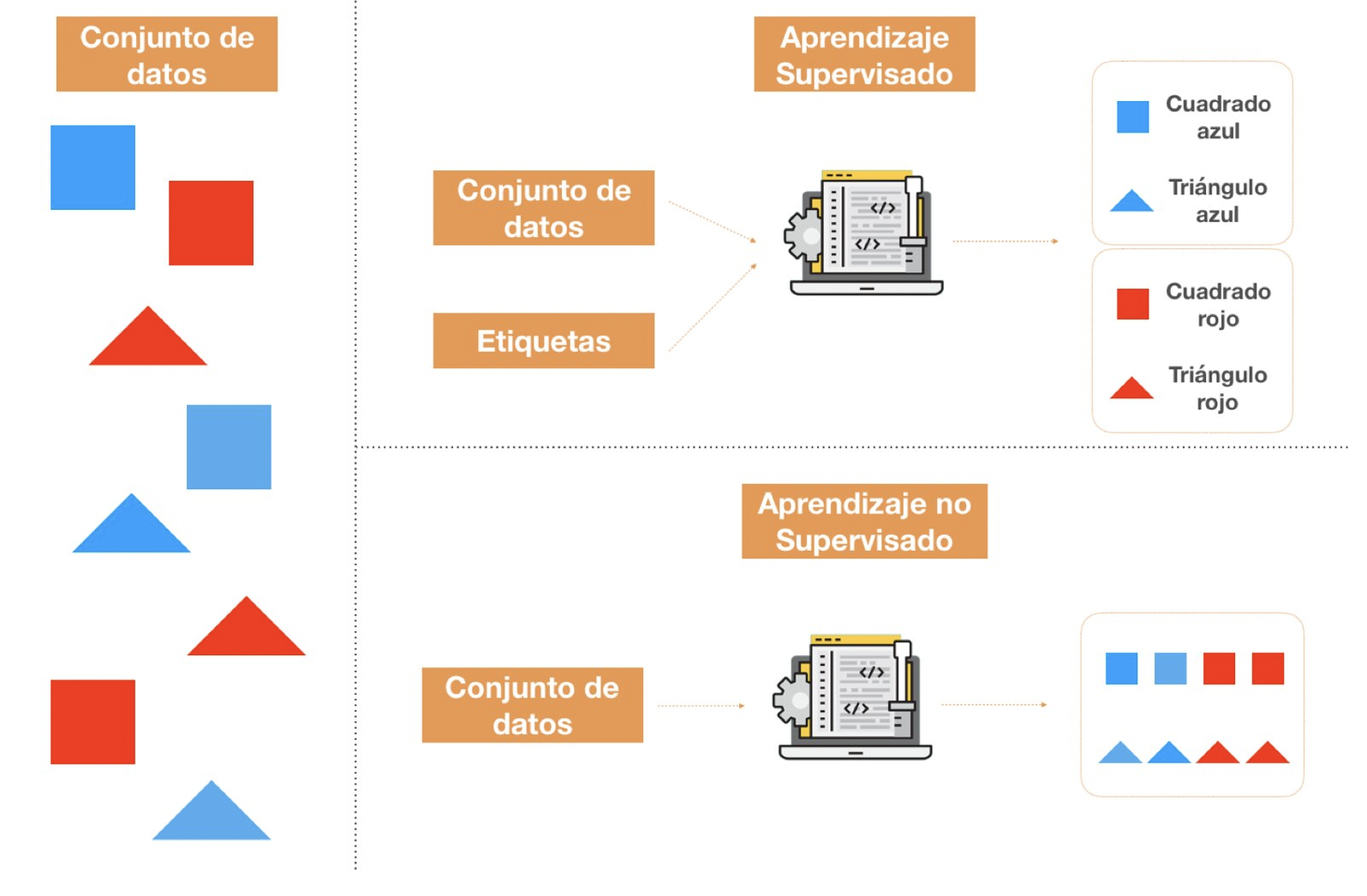
This machine learning technique requires a set of labeled data, where each sample has a label that includes keywords, descriptions, categories, or attributes. Its purpose is to perform extrapolations and predict accurate results.
The model uses the labeled data to quantify the relevance of the various features in order to gradually improve the model's fit to the known outcome. Thus, the computer system analyzes the provided labels and learns to recognize trends, detect anomalies, or recognize patterns, as in the following examples:
-
-
Sort emails (spam or not spam).
- Detects financial fraud.
- Predict the cost of real estate based on its characteristics and location.
- It recognizes handwriting and converts it into digital text.
-
Predict a company's revenue based on its advertising.
-
Unsupervised learning or unsupervised algorithms
In this technique of machine learning, The information provided to the system is as follows: data Unlabeled and unsupervised. In other words, the model must identify patterns and structures in data that lack labels and key annotations. Its goal is to discover hidden patterns and related data, and then group them into clusters or categories:
-
Categorize different customers based on their purchasing patterns.
- It generates images with less noise and greater visual clarity (dimension reduction).
- Identify purchasing patterns in a set of transactions.
- Improve cybersecurity.
- Create recommendation engines.
What are its advantages?
Both types of learning have specific advantages. Within the supervised algorithm We have:
-
High accuracy and reliability. The model learns from accurate, clear examples supervised by humans. It can also continue to improve over time.
- A better understanding of the data. It's possible sort and categorize data for a clearer analysis, ranging from business data to scientific applications.
-
Faster learning. When training with labeled data, the model learns more efficiently.
Now, the unsupervised algorithm offers the following benefits:
-
Explore and discover patterns. Identify relationships between variables and hidden patterns.
- Efficient and effective analysis. The following are studied: huge complexes data.
- Lower cost. It does not require the creation and labeling of training data.
-
Greater flexibility and adaptability. It can be used with a wide range of data types, such as text, images, audio, and video.
The Future of Machine Learning
The machine learning It is changing our world and promises to further revolutionize various areas of society. With this in mind, the best-prepared professionals are those who, for example, have a Master's Degree in Artificial Intelligence: Model Management and Implementation, those who will lead the transformation toward the future.
The supervised learning It is used when the data tags are known to obtain a prediction, whereas in the unsupervised learning is discover completely new models using unlabeled data. Also:
-
Supervised learning requires a larger amount of data training than unsupervised learning.
-
The accuracy The choice of model in supervised learning depends largely on the data quality. In unsupervised learning, it depends on the correct choice of the algorithm and parameters.
Structuralia It is a school that offers graduate programs in various areas of artificial intelligence, featuring top professionals and high-quality course content. The future is already in our hands—and so is success.