
We'll review the historical evolution of industrial production management and delve into the concept and basic principles of Lean Manufacturing. Are you going to miss it?
First, we will provide a historical overview that will help us better understand the concept of Lean Manufacturing.
HISTORICAL EVOLUTION OF PRODUCTION ORGANIZATION AND MANAGEMENT
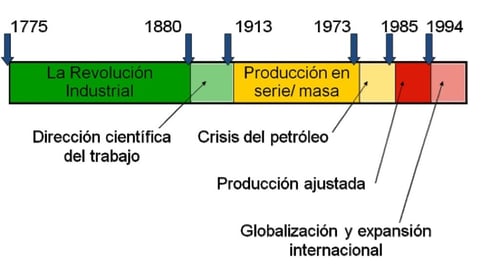
- (1775) Invention of the steam engine (Watt).
- (1880) Process analysis and time-and-motion studies.
- (1913) Assembly line for manufacturing the Ford Model T.
- (1973) Oil crisis.
- (1985) The spread of Japanese production philosophies to the West and the extensive application of technology to manufacturing.
- (1994) GATT Agreements and the Establishment of the World Trade Organization.
Until the 1973 oil crisis:
Although this was a long period of time, we can identify some common characteristics that set this first stage apart. Markets were constantly expanding and growing, driven by scientific discoveries and applications designed to improve people’s quality of life. This situation gave rise to a type of protectionist market, where trade was insufficient; this, combined with a lack of competition, resulted in a limited variety of products.
The market was dominated by manufacturers, and end consumers had very little choice but to accept the conditions imposed by employers. It was the era of peak industrial production.
Oil Crisis:
In the mid-20th century, oil accounted for 37.8% of annual energy consumption, while coal held a 55.7% share of the market. Years later, due to the great stability of crude oil prices, oil had increased its market share. It experienced such a rise that, one year after the crisis began, it stood at a 64.41 TP3T of energy consumption.

During that crisis, fierce competition undoubtedly served as a driving force for change. Retailers then asked themselves What do I need to do to get customers to buy from me instead of my competitor? The answer is clear:
- Quality of service (delivery times).
- Flexibility and the ability to adapt to change.
Customer focus and total customer satisfaction thus become the driving force behind all business activities. This entails the development of two strategic lines of growth for companies: the product customization and the a comprehensive range of services that go beyond simply delivering the product.
LEAN MANUFACTURING.
Lean Manufacturing is the term used to describe the adaptation of the Toyota Production System (TPS) to the industrial sector. This system had been used by the Japanese automaker Toyota since the end of World War II, but it is beginning with the oil crises of the 1970s, when it began to spread throughout the West, primarily the U.S. and then European countries.
After World War II, Japanese companies—and Toyota in particular—faced the challenge of rebuilding their production capacity without the necessary financial resources or advanced facilities. Consequently, increasing productivity and reducing costs became the company’s core objectives, and the focus was placed on eliminating all types of unnecessary tasks or waste. To this end, they did not hesitate to investigate the causes of these superfluous actions in manufacturing activities and devised methods to remedy them.
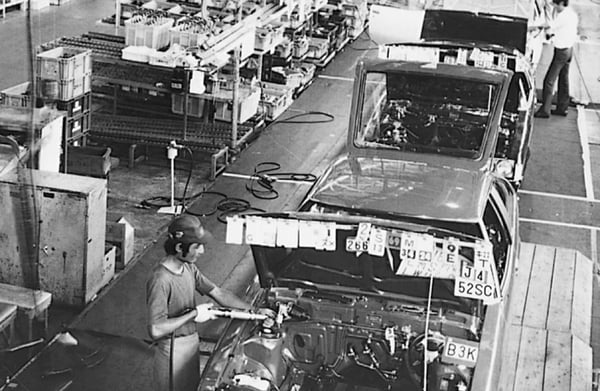
The Toyota production system, therefore, is characterized by its emphasis on practical results rather than on theoretical analysis. Its proponents and developers were Kiichiro Toyoda, founder of the automobile company, and the engineers Taichi Ohno, production manager and creator of the production system, and Shigeo Shingo, who promoted defect-free production through the development of error-proofing systems and devices and the rapid changeover of machines (SMED), which made the development of the production system possible.
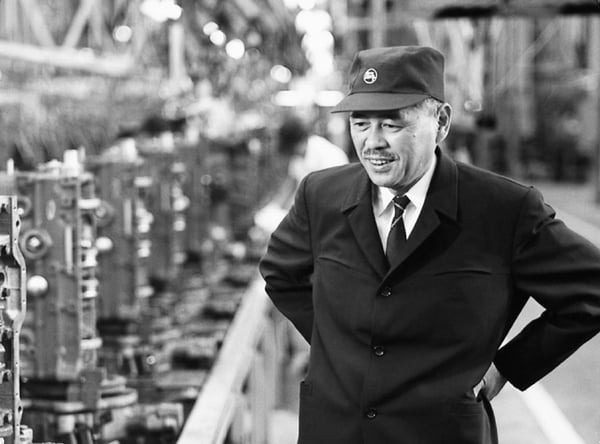
In the early 1980s, a delegation of researchers from MIT (Massachusetts Institute of Technology) traveled to Japan and conducted a study aimed at investigating what the Japanese automotive industry—which at that time was rapidly taking market share away from the American industry—was doing. Their main discovery was the use of the tools that made up the production system. Upon their return to the United States, the delegation named this manufacturing methodology “Lean Manufacturing” and was responsible for spreading it throughout the Western world. Since then, Lean principles and tools have been successfully applied, yielding remarkable results across all types of manufacturing industries and, more recently, in the service sector, hospitals, and other fields as well.
Key Principles of Lean Manufacturing:
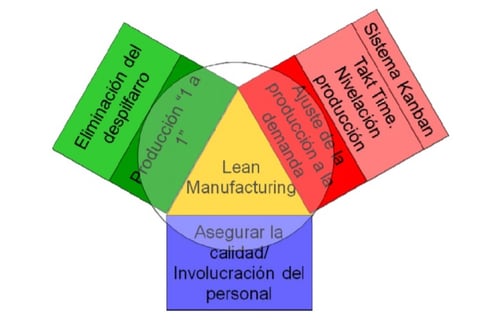
- Aligning production with demand.
“Products must be manufactured at the same rate at which they are sold.”
- Ensure quality (“jidoka”).
“Only the best pieces should move on to the next phase”
- Respect for the human dimension.
“As long as human resources are used within the system, they must be developed and encouraged to achieve cost objectives.”
If you'd like to learn more about the exciting field of Industrial Production, feel free to check out our graduate program:
Lean Construction