
Below are the tools most commonly used by engineers for Structural analysis of metal structures.
the complexity of the calculations they are capable of performing. These programs allow engineers to simulate loads and deformations in metal structures, which enables them to illustrate in a very visual way the behavior of a metal structure.
The Evolution of Structural Analysis for Metal Structures
The design of steel structures has evolved significantly in recent years, as we mentioned earlier, thanks to advances in technology, digitization, and software development very powerful and accessible for this purpose.
First, the use of technology has led to greater precision and efficiency, Automation and optimization tools help reduce time and effort needed to perform the calculations.
Second, the research has led to the development of new composite materials, such as carbon and fiberglass, which have gained popularity in the construction of metal structures due to their high strength and low weight.
And third, The laws and regulations in each country have evolved to adapt to new technological and research advances. Building codes and standards have been revised to include new calculation methods that account for the latest technologies and structural designs.
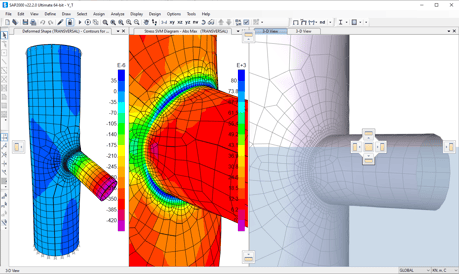 Example of the analysis interface in FEA software. CSIamerich
Most Commonly Used Software for Calculating Steel Structures
As we mentioned earlier, Software for calculating steel structures has been a major advance in this sector, not only simplifying the calculations but also ensuring the creation of more accurate models and more precise analyses for these types of structures. That is why we believe it is very important for you to be familiar with the software most commonly used by engineers to calculate steel structures:
1. CYPE:
This software specializes in the design of steel structures—in fact, its original name was “Metal 3D”—and includes built-in steel structure codes. Since it is optimized for this sector, it features a extensive selection of metal profiles (with their mechanical and physical properties) that greatly streamline the modeling and calculation process.
2. SAP2000:
Although it is not intended exclusively for the design of steel structures, it is considered to be the originator of this type of software with more than 30 years in the market. It is currently the most widely used because it covers many fields of engineering.
3. ETABS:
It has an excellent reputation in the industry for its strong performance in FEA, the application of rigid and flexible diagrams, large-displacement analysis, and dynamic and static analysis. It features a ga large number of tools to perform analyses and calculations for structures of all kinds.
4. SAFE:
He excels primarily in projects that require special attention to their foundations, making it the undisputed leader in this specific niche. It offers excellent compatibility with leading software programs such as AutoCAD and Revit.
5. Robot Structural Analysis:
It is the solution offered by the software giant Autodesk for the construction industry, which offers many advantages, such as the interconnectivity with other software from the same vendor. Primarily its compatibility with BIM software The way Revit stands out, plus having a company like Autodesk behind it, provides the assurance of excellent technical support and ongoing updates.
6. 3D Laughter:
It is known primarily in the American market, where it has virtually no competition. It stands out for its its ease of use and learning curve, which make it very accessible to all types of engineers. Another important feature is that it allows you to create an entire project from scratch, thanks to the sketching, drafting, and modeling tools it offers.
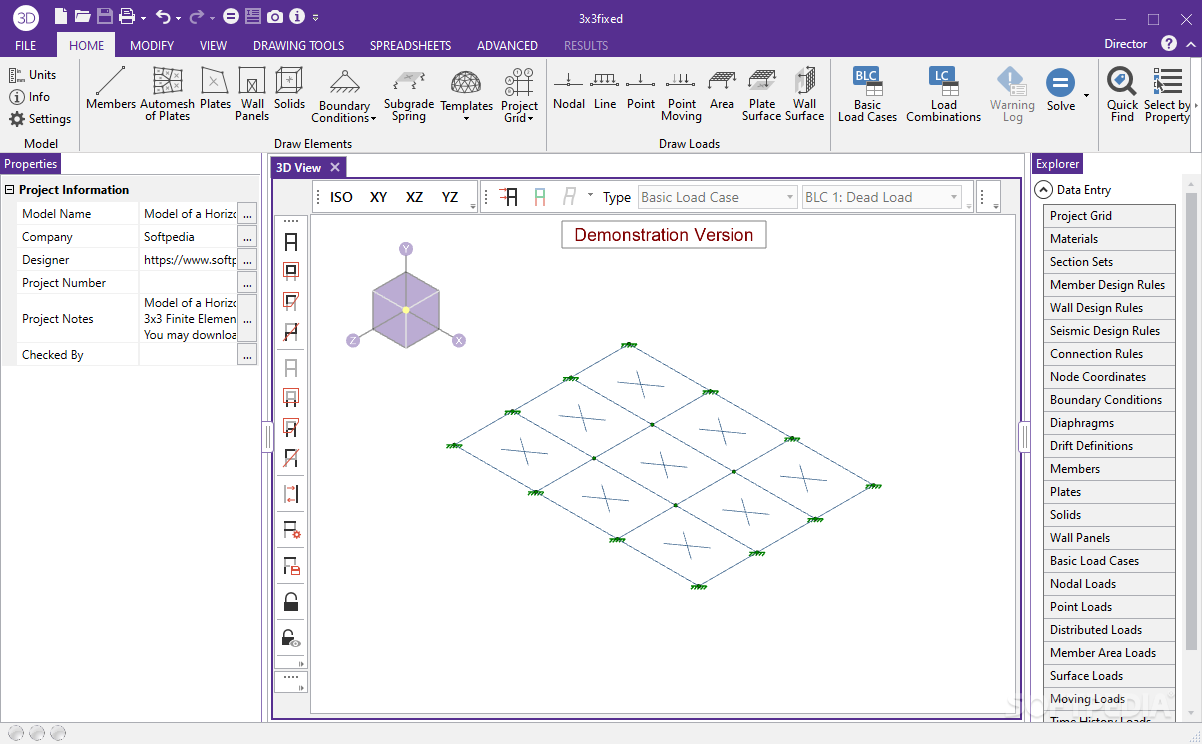
Example of the user interface in RISA 3D. Softpedia
Factors to Consider When Choosing Software for Structural Analysis of Steel Structures
There are several factors you should consider when choosing software for structural steel design; some of the most important ones are:
-
Analytical skills: Make sure the software you choose is capable of analyzing loads and deflections in metal structures in accordance with the building codes and regulations applicable in your area.
- Ease of use: The software should have an intuitive, user-friendly interface, which will help you reduce the learning curve and increase your efficiency at work.
- Automation and optimization tools: Make sure the software includes advanced automation and optimization tools to reduce the time and effort required to perform calculations.
- Technical support and updates: It is important to have good technical support and for the software to receive regular updates to ensure it works properly and to avoid wasting the time invested in learning how to use it.
- Compatibility with other software: Make sure the software is compatible with other 3D design and modeling software; this will allow you to import and export data and collaborate with other professionals.
- Cost: Cost is an important factor to consider, but you shouldn't choose the cheapest software if it doesn't meet all the needs and requirements necessary for your work.
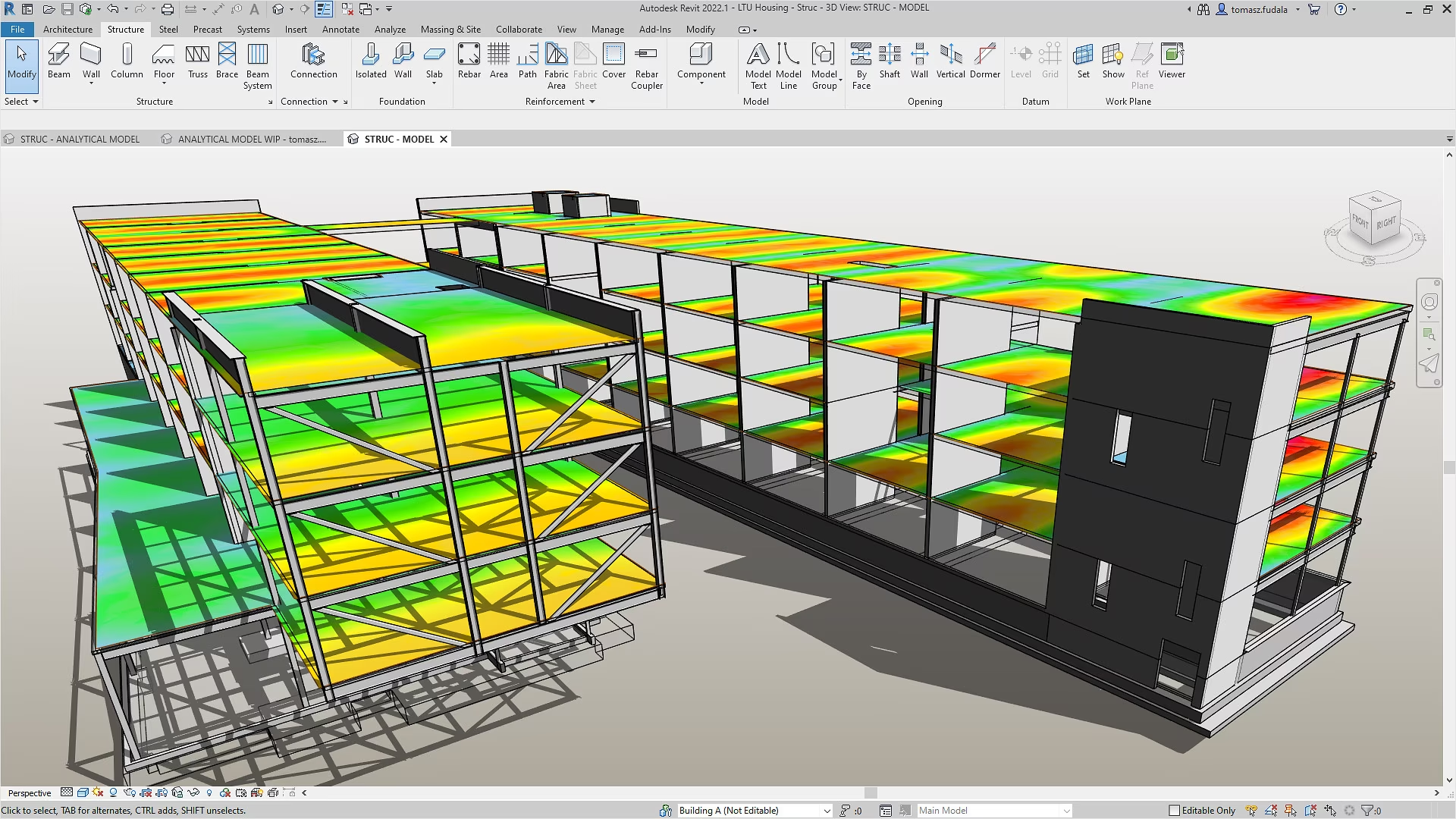
Example of Robot Structural Analysis compatibility with the Revit BIM environment. Autodesk
It is important to keep in mind that every project and every engineer has specific requirements, Ideally, you should evaluate the features of each software program and compare them to the needs and preferences of your work. to choose the one that best suits your needs.
In summary, the design of steel structures has evolved significantly in recent years thanks to advances in technology, research, and regulations—advances that have enabled a greater precision, efficiency, and safety in construction for metal structures. And today, it is essential for professionals in the field not only to be familiar with these tools but also to be able to use them effectively in a way that allows them to get the most out of them.
If you feel the need to to brush up on these topics, or simply want to specialize in the design of steel structures, be sure to check out the professional engineering training programs that Structuralia offers; in particular, we recommend the Master's Degree in Structural Analysis and Design.