
Originally published on May 6, 2022; updated on September 19, 2023.
Meet the Famous and Indispensable Engineers which have been instrumental in the advancement and improvement of engineering and digital transformation.
Famous Engineers Who Are Indispensable to Industry 4.0
Modern engineering and digital transformation have made tremendous strides in recent years thanks to the achievements of famous engineers. These iconic figures have contributed greatly to the development of new technologies and innovation.
All the Famous Engineers The individuals we'll see on this list have been instrumental in shaping new ways of working and driving digital transformation. Indeed, without their individual contributions, many industries would not have come as far as they have today.
Next, we’ll explore some of the key figures who have marked a turning point in the world of modern engineering and digital transformation.
Who are the famous engineers we should know about?
Today, we live in a world where Technology is essential and indispensable for the development of all kinds of projects. It is essential to understand the origins of all these new technologies and work methodologies that are part of our daily lives as professionals, and engineers known for their innovations, in their respective historical periods and fields, to remain relevant today.
In this post, we’re featuring 8 engineers who are renowned for paving the way for digital transformation in the architecture and engineering sectors:
Charles Eastman (BIM)
Known as the father of BIM, Eastman was a professor emeritus at the School of Architecture and the founder of the Digital Building Lab, deeply committed to teaching and research on the development of Work systems in the fields of engineering and construction. Widely known in this industry as one of the system's developers CAD (Computer-Aided Design) and BIM (Building Information Modeling).
The writer of BIM Handbook He based his research career on how architects and engineers could clearly represent their mental models and translate them into construction documentation. Without his work, BIM would not have been able to mature as a representation system to become, today, the the quintessential system within the construction, engineering, and architecture industries.
Kent Beck (Agile)
On February 12, 2001, in Snowbird, Utah, the widely known Agile Manifesto, which is now part of the project management methodology used in almost all companies. Kent Beck, having dedicated his career to software development and to explore new ways to streamline that process, is responsible for bringing together 17 leading experts on the methodology used to date to draft and sign a manifesto aimed at revolutionizing the way companies in the sector operate.
The The Manifesto and Agile Methodologies, have become one of the most widely adopted work and project management philosophies, not only in the world of software development, but have also spread to all sectors, prioritizing iterations and user-developer collaboration to improve project timelines, cost-effectiveness, and quality.
Alan Turing (Computing and AI)
The Londoner, born on June 23, 1912, who was known for decipher the codes encrypted communications within the Nazi army During World War II, he was also a pioneer in the field of computing. He was the first to envision that a computer could solve any problem expressed in mathematical terms through a sequence of logical operations using binary numbers (true and false), or zeros and ones.
This vision led him to make the first attempts at developing a programmable electronic computer, and later to begin hypothesizing that If machines could ever think (as discussed in her article Computing Machinery and Intelligence from 1950), becoming the forerunner of what we know today as Artificial Intelligence. Unfortunately, in 1952 he was tried and convicted for his homosexuality, which diminished his influence in the world of science and technology.
Henry Gantt (Gantt Chart)
He was a prominent engineer born in the United States in 1861, and he stood out among his fellow engineers for his significant contributions to the scientific organization of work, was involved for a long time with Frederick W. Taylor, who is known for the “”Taylorism" , a philosophy focused on improve productivity in the workplace, which had a major impact on the second stage of the Industrial Revolution.
In 1908, he presented the paper to the American Society of Mechanical Engineers Training workers in diligence and teamwork, and then, in 1910, he would present a diagram for arranging different tasks on a horizontal timeline, which served as a tool for carrying out operations that required a great deal of planning. This tool is known as Gantt chart and it remains essential for managing all types of projects even today.
Taiichi Ohno (Lean Manufacturing)
Taiichi was a Chinese engineer who spent much of his life in Toyota, from the end of World War II until the end of his professional career, starting as a workshop manager and eventually rising to become the company's vice president. His goal throughout his entire career at the company was take efficiency one step further in every possible way.
He is known today as the developer of the efficiency system for businesses “”Just in time" , which aims to maximize production efficiency using tools for Communication and Organization, which aims to minimize material waste while improving the quality of the final product. Today, it is the foundation of the well-known Lean Manufacturing.
Hedy Lamarr
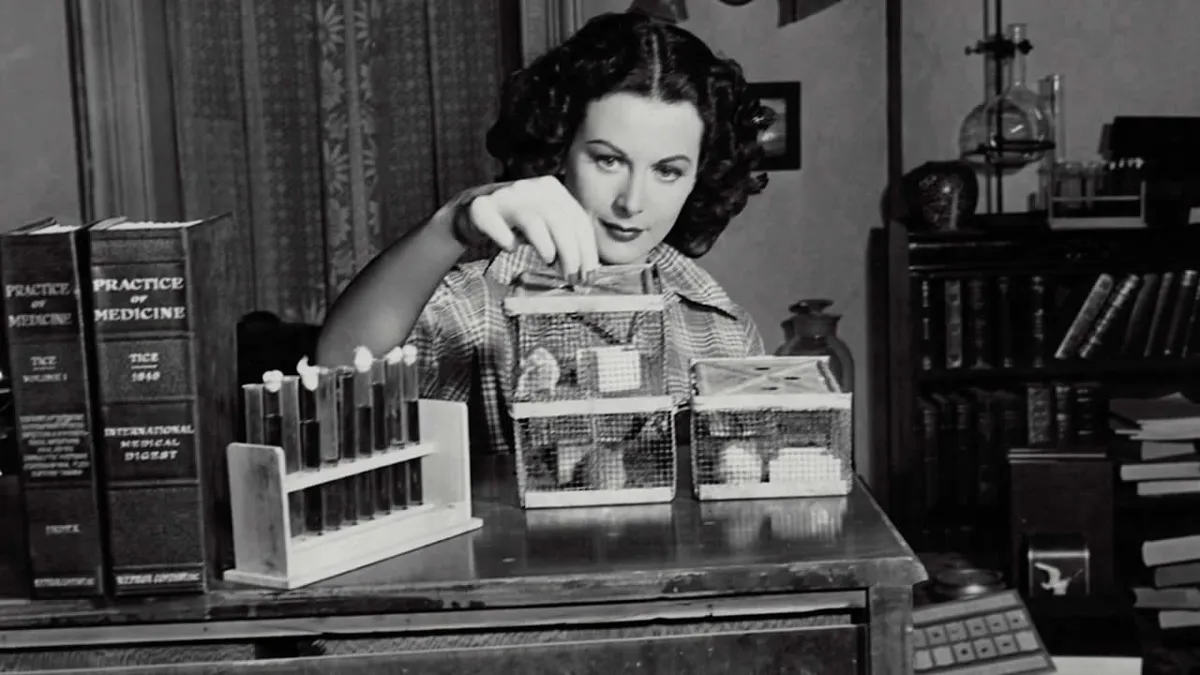
Engineer Hedy Lamarr was a visionary woman and a pioneer in the modern telecommunications industry. She invented the encryption system for naval torpedoes that eventually became the foundation of Bluetooth and Wi-Fi technology that we use today.
Their success story shows us that ingenuity, creativity, and innovation never go unnoticed. And without their help, we wouldn’t be able to enjoy the technological advantages offered by wireless communications, which today make such impressive infrastructures as the the world's tallest communication towers.
Enrique Lores
Not all famous engineers are foreigners. In Spain We have Enrique Lores, a man from Valencia who found a way to manufacture laser printers faster, more cheaply, and more efficiently than his competitors.
Thanks to their work, greater productivity in the IT sector, and his breakthroughs contributed to the development of laser printers. Today, he is one of the top executives at the world-famous HP.
Nikola Tesla
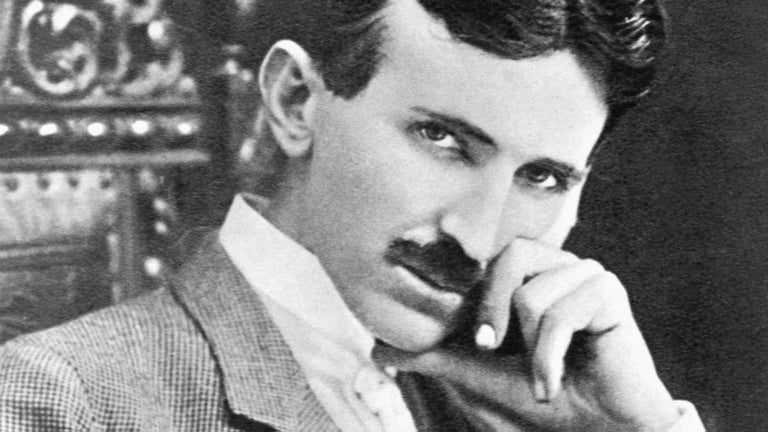
People often talk about the inventor Nikola Tesla, a Serbian electrical engineer who spent much of his life in United States. It was he who invented alternating current, thanks to which we can now enjoy the electricity No problem.
His work also contributed to the development of the electric motors, as well as new technologies related to telecommunications. His influence on the world of modern technology was so great that numerous scientific and technological initiatives have been established in his honor. He was recognized by the computer industry, as well as for his innovation in the advances in modern electricity.
To this day, his ideas continue to have a major impact: from the clean energy generation Even with advances in communication systems, Tesla continues to inspire engineers and scientists around the world. His legacy is a testament to the power of innovation to change the world.
Become an Engineer with Structuralia
Do you want to follow in the footsteps of these great innovators and become part of the world of engineering? You can! Structuralia offers a series of courses designed for those who aspire to become engineers.
Our courses are based on the latest techniques and technologies, so you'll be at the forefront of advances in the Engineering 4.0. In addition to learning about the latest tools and skills, you'll work with a team of experienced professionals to gain hands-on experience.
Don't think twice! Check out our courses and find out how Structuralia can help you achieve your goal of becoming an engineer. Because the world needs more innovators!