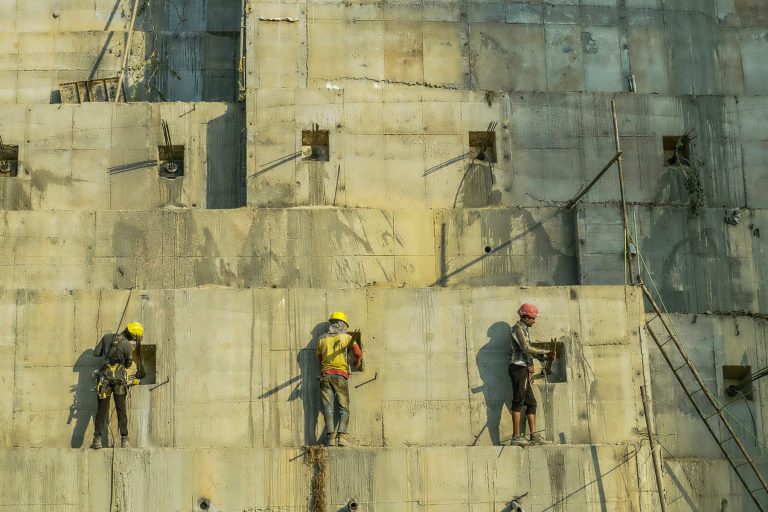
Building a solid foundation for bridges is essential to ensuring that the structure performs well throughout its service life and provides safety for its users. There are two types of foundations: shallow and deep.
To begin work on the foundation, you must first complete the clearing and cleaning the land, performing a layout of the components that will make up the foundation. Once these tasks are completed, will conduct an excavation, in which various criteria will be taken into account, such as soil characteristics, the stability of excavations, or rainwater that may affect the soil’s bearing capacity. In some cases, it may also be necessary to improve the soil. One of the most common methods of soil improvement is a technique called jet grouting.
Next, you must perform a clean-out concrete pour, about 10 centimeters thick, so that the following steps can be carried out on a level and clean surface. Once the foundation is complete, it is necessary to perform a backfill of the portion of the excavation not occupied by structural elements and, for durability reasons, it is advisable to Cover the top surface of the foundation with at least 0.5 meters of the material used for the fill.
We need to distinguish between two types of foundations: the superficial and the deep. The former, which are shallow, are constructed using footing and foundation slabs, while the latter may be constructed using piles or diaphragm walls.
Shallow Foundations
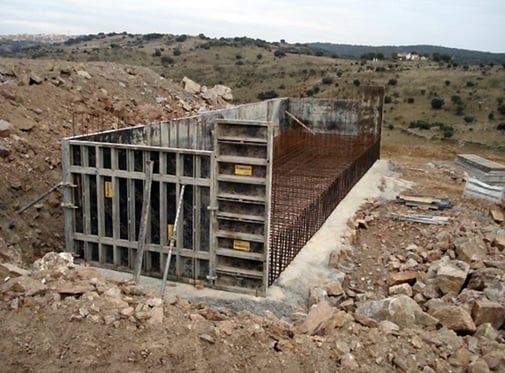
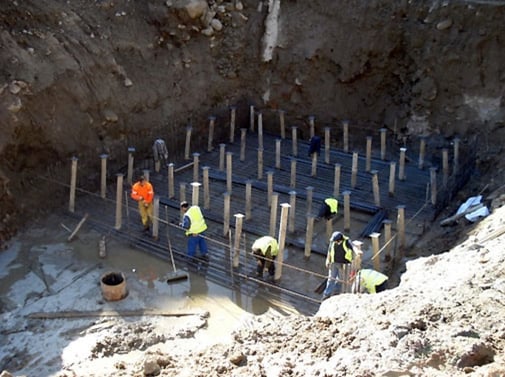
Once the screed concrete has been poured, the rebar will be laid out; this can be done on site or the rebar can be prepared in advance, using spacers to ensure that the rebar does not come into contact with the formwork. The next step is to Install the side formwork so that they do not move, allowing the concrete to be poured without any problems. Before pouring concrete, it is necessary to check that the formwork is clean and that the reinforcement in place matches the specifications of the project.
Deep Foundations
Deep foundations are constructed using piles or screens, which are commonly used in large-scale structures where loads must be transferred to more resistant layers. These types of techniques are essential in unique construction projects, such as the construction of the Arco Gateway in the United States, where the foundation design was crucial to ensuring the stability of a monument that defies the height and terrain conditions.
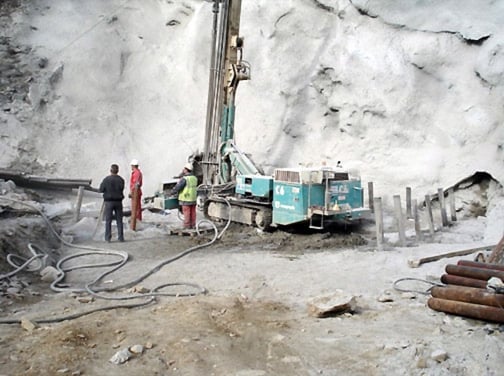
There are two types of deep foundations: driven or drilled/excavated on site. Driven piles can be installed by driving, percussion, hammering, or vibration. They can be prefabricated and made of various materials (concrete, wood, or steel).
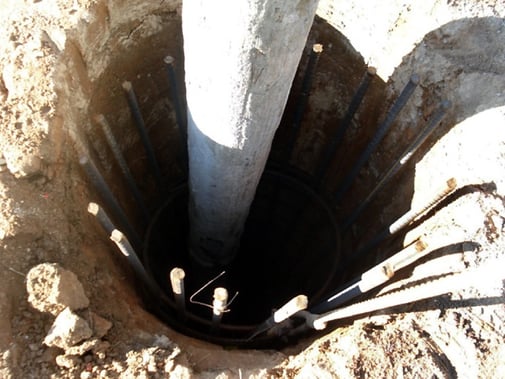
There are three types of bored or excavated piles: concrete piles with recoverable metal casings, excavated piles without casing, and drilled piles. Objective data must be available for acceptance of the pile work, such as: sonic tests, driving reports, or measurements of the lengths embedded in rock.
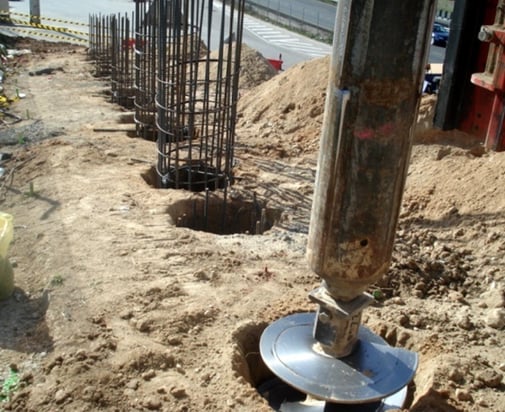
In the case of deep foundations, the following could also be used screens. To construct these, it is necessary to build guide walls, which must be placed at the ends where the retaining wall will be installed; next, the rebar will be placed, and the concrete will be poured. Retaining walls can have different thicknesses, ranging from 0.45 to 1.20 meters.
For both piles and diaphragm walls, it is necessary to trim the top to remove the poor-quality concrete from the upper portion and to expose the reinforcing bars that must be anchored in the pile cap.
The micropiles They could also be another solution for deep foundations, involving holes drilled into the ground into which a metal element is placed and which are subsequently grouted so that these metal elements remain in contact with the soil.
During construction, it is recommended that Inspect the foundation pile to detect any possible twisting or settlement that may have occurred.