Did you know that BIM courses are essential Want to pursue a career in construction and engineering? We'll tell you everything you need to know!
BIM Courses for Your Professional Future
Knowledge of the BIM methodology in the construction industry are essential today, but proper BIM training, such as a BIM course, can assure a very significant added value to the degree program for any professional in the industry, and it undoubtedly opens the door to the best job opportunities.
Source: adbarbieri
What is a BIM course?
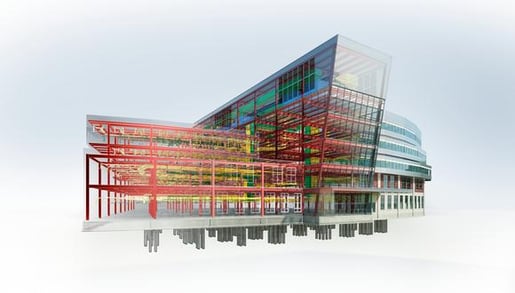
A BIM course consists of specialized training designed to help students acquire all the necessary knowledge about the BIM methodology. Currently, there is a wide range of training options available in this area, such as the Master's Degree in BIM Management from Structuralia which will allow you to develop and advance your professional career.
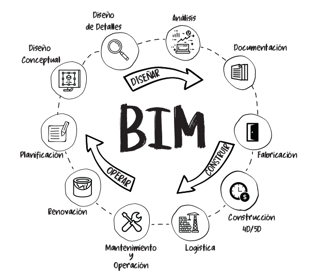
Do you know what it involves? the BIM methodology? Currently, it has meant a a true revolution in the construction industry since it makes the construction process more efficient. How does it do that? By reducing costs and time, At the same time, all project professionals are carrying out a collaborative effort.
What is a BIM Manager, and how do you become one?
The BIM Manager is the professional responsible for overseeing and managing the construction process through the methodology BIM in the construction industry. Therefore, its main objective is to implement the BIM system, while also being responsible for coordinate the work team so that it complies with quality standards From start to finish.
The BIM Manager must tackle some of the following tasks: implementing BIM; creating standards, processes, and workflows; and, finally, achieving the company’s ultimate goals in terms of cost, quality, and schedule.
Would you like to advance your career and become a BIM Manager? First of all, you need to expand your knowledge and learn everything there is to know about the BIM methodology. But the truth is that you'll also need practice and hard work to land a job like this. In fact, depending on your level of experience, you may have a junior position; junior/senior; and, finally, senior.
In addition, as a professional, you must comply with the following requirements to access job openings:
- Degree in Architecture or Engineering.
- Master's Degree in BIM (it does not necessarily have to be in BIM Management)
- Certified in REVIT.
- 3–5 years of work experience.
- Experience in managing work teams.
- Minimum English proficiency level: B2.
Job Market for BIM Professionals
In 2018, according to a study conducted by BIMforum, the number of BIM professionals had increased by 50% Compared to the previous period, and based on a sample of construction companies surveyed, the demand for BIM professionals It has also grown by 50%. Among these, in certain specific cases, Demand had grown by 300%. Among these figures, the most in-demand profiles remain architects and engineers, but it does not rule out other types of profiles.
It's very common to think that in countries outside Europe or North America, don't make too much of it The Value of BIM in a Professional Context, but, in reality, it is becoming increasingly tangible on a global scale. Almost all Latin America is already in The Journey Toward Full BIM Implementation, following the example of European countries such as Spain and the United Kingdom, those who have set the legislative standards for the standardization and unification of BIM implementation in bids for public works.

The BIM Market in Latin America
In Latin America, countries such as Argentina, Chile, Colombia, and Mexico are the leading sources of migration to the BIM methodology. Therefore, these are the countries with the highest demand for specialized professionals, or at least with some knowledge of, in BIM. In these countries, although It is not required, it is already becoming a requirement for Special Bids, and the private sector—though not in its entirety—is already implementing the BIM methodology to tackle the most important projects.
Although in Latin America The growth of BIM is proceeding at a much slower pace than expected, during the 2020, in leading countries, the market is expected to grow by 11%, according to BIMforum. This means that sooner rather than later, the reality of the construction sector in Central and South America, it will be BIM; and it will be the professionals trained and prepared in this methodology who will have the advantages and the best deals in the industry.

Criteria for Choosing a BIM Course
Now that the importance of BIM training for professional development within the construction industry, and now that we have decided to receive training on how to apply this methodology, it is essential understand the basic criteria to choose the most appropriate training and to understand how it can affect our professional future.
The first thing is to understand that BIM It is neither software nor an end in itself; the BIM is a work methodology, which is a far cry from the traditional methodology, based on the Computer-Aided Design (CAD), this does not mean that CAD will disappear; in fact, it is part of BIM, but the approach is radically different. Even so, It is recommended that BIM training be closely complemented by a practical component, and that means learning about the main software and tools used in the BIM, such as, for example, Revit, ArchiCAD, Softplan, among others.
On the other hand, it is important to be very aware of the needs and goals we want to achieve, which is why it is essential to know the academic program that offers training that you want to receive. In other words, if this is your first contact with the world BIM, choosing an introductory-level course that isn't too specialized can be the right decision, in order to build a general understanding. Thus, if the decision is made to move forward to advanced training, not only can you get the most out of it, but you also have the opportunity to specialize in a specific area.
This is a very comprehensive methodology that, if applied correctly, can cover all stages of a construction project, From planning to implementation; making it very difficult to be an expert in all of them The Basics of BIM. So, a good way to add significant value to a professional profile in the BIM field is look for advanced training focused on a specific aspect of the methodology.
Master's Programs in BIM for Architects and Engineers
These master's programs are the most sought-after by professionals in the civil engineering, aimed specifically at engineers and architects interested in acquiring practical and theoretical knowledge on the application of this methodology and the most important tools on the market.
Master's Programs in BIM and New Technologies
These master's programs focus on how they are transforming new technologies the work of professionals in the construction industry, and how to make the most of them in real-world applications. These are highly recommended for professionals interested in staying at the forefront of developments in their field.
Master's Programs in BIM Project Management
These courses are designed for professionals with a clear commitment to project management continuing the most innovative methods in this field. One of the most highly recommended ways to qualify for a greater number of job openings is a BIM course, where, as we've already explained, you'll learn everything there is to know about the BIM methodology.