The regions located around the equator, at 0° latitude, receive more direct sunlight than areas elsewhere on Earth. Warm air is less dense than cold air, so it tends to rise to a height of approximately 10 km above the surface, at which point it spreads northward and southward toward the colder regions. In short, this means that wind is generated by the uneven heating of the Earth, giving rise to phenomena known as divergence and convergence, which result in changes in pressure.
Humans have been harnessing this scientific reality for thousands of years, ever since the first ships sailed in Egypt using the power of the wind more than 4,500 years ago. And so we arrive at the present day, when the technology behind large wind farms is sufficiently advanced to make it one of the sources of the most widely used renewable energy sources worldwide.
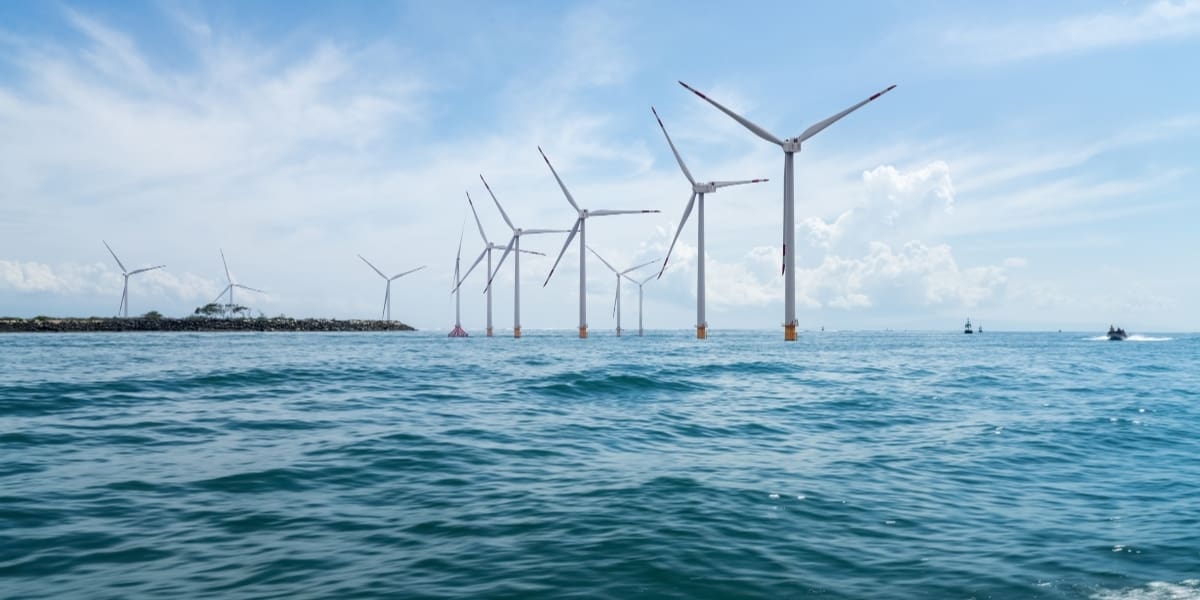
Given the current difficulty in finding areas of land with optimal wind speeds that have not yet been developed, the solution is to develop the offshore wind energy, in which, in addition, the following are obtained returns that are 20% higher than on the mainland.
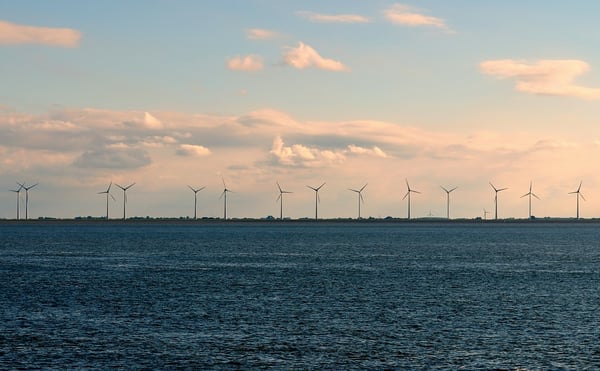
With this, we have reached a truly significant milestone in this area: The world's first floating offshore wind farm begins operations. This event takes place in deep waters, 25 kilometers off the Scottish coast.
Last October, the plant's five (impressive) wind turbines Hywind Scotland have been connected to the grid, generating enough electricity to power more than 20,000 families, thanks, in part, to the fact that it has a taller than such iconic landmarks as the Statue of Liberty or Big Ben.
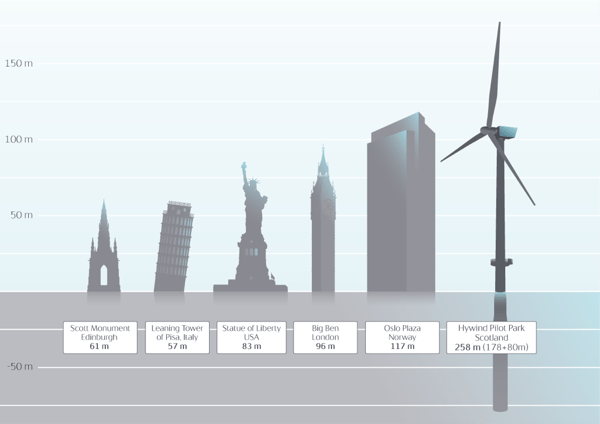
Until now, the commercial offshore wind farms currently in operation have been located in areas near the coast, in shallow waters, with piles driven into the seabed; therefore, this inauguration with floating elements It marks a historic milestone.
This opens up a new way to harness this type of renewable energy, which is expected to grow significantly in the coming years. According to WindEurope’s Director of Public Affairs, the capacity currently installed in Europe exceeds 14 gigawatts (GMW) and projects steady growth until it reaches 25 GW in 2020; a real opportunity for which we must be prepared.