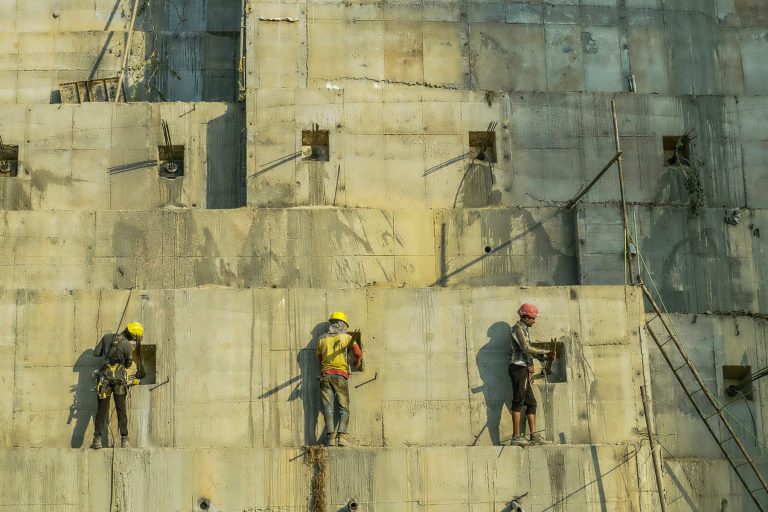
Concrete, that kind of artificial rock that meets certain mechanical, chemical, and particle-size requirements, bound together in a matrix by a binding paste. Concrete—that basic material used since ancient Rome, which is today the undisputed king of construction materials. The very material used to build the world’s greatest dreams and which seems to be an inexhaustible source of infrastructure is now undergoing a revolutionary advancement.
Javier Olmedo (Director of the School of Civil Engineering in Madrid) said that All it took was a word from the concrete to make it absolutely perfect. It may not speak, but the very fact that it can repair itself certainly brings us closer to its perfection.
Although its composition is constant (sand, gravel, cement, and water), There is no such thing as a universal concrete, since its percentage composition varies depending on the desired final properties. In any case, it will offer excellent resistance to compression; however, unfortunately, it will not provide significant resistance to tensile forces, which will be efficiently absorbed by the reinforcing bars.
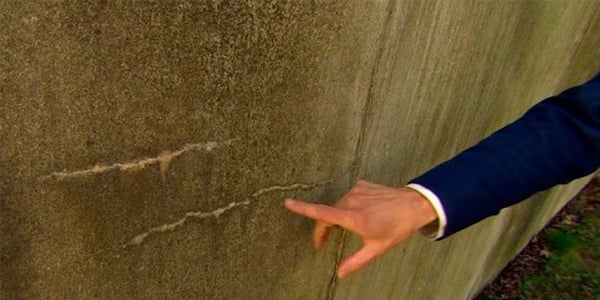
Currently, one of the aspects that most complicates the design of a structure is the cracking limit state, which is, moreover, practically unavoidable: you’re already familiar with that simple rule that allows us to approximately determine 1 crack every 4 meters linear concrete. The problem lies in the possibility that any external drop of water could penetrate the concrete, where it would undoubtedly corrode the steel that works with it to absorb the forces.
In light of this situation, a group of Dutch researchers at Delft University of Technology has developed a «bio-concrete»with the ability to repair itself, which could address the flaw in that material.".
How?
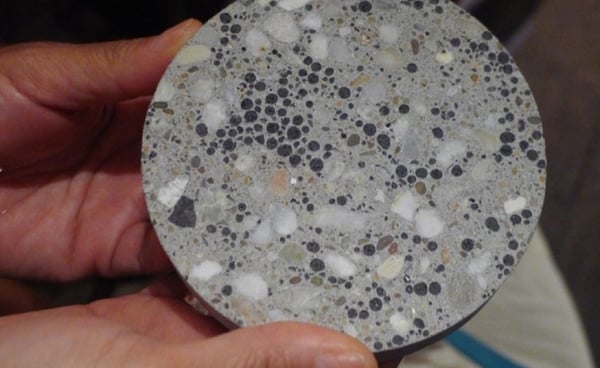
The solution is to add biodegradable calcium lactate capsules in the concrete manufacturing process. These capsules only open upon contact with water, so the microorganisms will remain inside until a harmful particle of H2Or if it gets in through infiltration, at which point those bacteria will be activated. Isn't that wonderful?
As it grows, They will be able to seal the crack in the concrete and feed on the seepage water, causing the concrete to become coated with a thin bacterial film. It should be noted that one of the main components of cement is calcium carbonate (CaCO3), so the compatibility of these capsules is assured. In this context, one might wonder whether these bacteria can withstand a pH as basic as that found inside concrete, but it appears that the «Bacillus subtilis»They don't report any problems.".
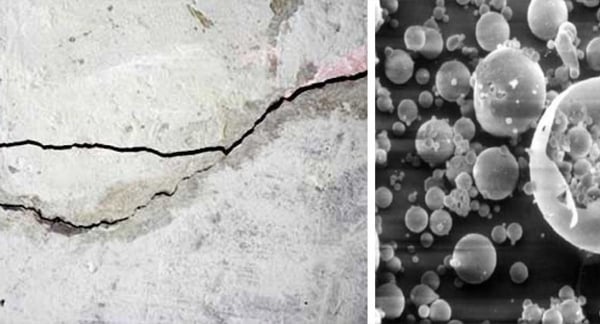
The thin layer of limestone that forms does not increase the material's strength, but is intended to extend a structure's service life and reduce maintenance costs; therefore, any progress made in this area must be closely monitored. future.