Originally published on February 17, 2015; updated on October 2, 2025.
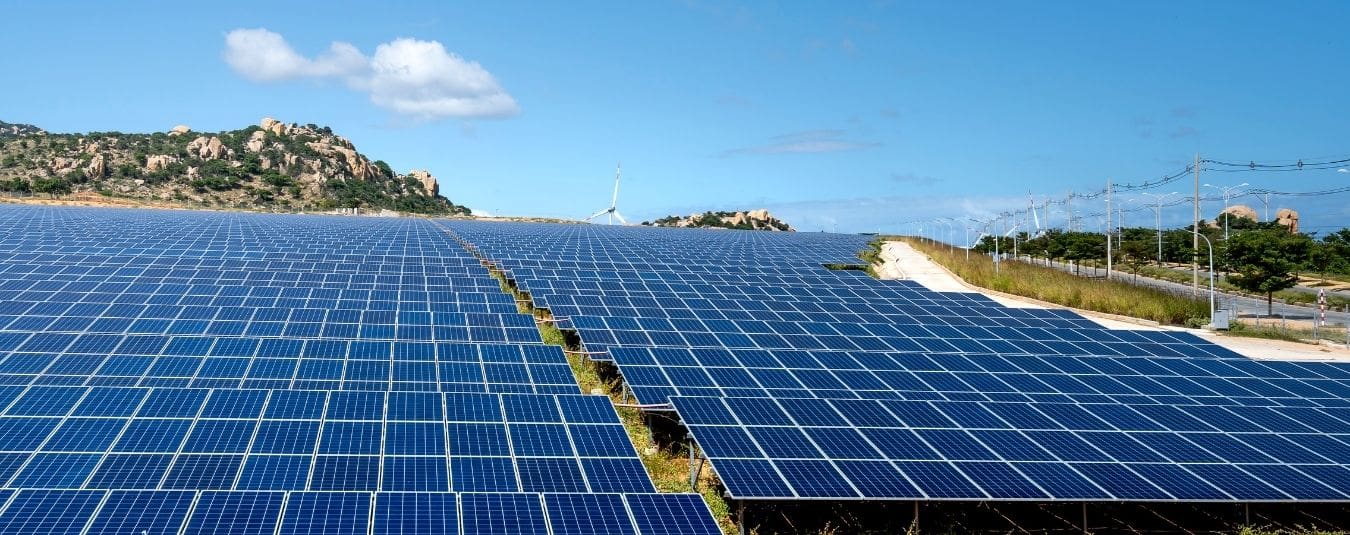
Horus Energy is a photovoltaic plant located in the municipality of Chiquimulilla, Santa Rosa Department, Guatemala. It was inaugurated in 2015 and has since established itself as the solar power plant the largest in Central America and the Caribbean. Its commissioning marked an important step in the diversification of Guatemala’s energy mix, helping to reduce the country’s dependence on fossil fuels.
What is a photovoltaic plant?
One solar power plant It is a facility designed to convert solar radiation into electricity by means of the photovoltaic effect. This process is based on semiconductor materials, primarily silicon, which generate an electric current when struck by photons.
The process takes place in several stages:
- Solar Energy Harvesting: The panels convert radiation into direct current.
- Energy Conversion: Inverters convert this alternating current so that it is suitable for consumption and distribution through the grid.
- Optimization with Solar Trackers: Horus Energy uses single-axis trackers, which adjust the orientation of the panels to follow the sun's movement from east to west, thereby increasing efficiency compared to static systems.
- Transmission to the grid: The voltage of the electricity is stepped up at the plant's substation and fed into the national power grid.
Environmental Impact of a Photovoltaic Plant Like Horus Energy
Key Benefits
The most obvious advantage is the reduction of greenhouse gas emissions. By generating more than 115 GWh per year, Horus avoids the use of fossil fuels and, as a result, the emission of thousands of metric tons of CO₂. This effort directly contributes to international commitments to mitigate climate change.
Another benefit is the diversification of Guatemala's energy mix, which has historically relied on hydroelectric and fossil fuel resources. Incorporating solar energy strengthens the country's energy security and reduces its exposure to volatility in international oil prices.
The construction phase It also had a positive impact: more than 500 direct jobs and a boost to the local economy. During operations, the plant does not produce significant noise, does not release pollutants into the air or water, and makes use of a renewable resource that is abundant in the region.
Environmental Challenges
However, there are challenges. The first is the extensive land use. The plant covers 175 hectares, an area that could have been used for other purposes. In this case, land previously used for livestock farming was chosen, which reduced the impact on natural ecosystems; however, this decision does not completely put an end to the debate over the territorial impact of large-scale projects.
Another challenge is the management of technological waste. Photovoltaic modules contain glass, aluminum, and, in some cases, metals that require appropriate recycling processes at the end of their useful life. This necessitates planning a circular economy framework from the outset.
Finally, the following should be considered: effects on the landscape and local microclimate. Solar panel fields alter the reflectance of the land, and although their effects are less significant than those of thermal power plants, they are among the impacts that must be managed through environmental studies and offset plans.
Conclusion
Horus Energy is not just an engineering project; it is a strategic commitment to energy sustainability in Guatemala and throughout Central America. With an installed capacity of more than 90 MW, the use of solar tracking technologies, and an annual output exceeding 115 GWh, the plant demonstrates that the region can lead large-scale renewable energy initiatives.
The path toward a cleaner energy mix involves addressing challenges such as land management and the disposal of technological waste, but Horus Energy’s overall assessment confirms that the benefits far outweigh the impacts.
This solar power plant is now a model for future renewable energy projects in Latin America, and a reminder that the energy transition is not a distant prospect, but a reality that is already underway.