Selecting just five hydraulic structures seems like a daunting task, as there are many fascinating examples all over the world. The following is a review of those that possess certain characteristics that make them particularly unique.
Delta Plan: Engineering Against the Sea
The Delta Plan, or Delta Works, consists of a series of construction projects carried out after the floods that occurred in Netherlands the year 1953. The Delta Plan has been one of the largest water management projects in the world.
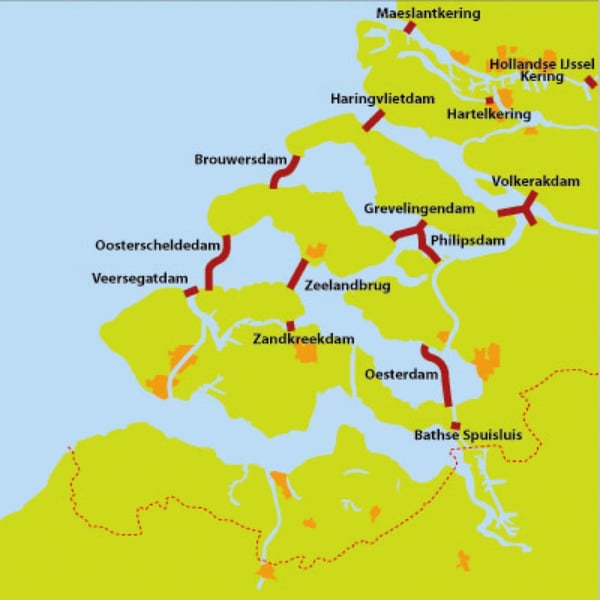
In addition to protecting this country, the mega-construction has contributed in a positive impact on agriculture, facilitating the freshwater supply. In addition, the dams built improved also the mobility, connecting different parts of the region.
One of the dams more impressive What was built was Oosterschelde (cover photo), which is nearly 8 kilometers It connects the islands of Schouwen-Duiveland and Noord-Beveland.
Syncrude Tailings Slurry Reservoir
It is the world's largest reservoir by volume, which reaches 540 million cubic meters.
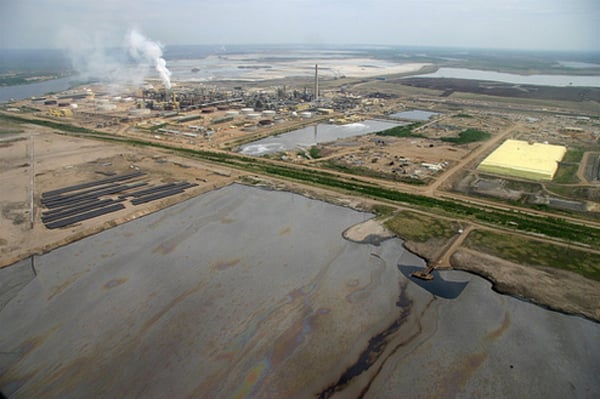
It is located near Fort McMurray, Canada. Construction began in the year 1973 with the aim of store the sludge resulting from oil extraction in the area. Since these activities have continued ever since, the reservoir has gradually expanded to its current size.
Saemangeum Seawall, the longest in the world
It is located in the heart of the Yellow Sea (South Korea). Thanks to its 33.9 kilometers long has become the longest on the entire planet.
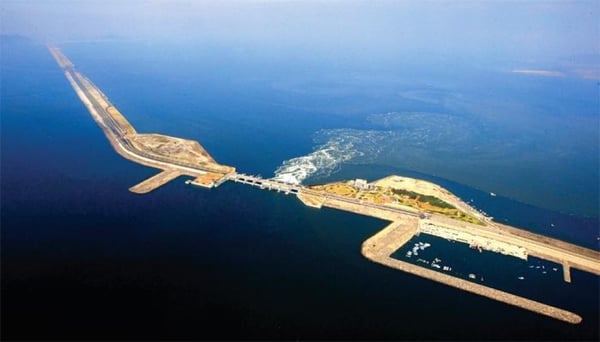
The main reason for its construction was to add 400 square kilometers more land area to the Korean Peninsula, allowing this space to be used as a multi-purpose city: agricultural, tourism, industrial, residential, etc.
Construction did not begin until the year 1991 and it took nearly two decades to complete the megaproject, which was finished in the year 2010.
Each year, 2.3 million workers were employed on the construction project, 123 million cubic meters of earth were used, and approximately 20,000 million dollars. Embankments 36 meters high and with an average width of about 300 m were constructed, reaching 535 m in some cases.
Nicaragua's New Interoceanic Canal
This megaproject will allow large ships to pass through between the Caribbean and the Pacific, and is being built by the Chinese company HKND Group with an investment estimated by the Nicaraguan government at 40 billion dollars.
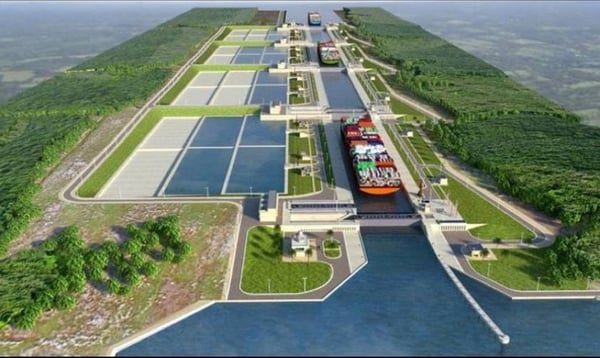
Construction began on December 22, 2014 and it could be partially built for 2019, the year in which it would have the capacity to handle 416 million metric tons, representing 3.9% of global maritime cargo.
The Nicaragua Interoceanic Canal project aims to be a alternative to the Panama Canal, as it would allow larger ships to pass through and would feature a waterway wider than the expanded Panama Canal. It will also include a rail line, oil pipelines, two deep-water ports, free trade zones, and two airports, both on the Caribbean and Pacific coasts.
The Great Eye of IJssel
The IJssel Eye is a huge circular hole built on an artificial island located in the center of Lake Ketelmeer, into which the IJssel River flows, in Netherlands, and its function is to act as sedimentation tank highly contaminated. Construction began in the year 1996 and ended three years later, in 1999.
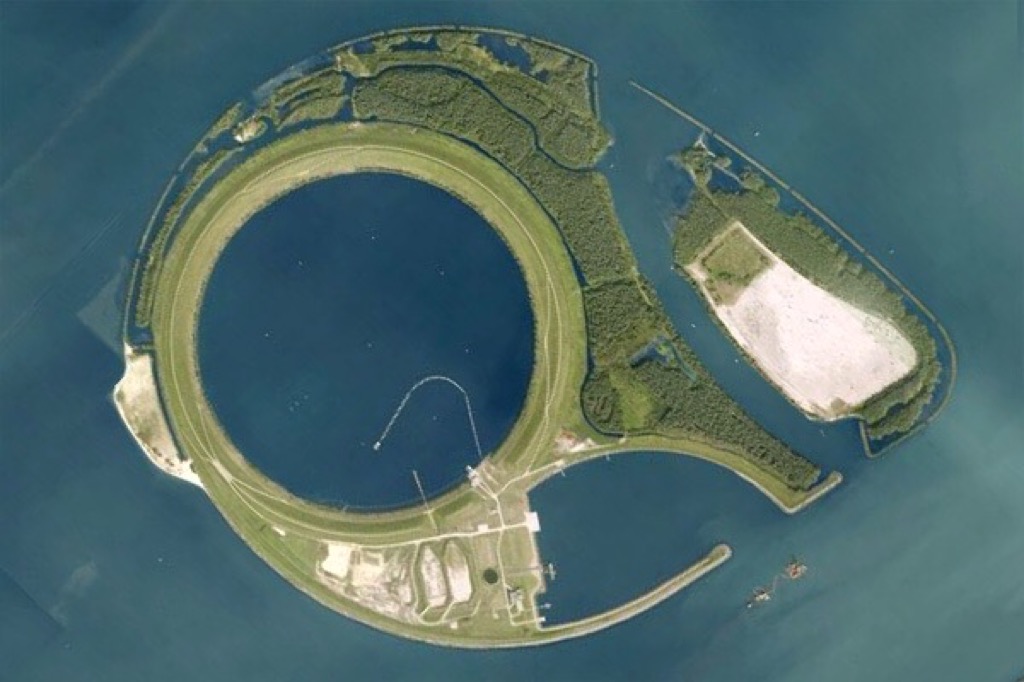
Between the 1950s and the 1990s, Lake Ketelmeer was heavily polluted as a result of industrial waste from various factories in the area, making this lake one of the places most polluted of the hydrography of Europe. So the government of this country, fearing that this might cause contamination of the groundwater or Lake IJsselmeer, decided to build this structure.
It can store more than 20 million cubic meters sediment, with the well having a diameter of one kilometer and a depth of 45 meters. It also features a 10-meter embankment surrounding the structure to prevent leaks.