
These are the 7 Types of Architects the most common ones in the labor market and some more recent alternatives.
Types of Architects
Today, there are few professional careers that encompass such a wide variety of aspects as architecture does, where Art, history, construction techniques, technology, political science, and the social sciences are all relevant. This undoubtedly makes it a particularly rewarding career to pursue, but at the same time, it makes it long and complicated. So it’s very common for various Types of Architects, depending on which aspect of architecture they excel in, they may end up working in a wide variety of fields.

Image of the Parthenon in Greece, representing the architect's classic work. NatGeo.
If we think about it, the profession of architecture has been evolving ever since humans transitioned from a nomadic to a sedentary lifestyle, ever since we’ve had the need to build spaces that are durable, comfortable, and safe. But as time went on, the role of the architect became increasingly specialized, evolving from that of a craftsman skilled in construction to one that closely resembled that of engineers during the Industrial Revolution, when the scope of each professional role began to be defined in greater detail.
Currently, Construction has reached a level of complexity never seen before (at the regulatory and technological levels), since the way buildings were designed and constructed just 50 years ago bears no resemblance to how they are built today. What has forced professionals in the sector to refer patients to different areas of specialization within the sector itself. In the case of architects, who have such a wide range of tools at their disposal, they have managed to greatly expand their field of work—driven in part by the periodic economic crises that affect this sector—which has led to the proliferation of a wide variety of specialization degrees or master's degrees to open more doors for architecture professionals.
Types of Architects by Professional Specialization
In this post, we want to help you get an idea of the different career paths you can pursue as an architect, in case you want to explore other options, both within and outside the field itself. Here are the 7 most popular types of architects:
1. Construction Architects
One of the most common jobs for recent architecture graduates is building design and the management of construction projects and renovations including the design and construction of single-family homes, apartment buildings, commercial buildings, and public buildings, as well as the restoration of historic properties. These architects may also work on design teams and collaborate with other professionals, such as engineers and contractors, to ensure that projects are completed efficiently and effectively.
2. Planners and Urban Planners
Another popular career path for architects is urban and regional planning. Urban planners can work in large-scale planning projects, such as the design of new residential developments and sustainable cities. They can also participate in urban renewal projects, helping to revitalize underutilized areas and give them a new lease on life by promoting citizen participation.
3. Academic and researcher
Architects who are engaged in teaching and research They teach and study topics related to architecture and design in an academic setting, they can teach at a university or institution of higher education, offering courses on topics such as architectural design, architectural theory, and the history of architecture, among others.
In addition to teaching, architects who are involved in teaching and research They can conduct research on topics related to architecture, design, and even art criticism . This may include research on sustainability, urban design, architectural heritage preservation, construction technology, and building materials, to name a few of the most common topics.
4. Landscape Architects
Landscape architects focus on the design and planning of outdoor spaces, such as parks, gardens, public squares, and golf courses, among others. They use design techniques and principles of landscape architecture to create attractive and functional spaces that blend harmoniously with the natural environment. They may also work on the conservation and restoration of natural areas, as well as the design of irrigation and drainage systems. In short, landscape architects are dedicated to improving people’s quality of life outside of buildings and their relationship with nature.
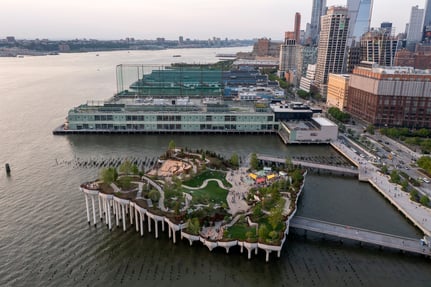 Landscape Architecture Project in New York (Little Island Park). Archdaily
5. Sustainability
Architects can also work in the field of sustainable construction and eco-friendly design. This may include designing buildings with sustainable features, such as solar panels and water recycling systems, as well as certifying the energy efficiency of buildings and collaborating on projects to conserve and restore ecosystems.
Alternatives Resulting from the Digital Revolution
There are other fields—perhaps less directly related to construction—that have emerged as a result of the digital revolution, including new forms of architectural representation and advances in computer science. These are some of the areas in which architects excel:
-
BIM Manager: They are professionals who specialize in implementing and managing projects using the BIM methodology, employing 3D modeling tools with real-time data, and participating in the development of architectural and engineering projects from start to finish.
- Infographic Designer or 3D Visualizer: They are architects who specialize in modeling, texturing, and compositing images or videos to showcase architectural projects, creating photorealistic representations of the project's elements.
- Virtual Architecture Designer: Architecture has also made its way into the digital realm, and there is a growing need for professionals who can create scenes and representations of cities and architectural environments in digital worlds, such as video games, virtual reality, and, in the near future, the Metaverse.
 Rendered infographic for a skyscraper project in Nicaragua Ronenbekerman.com
The Outlook for Architects
In the not-too-distant future, the architectural profession is likely to undergo significant changes due to the growing importance of technology in building design and construction. Architects will likely have to adapt to more advanced digital design tools and software, and they will probably specialize more and more in specific areas, such as sustainability, accessibility, innovation, and the digitization of spaces.
In addition, it is likely that the collaboration among architects, engineers, and other professionals in the construction industry become increasingly common, as this will allow us to make the most of everyone’s skills. We can say that the architectural profession will continue to be important in the future, but architects are expected to adapt to new technologies and collaborate with other professionals to offer increasingly innovative and sustainable solutions.
In summary, architects have a wide range of career opportunities available to them, from building design, urban and regional planning, and sustainable construction to 3D modeling. With the right training and experience, architecture graduates can pursue exciting and rewarding careers in a variety of fields. Structuralia offers a wide variety of master's degree programs related to architecture, for professionals looking to open new doors for themselves both within and outside the construction industry.