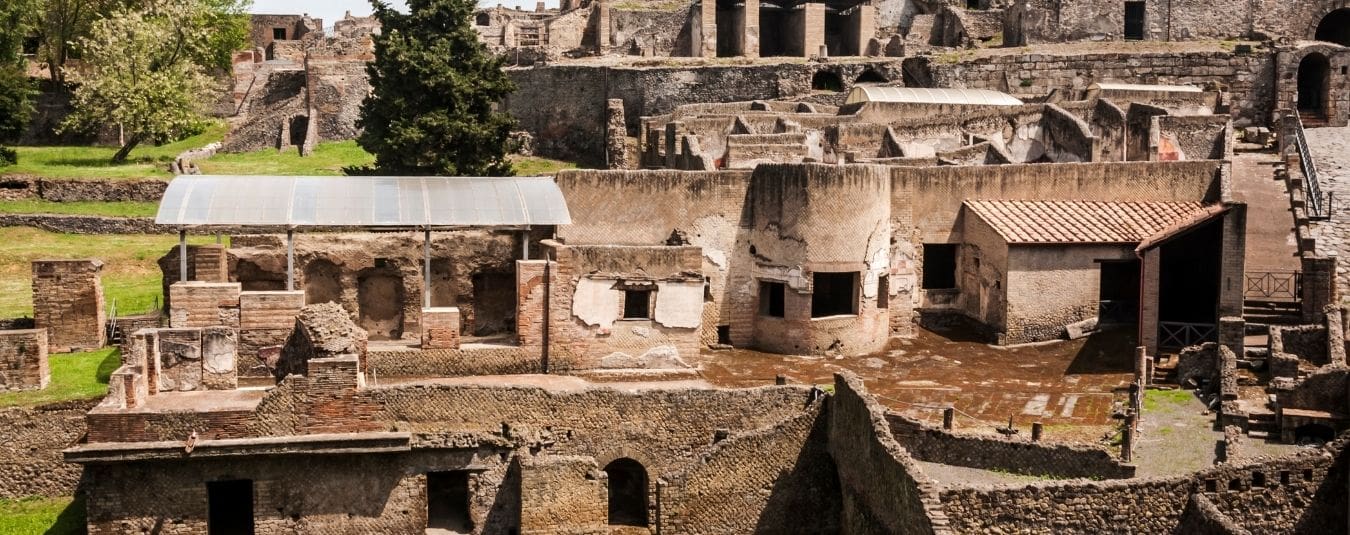
The city of Pompeii is one of the most fascinating archaeological sites in the world and offers a unique window into the past of Ancient Rome. Its tragic end in 79 A.D., following the eruption of Mount Vesuvius, froze the lives of thousands of people in time.
Currently, thanks to its discovery In 1748, thousands of people can walk through its streets, look at its homes, and get a sense of what daily life was like in a prosperous Roman city that was buried under ash and volcanic rock.
In this article, we'll tell you what life was like in Pompeii before the disaster and what the most surprising discoveries have been—ones that continue to astonish archaeologists and historians to this day.
Who built Pompeii?
The origins of Pompeii date back to the 7th century B.C., when the Oscans settled in this region of Campania, Italy. Later, the city was influenced by the Etruscans and Greeks, who contributed their knowledge of urban planning and architecture.
It was ultimately the Romans who transformed Pompeii into a true Roman city in the 1st century B.C., following the Social War. From that point on, forums, temples, thermal baths, and a water supply system worthy of advanced engineering were built. The the city of Pompeii It established itself as a major commercial and agricultural center, reflecting the empire's power and organization.
Where is Pompeii?
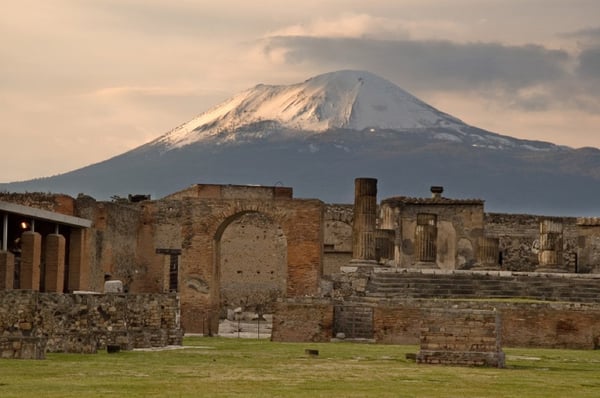
For those who are wondering Where is Pompeii?, is located in southern Italy, in the Campania region, very close to the Gulf of Naples and at the foot of Mount Vesuvius. Its strategic location allowed it to develop into a vital economic hub in Ancient Rome, although it was also its undoing.
Today, Pompeii is a UNESCO World Heritage Site and one of the most visited archaeological sites in the world. Millions of tourists stroll through its paved streets, thermal baths, and villas, marveling at how nature and history have come together to create a unique destination.
Urban Planning and Architecture in Pompeii
The The streets of this city were straight and formed a grid pattern in the style of Roman urban planning, but it was not laid out in a regular grid pattern as in other Roman cities, since it is located in a an area with a more rugged terrain. Pompeii had a thistle (a north-south street) and two decumani (an east-west street), and its streets are paved with a slight slope so that rainwater does not pool.
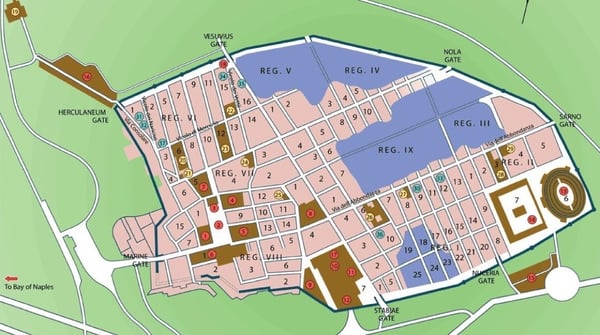
The forum, which had an open space measuring 145 meters long by 38 meters wide, was the The center was the commercial and civic center of the city, and in the case of Pompeii, we find another feature that sets it apart from other cities of its time: it is located slightly off the intersection of the cardo and the decumanus. In addition to the forum, the city had other public spaces typical of Roman cities, such as the baths and temples.
Analysis of the preserved remains revealed that there were several types of dwellings in the city of Pompeii, reflecting the varying levels of purchasing power among the city’s inhabitants. On the one hand, there were the homes of the wealthiest families—single-family dwellings known as Domus. Another type of residence—those of the middle class—were forming small residential communities or insulae, which had corridors running around a courtyard or garden, onto which their private cubicula opened. Finally, there were also various suburban villas around the city, designed for leisure or for agricultural and livestock operations.
Pompeii, like other Roman cities, was equipped with a modern water management system, water supply systems, sewer systems—including its Castellum Aquae—but only in one part of the city.
The urban layout of Pompeii was a combination of planned design and adaptation to the uneven terrain on which it was built.
Pompeii had thermal baths, theaters, and temples dedicated to Jupiter, Apollo, and Venus. These structures reflected the importance of public life and leisure in Roman culture.
The amazing Rion-Antirion Bridge in Greece , another monumental work that demonstrates how ancient engineering laid the foundation for today's major infrastructure projects.
Housing and Daily Life in Pompeii
The excavations have revealed different types of dwellings, reflecting the city's social diversity.
- Domus: large single-family residences of the elite, decorated with frescoes and mosaics.
- Insulae: apartment complexes for the middle class, organized around courtyards.
- Suburban villas: vacation homes and farmsteads located on the outskirts of town.
The discovery in Pompeii of everyday objects such as kitchen utensils, jewelry, and graffiti on the walls gives us a glimpse into what daily life was really like in a vibrant and diverse Roman city.
What was discovered in Pompeii?
One of the most fascinating aspects of Pompeii is its archaeological finds. Frescoes in perfect condition, charred bread, furniture, tools, and even plaster casts depicting the silhouettes of its inhabitants at the moment of the eruption have been discovered.
These findings are not only of historical value, but they also allow researchers to reconstruct in detail the economy, customs, and even the diet of the time. The discovery at Pompeii is considered an unparalleled time capsule.
It is estimated that the city of Pompeii had between 20,000 and 25,000 inhabitants at the time of the eruption. Today, the ruins allow visitors to explore the forum, the temples, and some homes decorated with original frescoes.
Conclusion: Pompeii's Legacy in History
The city of Pompeii is much more than just an archaeological site: it is a living testament to Roman civilization. Its streets, forums, and homes offer a unique glimpse into daily life in antiquity.
Thanks to the discoveries made in Pompeii, we now have a better understanding of how the Romans lived, worked, and interacted with one another. And what's most surprising is that every excavation continues to reveal new details, keeping interest in this unique site alive.
Just as Pompeii connects us to the grandeur of ancient Rome, modern architecture also draws inspiration from classical designs. A good example is the The Flatiron Building, a Greek column turned into a skyscraper, which demonstrates how the architectural principles of antiquity remain relevant in iconic works of today.