The unique Rolling Bridge, a pedestrian bridge, is located in the London borough of City of Westminster, in the United Kingdom. The Rolling Bridge rolls up onto itself, forming an octagon, so as not to obstruct the passage of boats traveling along the Paddington Canal.
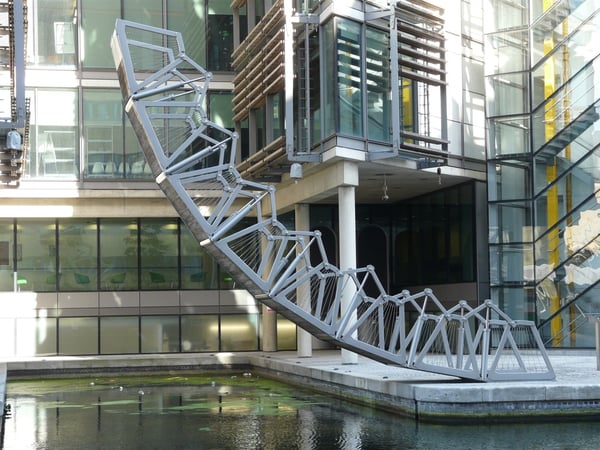
This bridge consists of eight identical articulated segments shaped like triangles. The Rolling Bridge opens and closes thanks to a mechanism that hydraulic cylinders.
When the bridge is open, it forms a lattice; when it closes, the upper part of the lattice begins to bend, lifting at one end and folding in on itself. When it is fully retracted, the Rolling Bridge takes the shape of octagon.
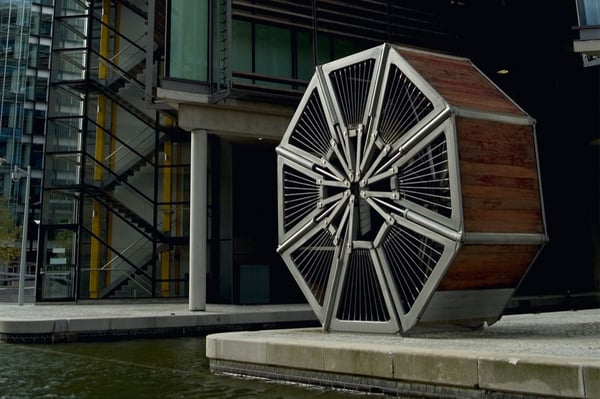
When the Rolling Bridge is open, it has a about 12 meters long. The materials most commonly used to build the Rolling Bridge were steel and wood.
Most of the time, this pedestrian bridge is unrolled, allowing pedestrians to cross. However, on Fridays at noon, the bridge is rolled up, attracting large numbers of tourists. The process takes less than 10 minutes. These are the days when the maintenance work.
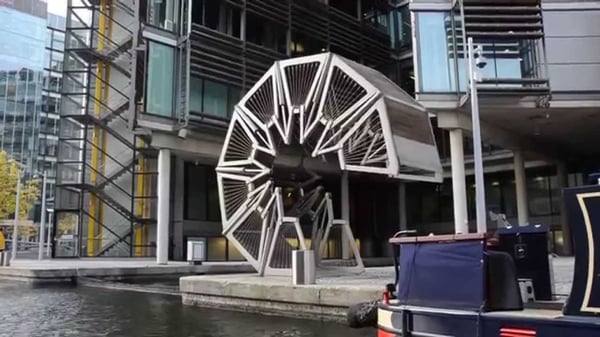
In addition to Fridays at noon, the Rolling Bridge is closed when necessary to avoid disrupting navigation on this channel. This maneuver is carried out by activating the hydraulic cylinders.
Thomas Heatherwick, a British designer and architect from the Heatherwick Studio, was involved in the bridge's innovative design. It was installed in the Paddington Basin in London in 2004 and, a year later, received the Structural Steel Design Award. This bridge was also honored with the Emerging Architecture Award.
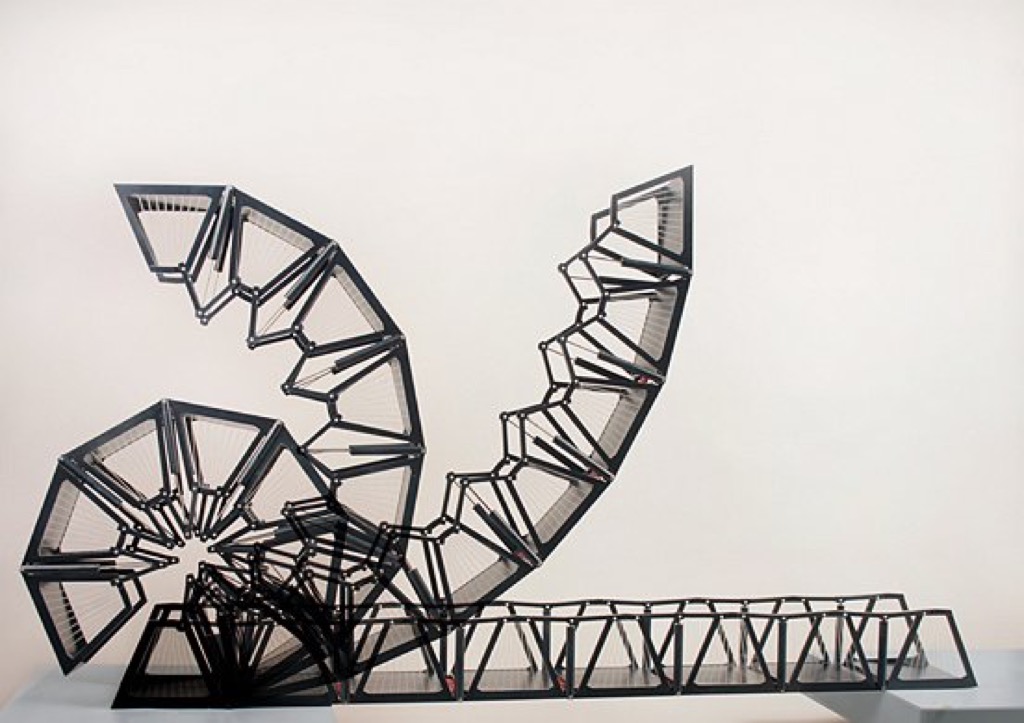
The Rolling Bridge is part of the Grand Union Canal office.