Since the debut of the first high-speed rail line in 1964—Japan's Shinkansen—this type of infrastructure has evolved into the systems we have today, which allow trains to travel at speeds exceeding 500 km/h, far faster than those reached by traditional railways.
This improvement in train operating speeds has significantly reduced travel times, enabling trains to compete with air travel on medium-distance routes.
Below, we will conduct a general comparison between high-speed rail and traditional rail lines in terms of their infrastructure, superstructure, signaling, and telecommunications:
Infrastructure
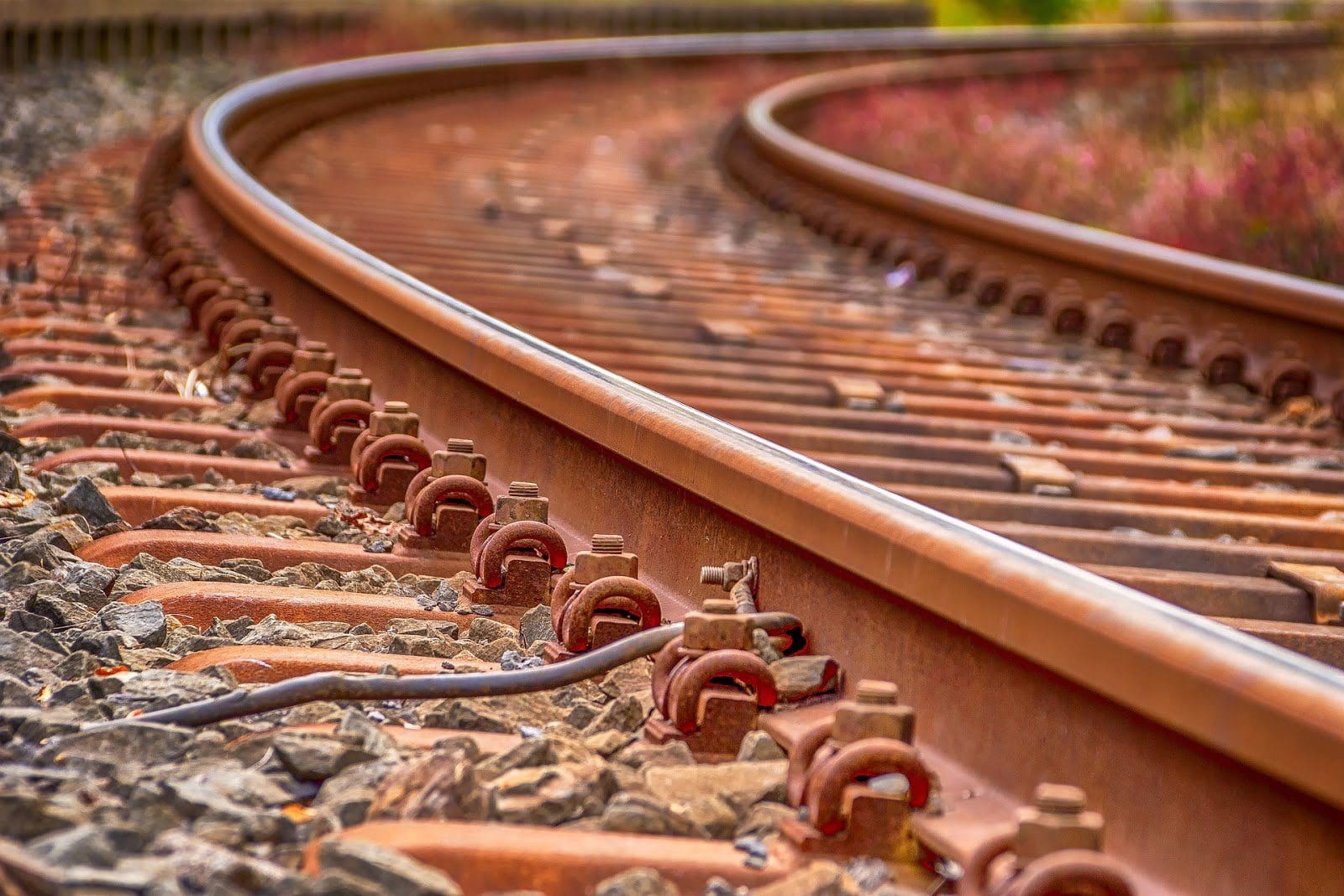
It is the material placed between the ties and the subgrade, and its function is to ensure the proper performance of the track in terms of stiffness, alignment, leveling, and drainage. In general, they consist of an upper ballast bed and a lower sub-ballast layer, although other types of layers may also be present.
The main difference between traditional and high-speed rail lines is the absence of intermediate layers in conventional tracks, which go directly from the ballast layer to the subgrade. In high-speed rail lines, however, there are layers of sub-ballast, gravel, and sand, which improve the track's response to pressure and degradation.
Its purpose is to provide proper support for the ballast, ties, and tracks. The differences between the two types of railroad lines are limited to the higher quality of the subgrades on high-speed rail lines due to the greater loads they bear.
- Steps Up, Down, and at the Same Level
For speeds above 140 kilometers per hour, there are no significant differences in the clearance profiles and cross-sections of overpasses and underpasses. The only requirement is to install protective systems to prevent unauthorized access on high-speed lines.
The most notable difference in this section concerns railroad crossings, as they are commonly used on traditional lines but are not permitted on high-speed lines.
Due to the high dynamic loads encountered on high-speed lines, this type of infrastructure differs in its construction: high-speed lines use prestressed concrete, whereas conventional lines may use masonry, steel, or reinforced or prestressed concrete.
Finally, with regard to tunnels, there are significant differences in cross-sectional area between the two types of rail lines due to the physical phenomena that occur when a train passes through (such as the piston effect); on average, the cross-sectional area of high-speed rail lines is twice as large.
Superstructure
It does not vary based on operating speed but rather on the characteristics of the train wheel profiles. In general, 1:20 or 1:40 superelevation is used on high-speed lines, while on many conventional tracks, the track superelevation is completely vertical.
There are numerous variables involved in the plan and elevation design of a railroad line: minimum radius, maximum superelevation, uncompensated acceleration, transition length, maximum gradient, etc. These values are determined primarily by the operating speed, which is why there will be significant differences in track geometry between the two types of railroad lines.
In fact, in the case of high-speed rail lines, the constraints on the route are much greater in terms of the radius of curvature in curves or the length of transition. This makes it more difficult to adapt the alignment of these types of lines to the terrain and, as a result, requires many more tunnels, large viaducts, excavations, earthworks, etc. It is therefore comparable to the differences between the alignment of a highway and that of a secondary road.
The differences between rails are determined by their weight per linear meter; the higher the operating speed, the greater the required weight. It is also important to note the rail joint systems, which differ between conventional and high-speed lines.
Track switches allow for the branching and crossing of different tracks on railroads. They vary depending on the speed of trains traveling on both the main track and the diverging track, which is why they differ between the two types of lines being compared. For example, if speeds exceed 220 km/h, the installation of turnouts with movable-point hearts is mandatory.
The main difference when it comes to sleepers and fasteners stems from the need for greater flexural stiffness, heavier sleepers with a larger bearing surface, and a more elastic fastening system.
Signage and Telecommunications
Its goal is to ensure the safe operation of trains regardless of the line's operating conditions. However, the requirements are much more stringent for high-speed lines.
In this regard, the most commonly used safety systems on conventional lines are computerized traffic control, telephone interlocking, and automatic interlocking via ASFA.
In contrast, European high-speed rail lines use the European Rail Traffic Management System (ERTMS), which allows speeds of up to 500 km/h and ensures very high safety standards.
If you found the topic covered in this article interesting and would like to specialize in the railway sector, Structuralia’s Master’s Program in the Design, Construction, and Maintenance of Railway Infrastructure and Facilities will provide you with the knowledge you need to advance your professional career.