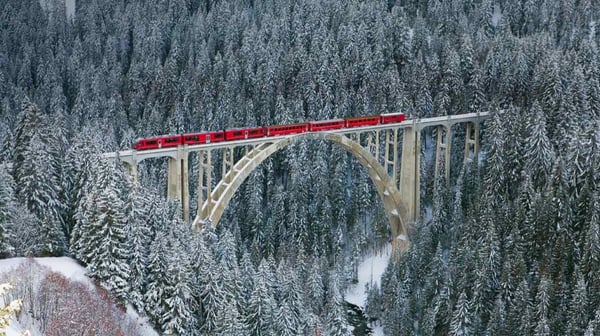
In 2008, UNESCO decided to add the Rhaetian Railway to its World Heritage List. If you'd like to learn a little more about it, we'll tell you all about it here!
Specifically, we are talking about the landscape integration of the Albula section and that of the Bernina, a line that connects Italy with Switzerland through a long labyrinth of valleys and mountain passes.
The railroad was built in the late 20th century and had a major social impact, as it brought an end to the isolation of several Alpine towns. The 61-kilometer route runs through 13 tunnels and 52 viaducts, thus becoming one of the sections highest in Europe and on one of the rail lines with greater slope (up to 7% without the help of the rack-and-pinion track).
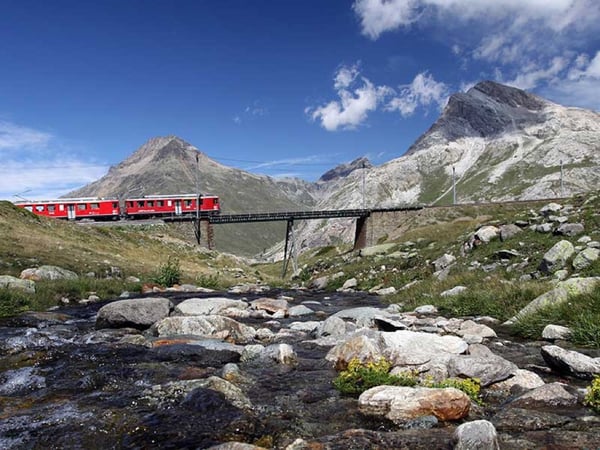
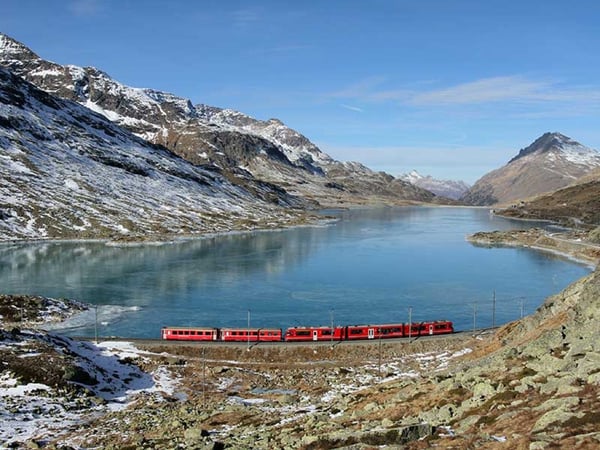
Below, we've included some beautiful images of this great feat of engineering for your enjoyment.
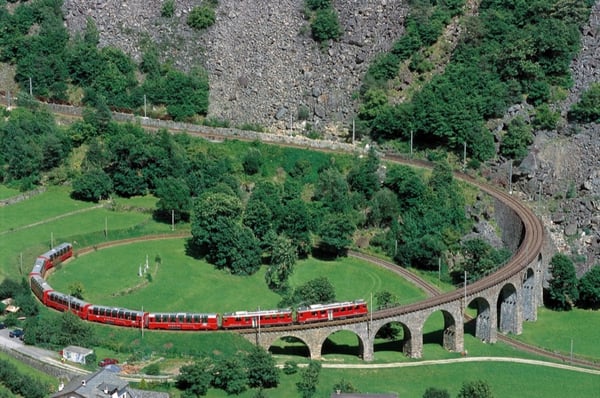
This intriguing spiral-shaped structure turned out to be an ingenious solution for bridging the steep slope over a short distance. The viaduct is 110 meters long, has a radius of curvature of 70 meters, and a longitudinal cut of the 7%. The tracks rest on 9 stone arches, each with a span of 10 meters, which raise the train to a height of 20 meters.
We're also including a video about the intriguing spiral viaduct to go along with this post.