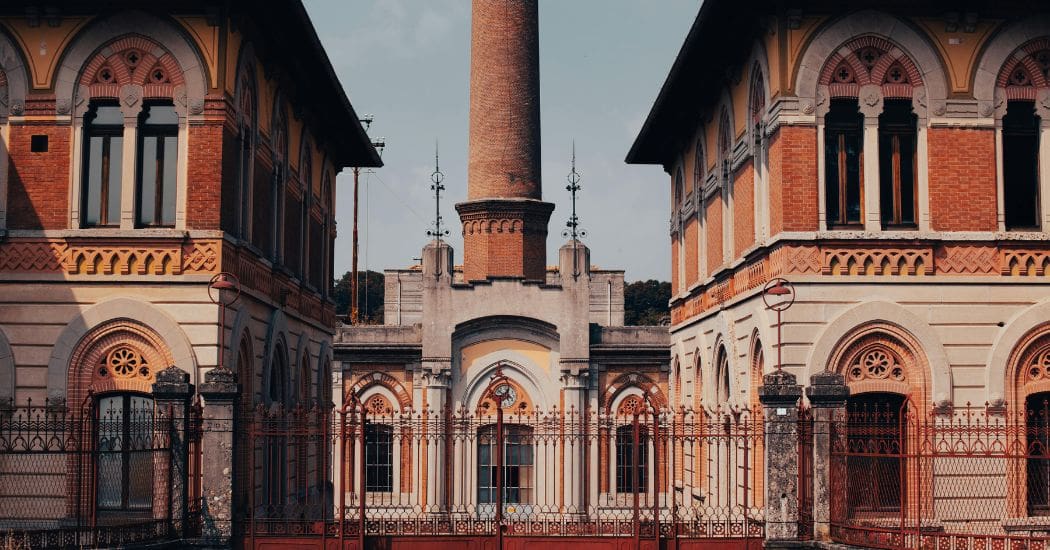
We analyze the main characteristics of the industrial architecture, its origins and examples of famous buildings that follow this style.
Characteristics of Industrial Architecture: A Style as Beautiful as It Is Historic
The industrial architecture It is an architectural style that dates back to the 19th century, following the Industrial Revolution. In the following article, we take a look at its origins, its characteristics, and some examples of buildings in this architectural style.
What is industrial architecture like?
When traveling through Spain or Europe, you'll come across some wonderful industrial buildings, which are a must-have on your tourist brochure. Many of them were built many years ago, during the era of the industrial architecture.
It's an architectural style that's very popular, attracting thousands or even millions of visitors who come to admire its beauty and history. Before I show you how to identify this style, let's take a look at its origins.
What is the fascinating origin of industrial architecture?
Industrial architecture dates back to the 19th century, specifically to the period following the Industrial Revolution. This architectural style emerged with the introduction of materials such as steel, iron, concrete, or even glass. That is why we can find them in some of the most iconic buildings from that era.
Starting in the 18th century, buildings began to be constructed using materials typical of the period. Although the Baroque and Rococo styles still dominated at first, by the middle of the century there was a shift toward the Rationalist style. A shift toward simplicity.
What are the characteristics of industrial architecture? Get an inside look
The Industrial Revolution gave rise to the the need to design and build large spaces to house machinery and provide enough space for workers to carry out their tasks in the factories. These factories were built using large metal structures with glass and reinforced concrete.
At the same time, train stations, bridges, and all kinds of buildings—such as hospitals and markets—were built during that period. It was a true paradigm shift.
We could summarize industrial architecture as 5 Qualities: functionality, efficiency, simplicity, durability, and flexibility in terms of materials.
-
It is a more practical style of architecture, designed for a specific purpose. Therefore, the architects' main concern is to create a functional space. Priority is given to the functionality to the design.
-
Given the purpose of this type of building, the goal is to optimize space and achieve maximum efficiency possible. After the Industrial Revolution, it became more necessary than ever.
-
In industrial architecture, the simplicity, minimalism. The goal is to build factories and buildings that prioritize functionality and efficiency above all else, so you won't see any superfluous or expensive embellishments—because they're not necessary at all. Let's just say that's not the point.
-
When designing in the industrial style, durable materials are used that are capable of withstanding heavy loads and extreme conditions, whether exposure to chemicals or harsh temperatures. These are hard materials and durable.
-
It is a type of architecture flexible In terms of materials, some options—such as steel, concrete, or glass—can be used. Many of these are popular and offer excellent value for the price. It is modular, and the possibilities it offers are endless.

How can you recognize a building in this style? Learn how to distinguish this type of architecture from other styles.
In buildings constructed after the Industrial Revolution, you won't see any unnecessary ornaments or decorative elements that serve no practical purpose. Let's say that, during this period It was built quickly using durable, high-quality materials, to build factories where workers could operate the machines. It was a time that changed everything, marking a turning point.
There are buildings with industrial architecture that feature geometric and asymmetrical shapes; you can recognize them the moment you see them, because they undoubtedly transport us back to the building styles of that era. Just as they began to be the first modern buildings in showing themselves.
You can also recognize them by the materials they use. Typically, during this period, a great deal of concrete and steel was used because of their properties. The goal was to design strong, sturdy spaces—and that is certainly what was achieved.
Iconic buildings that showcase industrial architecture—let yourself be amazed
When you travel, you'll come across numerous buildings that Al-Andalus architecture and the era of the Industrial Revolution. Here are some of the most relevant examples:
-
The Crystal Palace in Madrid, 1887. This beautiful Crystal Palace, designed in 1887 by architect Ricardo Velázquez Bosco, is located in Retiro Park. Although it was originally designed as a greenhouse, today it serves as one of the exhibition venues for the Reina Sofía Museum.
-
Eiffel Tower in Paris, 1889. Another of the great icons of industrial architecture is this famous tower designed by Gustave Eiffel. It weighs more than 10,000 metric tons and is 300 meters tall. Today, it is a global icon.
-
Atocha Station in Madrid, 1851. Another example in the field of civil engineering is the Atocha Railway Station in Madrid. It was designed by Alberto Palacio and expanded by architect Rafael Moneo.
What do you think of industrial architecture? Do you find it captivating, or would you prefer another architectural style?