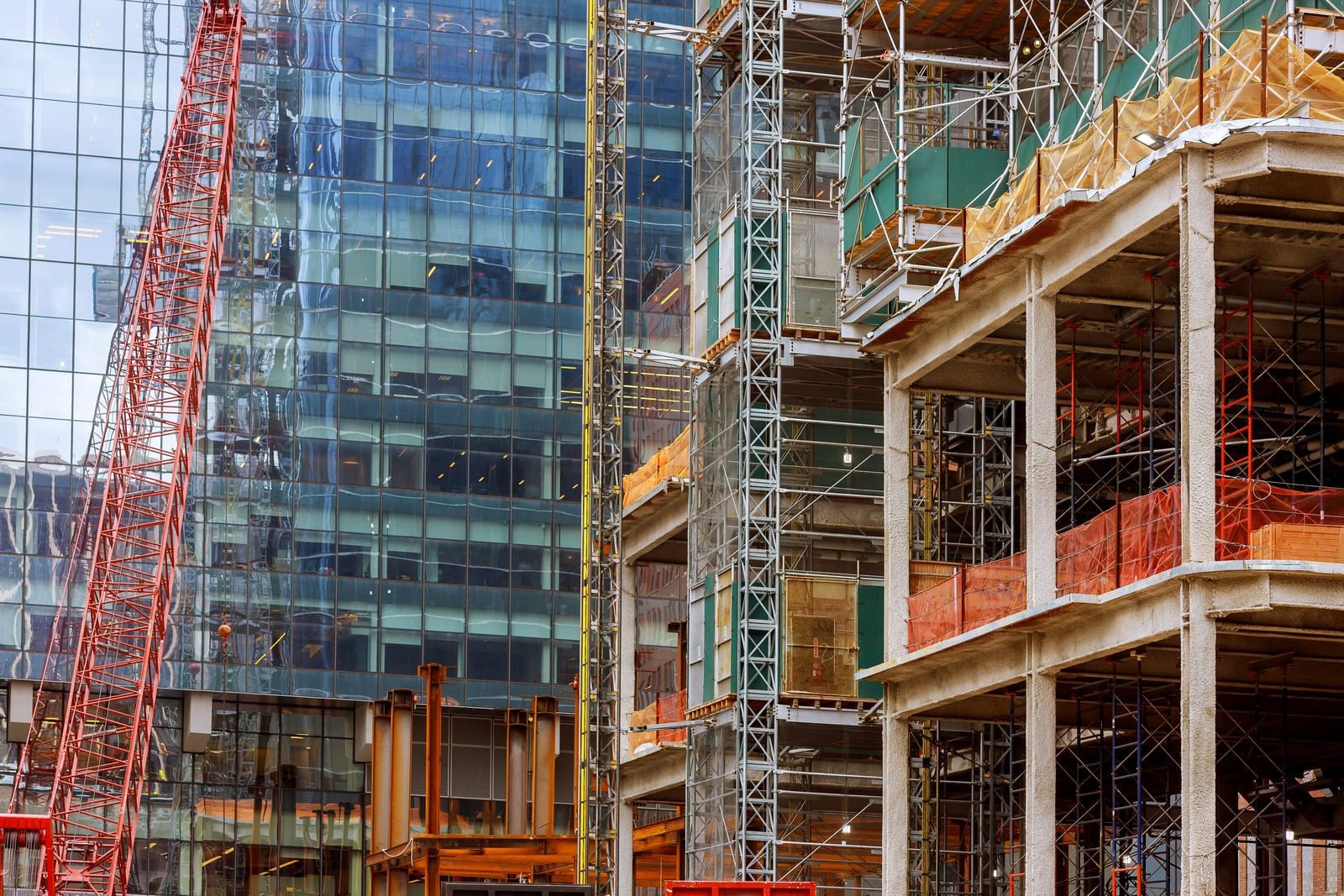
Although we view bracing as a secondary system in the construction of steel structures, its importance is quite significant. It serves to restrict the translational movement of the framework and provides greater safety for the entire structural assembly.
We use the transverse bracing, basically, as a countermeasure to prevent the buckling side and for improve the structure's performance when the structure is subjected to longitudinal forces from the wind or other internal factors, such as overhead cranes as they move from one point to another. They are also vital when the building is located in an area with high seismic activity, as they help absorb the forces transmitted to the structure.
Depending on various factors, engineers and builders prefer one type over another. In the following sections, we'll review the most notable ones.
What are the most common types of bracing?
There are two main types of horizontal bracing systems that we use in the construction of multi-story braced steel structures. Specifically: diaphragms and discrete triangular bracing. In the field of building construction, we use transverse bracing to provide greater stability to structures that rely on diagonal supports.
We can classify the bracing systems themselves into three types:
- Reinforcing Bracing
- Torque-related ones
- U-Frame Reinforcement
Wall Bracing
Wall bracing provides steel-framed structures with both lateral and longitudinal stability. The bracing systems transfer the stress from the loads across the walls from one bracing system to another, and distribute the load at any given point. Every building, regardless of size, must be able to withstand any anticipated structural load to prevent collapse.
Diagonal bracing
Diagonal bracing is a structural component of nearly every building. It provides lateral stability and prevents the collapse of walls, roofs, ceilings, and many other structural elements.
Structural Reinforcements for a Post-and-Beam Wall
Bracing for structural walls is custom-made, whether it consists of sheet metal, crosswise wood, or steel. We must distribute the bracing evenly to ensure it is effective.
Concentric bracing
Concentric means that the ends of the brace are connected to the node or joint of the frame. With concentric bracing, we can increase the structure's stiffness and reduce lateral drift. Furthermore, through the concentric configuration We may interfere with the architectural features.
Torsional reinforcement
We can distinguish a torsional brace from a lateral brace in that the torsion of the cross-section is directly restrained, as in the case of twin beams with a transverse frame or diaphragm between the members.
Portal Roll Bracing
The portal is usually a swinging frame that spans between a pair of trusses; its purpose is also to transfer the reactions from a lateral bracing truss to the end posts of the trusses, and therefore, to the foundations. This action depends on the frame's ability to resist transverse forces.
Truss Bracing
Bracing. Temporary bracing consists of lateral bracing and diagonal bracing that we install during construction for the purpose of secure the trusses in their proper positions. Permanent bracing is designed to resist the forces of gravity, wind, and other loads.
Lateral bracing
Lateral bracing is the term we use to refer to any component of a bridge that helps prevent the sides (trusses) from twisting. It also helps prevent the bridge’s upper chords from bending or deforming inward or outward.
Eccentric bracing
Eccentric bracing consists of diagonal braces located in the plane of the frame where one or both ends of the brace do not connect to the end points of other frame members. The eccentric connection to the frame means that an eccentric brace transfers lateral forces through shear to another brace or to a vertical column.
Riostra Chevron
We also call this a Chevron brace connection. The Chevron brace configuration supports two braces that are attached to a beam from opposite directions. Each Chevron brace connection consists of several sub-connections: the left brace connection to the flange (bolted or welded) and the right brace connection to the flange (bolted or welded).
In short, bracing plays an essential role in the construction of industrial steel structures. Its general purpose is to provide us with additional security against external loads in a comparable self-built structure. The primary function of bracing in steel structures is to efficiently transfer lateral forces caused by wind, earthquakes, and crane sway, among other factors, to the building’s foundation.
If you'd like to specialize in this field, you can rely on the Structuralia Master's Programs under construction, a training program that enables professionals to acquire the knowledge necessary to work in this field.
In addition, there are many other courses that can help us get started in the construction industry, such as our Master’s Degree in Construction Materials and On-Site Quality Control. With this qualification, we’ll be better prepared to handle construction site management, material selection, cost control, and the supervision of quality control processes for any project.
Another option is the master's degree in Home Automation and Technology Integration in Buildings. Safety, Efficiency, Sustainability, and Well-Being. This program is designed to equip us with the skills needed to tackle the future of the building industry and take advantage of technology applied to the construction sector.
Both in the field of bracing Like many others, it's the perfect platform for finding the best qualifications that enhance the value of our resume. Today, it is vital to have the right training and to specialize in fields that are currently thriving and have great future prospects. At the same time, there are other core master’s programs that will allow us to enter the construction industry with confidence. Don’t hesitate to request more information about the program that best suits your preferences and budget.