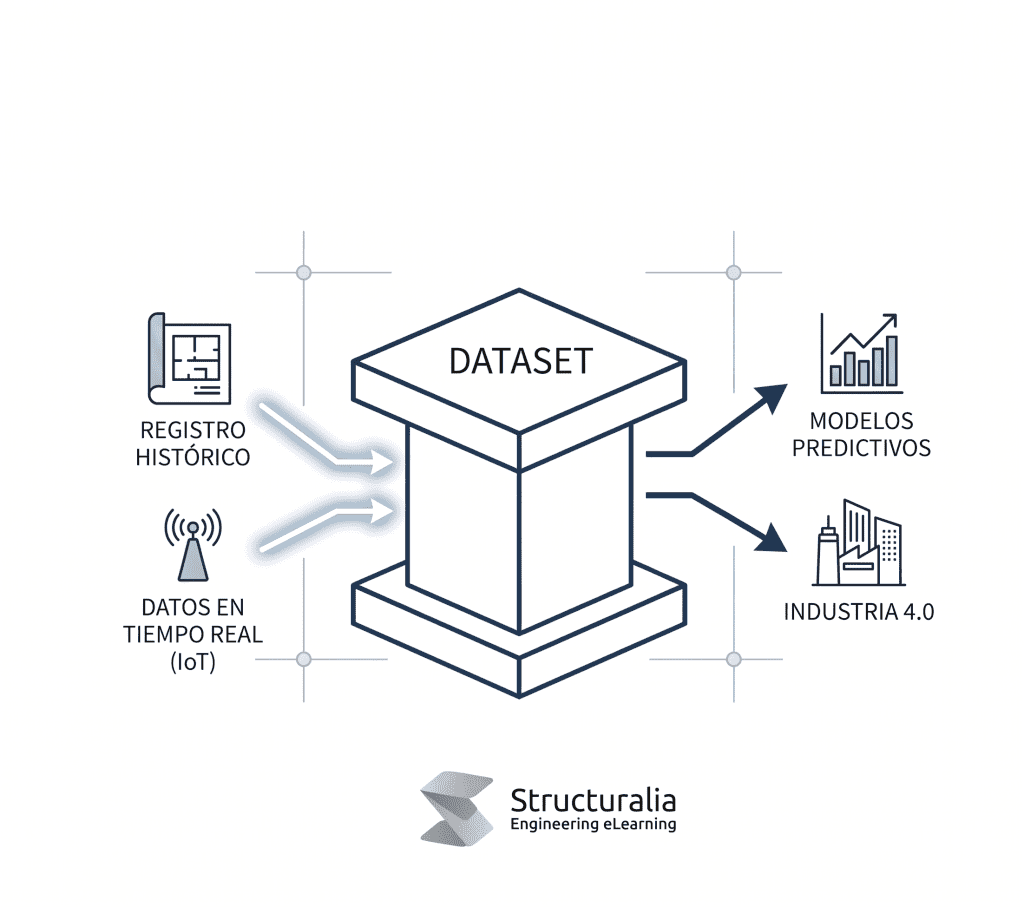
A dataset is a logical unit of persistent, structured information that serves as the basis for the analysis, experimentation, and training of algorithmic models. The dataset It serves as a historical and real-time record of the critical variables that enable an effective transition toward the digitization of infrastructure. This information is the result of a technical curation process that gives purpose to every stored bit.
What are datasets?
The datasets They are organized collections of curated information that enable data scientists to perform high-impact analyses. Unlike the big data Unlike raw data—which is typically a chaotic jumble of records—a dataset involves a predefined analytical purpose and a defined schema. It is the minimum viable infrastructure that enables the transformation of isolated facts into actionable knowledge for strategic decision-making in highly technically complex projects.
- Financial Optimization: It is establishing itself as the key asset for optimizing budgets and reducing operational risks throughout the region.
- Global Interoperability: It ensures technical compatibility in accordance with international standards, allowing a technical office in Madrid and a construction company in Mexico to share strength parameters without any discrepancies.
- Structural Safety: supports failure prediction by normalizing critical data.
Difference Between a Dataset and a DataFrame
The dataset is the physical data stored permanently on servers or in the cloud, generally in formats optimized for big data. It is the original, immutable, and secure source that guarantees the integrity of historical technical records against any processing errors or human error during the active analysis phase.
- Logical Abstraction: the dataframe It is the representation of the dataset that is actively loaded into RAM for processing.
- Dynamic Calculation: It allows engineers to perform matrix operations and filtering in real time while the source remains at rest.
- Ephemeral Nature: Unlike persistent storage, the dataframe is destroyed at the end of the session to protect the integrity of the original database.
Types of Datasets
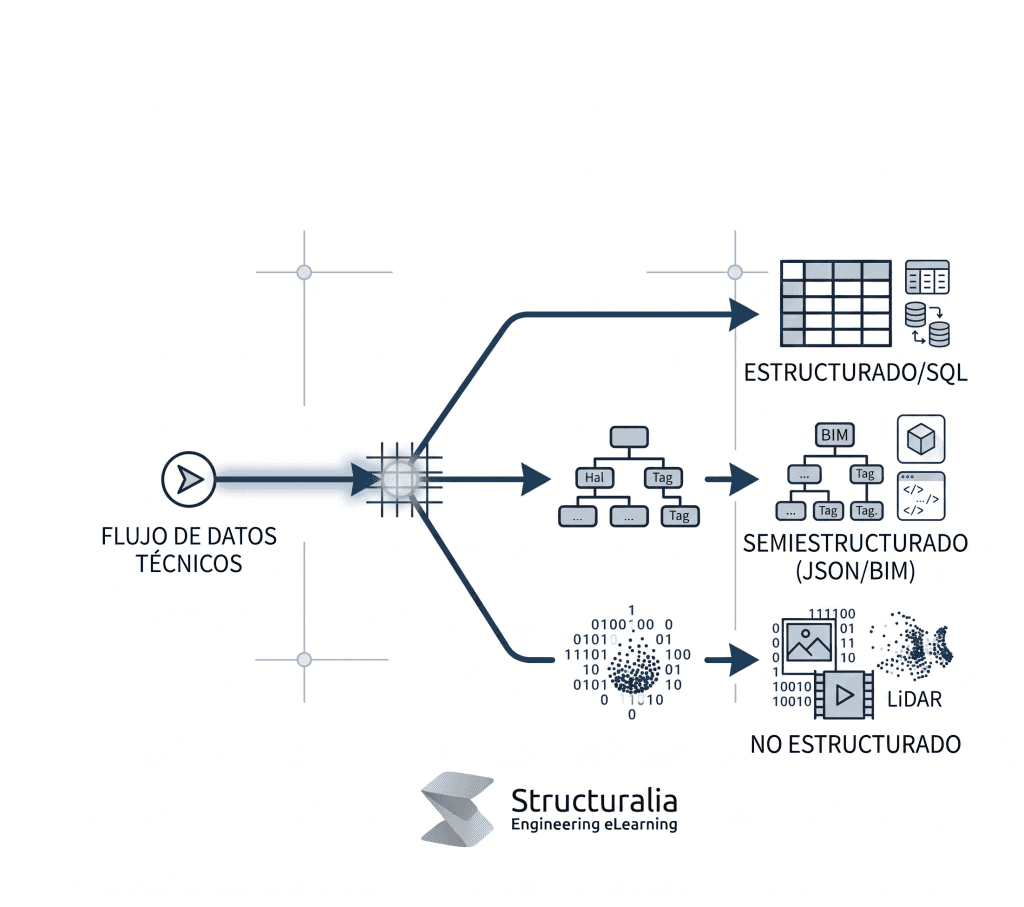
The classification of the datasets determines the tools for data analysis required and the associated processing cost. In engineering, the dataset type guides specialists toward the optimal storage architecture, whether through traditional SQL systems or modern data lakes. This taxonomy allows information to be organized in a way that maximizes its operational utility and facilitates the integration of new variables throughout the project lifecycle.
Structured Datasets
The structured datasets are the foundation of organized technical management; they are characterized by a rigid relational model or Schema-on-write. In this dataset type, each record fits into a table format with predefined columns and rows, ensuring complete consistency. It is the standard format in ERP systems and SQL databases used for cost control, construction site inventories, and laboratory test records, where numerical accuracy is non-negotiable.
Its greatest operational advantage is the speed of queries and the ease with which it can perform massive mathematical operations almost instantly. By working with fixed data types, data analysis algorithms can identify trends in historical performance without technical friction. In regional engineering projects, this structure is vital for ensuring that financial decision-making is based on robust and comparable metrics.
Unstructured datasets
Unstructured datasets account for the largest volume of information generated in modern engineering, although their technical application is more complex. These are binary files without a defined schema, such as point clouds LiDAR (Light Detection and Ranging), inspection videos, or field audio recordings. For this dataset to be useful, it requires layers of artificial intelligence that translate the pixels or signals into structured metrics that an engineer can interpret.
Integrating this information into big data strategies makes it possible to monitor the actual progress of a construction project against the theoretical schedule with a level of accuracy that is impossible to achieve through manual reports. The technical analysis of unstructured data is what enables the detection of critical deviations in real time, increasing responsiveness and drastically reducing cost overruns caused by unforeseen execution errors.
Semi-structured dataset
The semi-structured dataset It is the balance between tabular rigidity and the chaos of binary formats. This data uses hierarchical tags to organize information, with JSON files and models being BIM IFC the most powerful examples. This structure allows each structural element to contain a wealth of technical metadata that facilitates the lifecycle management of any infrastructure.
This flexibility is the key to technical compatibility in large-scale STEM projects involving multiple software platforms. A file IFC allows material, supplier, and maintenance data to be integrated with the geometry without corrupting the database General. Mastering this dataset type asserts that the decision-making the technology is seamless and that the information remains accessible decades after the initial construction.
The Importance of Datasets
The usefulness of a dataset The benefits are immediately apparent, as they eliminate unproductive hours spent searching for and validating scattered information. Having clean data makes it possible to identify operational bottlenecks in a matter of minutes, transforming the workflow from a reactive to a proactive approach. This efficiency frees up capacity for higher-value-added tasks, reducing calculation errors.
In the long term, the strategic accumulation of this data completely redefines infrastructure performance and the very nature of technical professions. The transition to predictive maintenance allows structures to «speak,» warning of fatigue before a catastrophic failure occurs. This shift moves the engineer’s role from manual supervision to the orchestration of intelligent systems, where professional success will depend on the ability to interpret large datasets. Companies that invest today in the quality of their dataset will achieve levels of performance and scalability that are unattainable for traditional management models.
Where can I find the datasets?
The difference between a rigorous analysis and a simple theoretical exercise lies in the source. The first step is to map the available data catalogs according to their operational usefulness and origin:
- Kaggle (The Training Ground): A global leader in training and benchmarking algorithms. It is ideal for validating hypotheses against internationally curated data before applying them to real-world environments.
- Google Dataset Search (The Universal Search Engine): It indexes millions of academic and technical datasets under a unified metadata standard, facilitating access to studies from prestigious universities.
- IEEE DataPort (The Engineering Standard): A highly reliable repository offering academically validated datasets for electrical, electronic, and civil engineering projects.
- Open Data Portals (The Reality on the Ground): Official resources of inestimable value for analyzing the local context and managing public works projects, including platforms such as:
- datos.gob.es (Spain): Large-scale datasets on cartography, infrastructure, and services from the IGN.
- datos.gov.co (Colombia): Key data for understanding the country's physical and topographical characteristics.
- datos.gob.mx (Mexico): A critical resource for the analysis of infrastructure and social development.