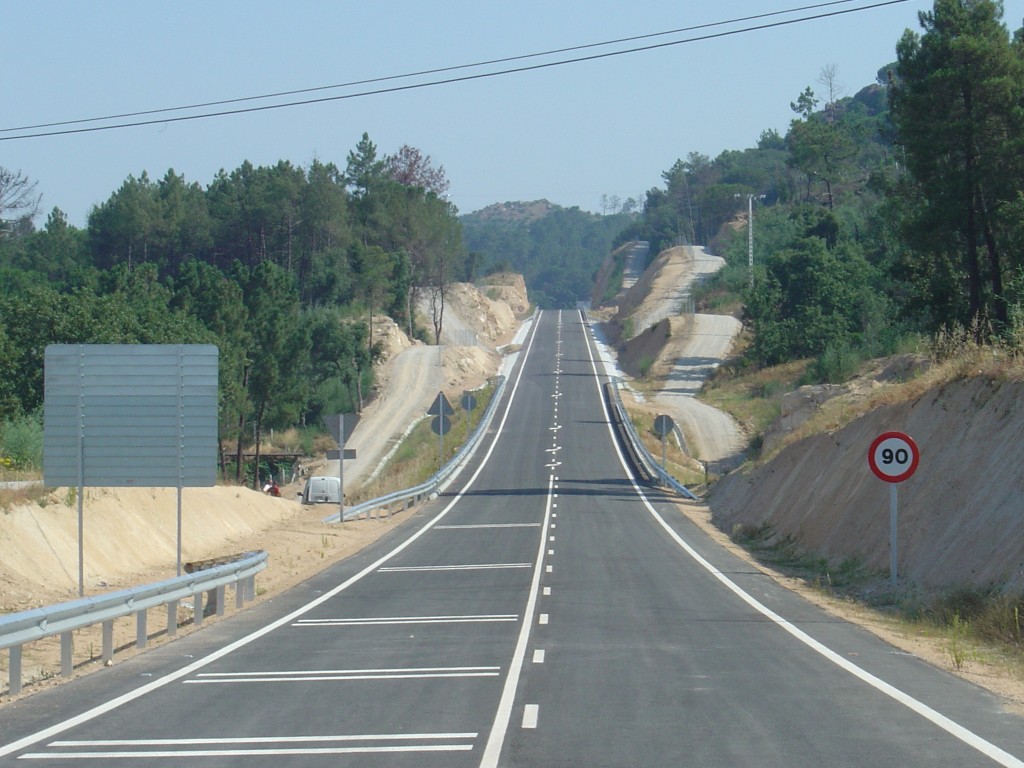
The technological revolution has arrived to transform every aspect and sector of our society, including the conventional highway.
Conventional Highway: What Is It, and What Is the Speed Limit?
The conventional highway is, today, of great importance to the country's mobility. In fact, it was the Romans who, several centuries before Christ, discovered the significance of these land transportation routes. Furthermore, it is the busiest road in Spain's highway network, which is why they play a key role in the country's mobility.
Do you know What are conventional highways?? In this article, we'll explain what they are, the maximum speed limit, and how to tell them apart from expressways or highways.
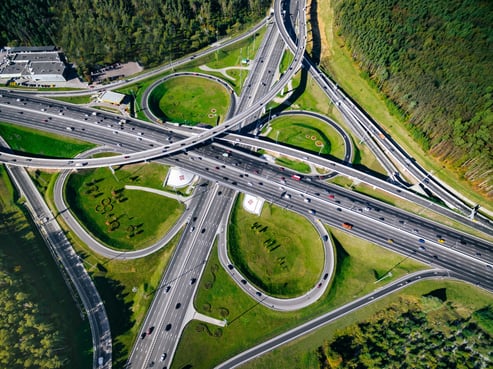
What are conventional highways?
Also known as secondary roads, conventional roads are those non-urban that are located outside town and have two-way traffic on the same roadway. Therefore, There is no separation between the two lanes as is the case on expressways or highways. These roads are also identified by the capital letter N followed by their identification number.
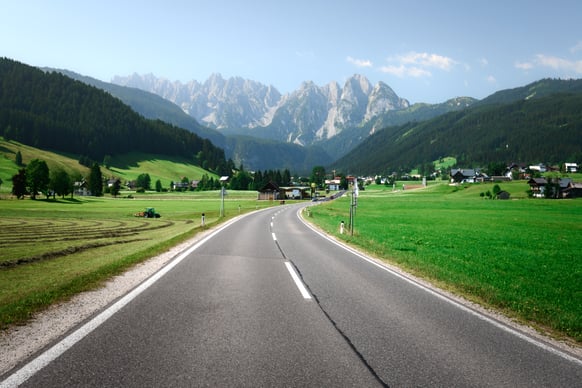
As a general rule, these types of roads are used for to link different municipal centers or to connect them to a main highway. Another key difference from expressways and highways is the number of lanes—expressways have at least two lanes, and their alignment is usually more irregular because they have more curves and poorer visibility.
Without a doubt, conventional roads serve an important purpose because connect communities that are not connected by major highways. Thus, their goal is to connect any city or town with any location in the country.
What is the speed limit on a regular highway?
Now that we know What is a conventional highway?, it is important to know What is the maximum speed limit?. The General Directorate of Traffic (DGT) set the speed limit on secondary roads at 90 km/h in 2019. It also stipulated that certain vehicles should Drive at a maximum speed of 80 km/h with the clear goal of reducing the number of claims.
In addition, in the latest update to the traffic law The 20 km/h margin for passing is eliminated in order to reduce traffic accidents on secondary roads. Thus, failure to comply with this obligation results in a €100 fine for drivers, but it will amount to 300€ and a loss of 2 points if the 120 km/h.
How can you tell the difference between a regular road and a highway or freeway?
As we explained earlier, the most obvious difference between a conventional highway and a freeway is the number of lanes in one direction; the first one has only one lane in each direction. Generally, secondary roads also do not have a fixed distance between the two directions, which makes it a more dangerous road, so it is necessary to have Be extra careful when driving on them. In addition, the layout is often irregular and there is little lighting, so the accident rate It is higher than on highways.
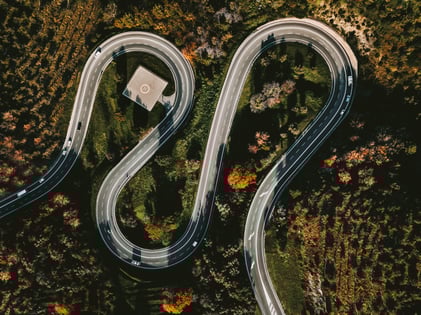
The Importance of Conventional Highways
Even though most drivers try to avoid secondary roads to drive on highways and expressways. But the truth is that conventional roads have a key role on Spain's road network:
- Allows connect towns with each other.
- Prevents the rural isolation.
- Help the economy of the towns.
The reality is that these types of roads must be adapted to current traffic needs by focusing on Sustainability and the Environment.

What the Conventional Highway of the Future Will Look Like
The reality is that these types of roads must be adapted to current traffic needs committed to sustainability, safety, efficiency, and intelligence. Next, we'll take a closer look at each of these aspects:
A More Eco-Friendly Secondary Road
Without a doubt, reduce the environmental impact It is one of the guiding principles of this century, and given the vast extent of the world's highway systems, it is a priority for the future to have more environmentally friendly conventional highways, which are not only built with sustainable materials but also contribute to reduce vehicle emissions who travel along them.
One example of this is the European project LIFE eQUINOx, a treatment system for application on asphalt pavements with the aim of remove nitrogen oxides (NOx) in urban environments. It is a film that is easily applied to the top layer of the road and that is activated by the sun to capture CO2.
On the other hand, photovoltaic technology It is a very promising alternative when integrated into roadways. In both Europe and North America, tests of the first photovoltaic pavers are already underway; the company Solar Roadways has already begun to sell hexagonal tiles with an output of more than 26,000 kWh per year per kilometer and a half, which would be enough to power about 22 electric vehicles.
A Safer Conventional Highway
According to the World Health Organization, more than one million people died in traffic accidents worldwide in 2016. Self-driving cars promise reduce human error, but for that to happen, it is necessary that conventional roads are suited to this type of technologies.
These technologies make use of advances in geolocation and high-speed telecommunications to detect and alert drivers, which makes them a very useful tool in accident prevention.
A More Efficient Conventional Highway
The progress that has been made in the paving materials have managed to improve the performance of cars traveling on conventional roads. Among the Properties of Asphalt-Rubber They find that they tire less easily, adapt better to temperature changes, provide better traction, and increase the efficiency of land mobility. But the future of efficiency lies in significantly reduce the need for infrastructure maintenance.
Smarter Roads
In recent years, the use of artificial intelligence It has brought about a revolution that has affected virtually every sector. Just as we discussed earlier regarding systems for Accident detection and prevention, these technologies can be applied to improve other aspects of traffic flow on conventional roads, such as the storage of large amounts of information thanks to new technologies data monitoring and control.

Now you know What is a conventional highway? and future projections toward smarter, more efficient, safer, and more environmentally friendly roads. Remember that at Structuralia You can further your education with the Master's Degree in Highway and Road Construction and Maintenance and advance your career.