The Planeta Azul Aquarium It is the largest aquarium in the Nordic region of Northern Europe and a symbol of respect for the oceans.
The Planeta Azul Aquarium: A Landmark of Northern Europe
In a world where environmental awareness and the preservation of our oceans are more urgent than ever, every June 8 we celebrate the World Oceans Day, a date that gives us the opportunity to reflect on the the vital importance of these vast bodies of water for life on Earth, as well as to recognize the vital role that sustainable architecture plays in the revitalization and protection of our seas. In this context, it is worth noting that the iconic Planeta Azul Aquarium, which stands as an eloquent testament to humanity's commitment to marine conservation in Northern Europe.
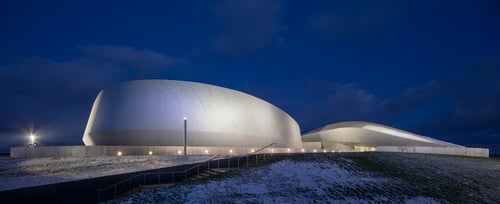
A winter view of the Planeta Azul Aquarium. Arcdaily
The Planeta Azul Aquarium
Located in the heart of Copenhagen, Denmark, the Planeta Azul Aquarium stands as a beacon of environmental awareness and marine education in Northern Europe. Designed to immerse visitors in a fascinating journey through the mysteries of the underwater world, this landmark project perfectly combines entertainment, education, and sustainability. Designed by the architectural firm 3XN, the Planeta Azul Aquarium opened its doors to the public in 2013 and quickly became a landmark for both locals and international visitors those interested in the preservation and exploration of the oceans.
At the heart of the Planeta Azul aquarium's design lies a firm commitment to sustainability and respect for the marine environment. Inspired by the beauty and diversity of the oceans, the concept behind this project goes beyond simply creating an entertainment space; it is an educational and awareness-raising platform that seeks to inspire a love for and a sense of responsibility toward our seas. From its inception, the team at 3XN has incorporated sustainable design principles into every aspect of the aquarium, from material selection to energy and water management. The building's fluid, organic architecture blends harmoniously with its surroundings, while innovative recycling and energy-efficiency technologies ensure that the environmental impact is minimal.
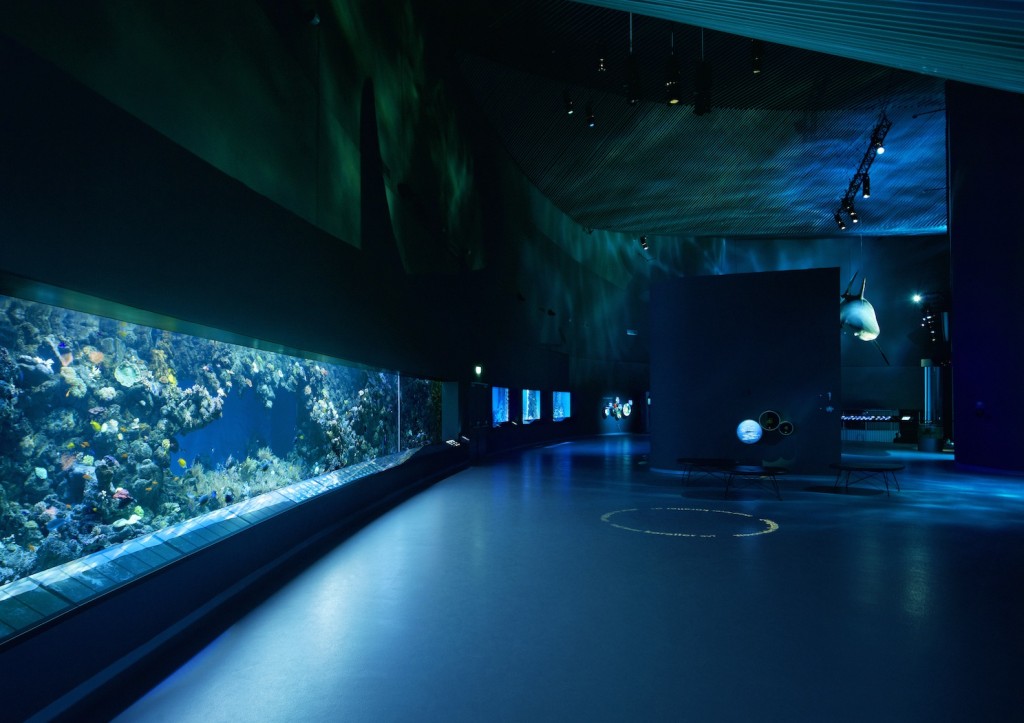
Inside the Planeta Azul Aquarium. Orphek
Its creators: 3xn Architects
In our tireless quest to raise awareness about the beauty and fragility of our oceans, the Danish architecture firm 3XN has brought one of his signature works to life: The Planeta Azul Aquarium. Recognized for its innovative approach and commitment to sustainability, 3XN has carried out this project with a forward-thinking vision that transcends convention. His dedication to creating spaces that are not only visually captivating but also educational and thought-provoking is reflected in every aspect of this impressive aquatic structure.
The concept and idea behind the design of the Planeta Azul aquarium
It's shaped like a giant whirlpool from which There are 5 branches, each corresponding to one of the marine themes that can be found inside. This design is clearly visible when landing or taking off by plane, since it is located very close to the airport.
The aquarium is surrounded by water, as it is located in a headland. Its design is intended to imitate the shape and fluidity of this liquid, all constructed of steel with aluminum parts, resulting in a shimmer that emphasizes the feeling of being completely enveloped by the ocean.
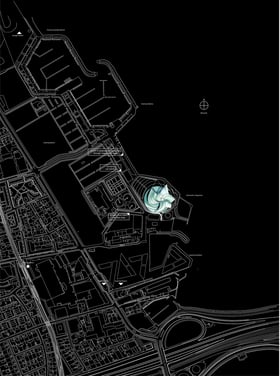
Conceptual floor plan for the construction of the Planeta Azul Aquarium. archdaily
The Impact of the Planeta Azul Aquarium on the City of Copenhagen
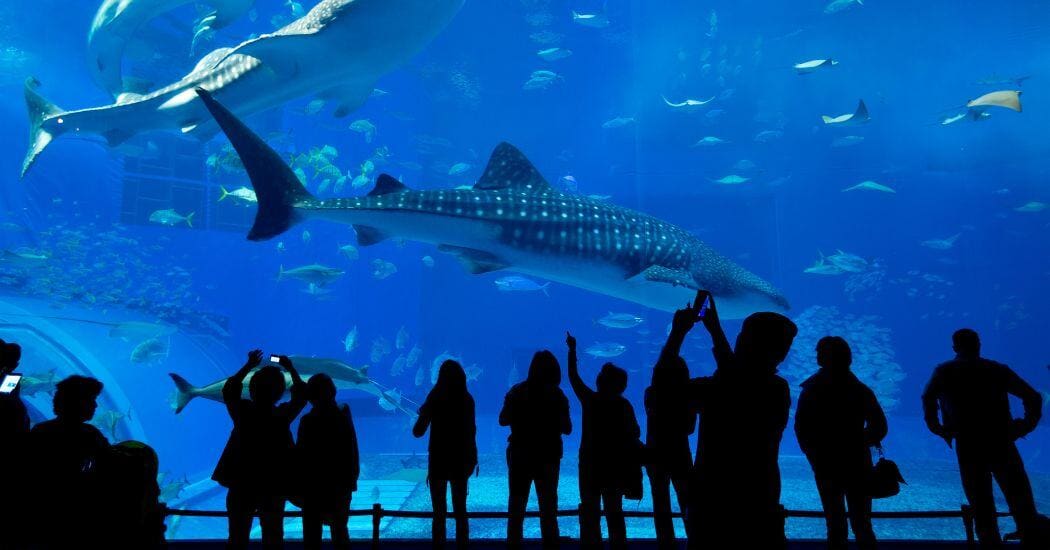
Construction began in 2010, and it was inaugurated in 2013 at a cost of about 735 million euros. Inside, we can find about 2,000 animals from warm and cold waters, both freshwater and saltwater, such as piranhas, sharks, stingrays, moray eels, and all kinds of exotic marine animals we can imagine.
Since it opened, The Planeta Azul Aquarium It has left an indelible mark on the city of Copenhagen and the entire region. Now a must-see destination for locals and tourists alike, this magnificent building has revitalized the area where it is located, attracting a steady stream of visitors eager to explore the marine treasures it holds. Beyond its economic impact as a major driver of tourism, the aquarium has played a crucial role in raising environmental awareness in the community.
In addition, its innovative architecture and its focus on the sustainability have served as a beacon of inspiration for other urban projects, driving the city's development toward a more environmentally conscious and sustainable future. In short, the Planeta Azul Aquarium It has not only enriched Copenhagen's cultural and tourist offerings, but has also left a lasting mark on the social and environmental fabric in the city.
On World Oceans Day, we reflect on the vital role that architecture plays in the enhancement and preservation of our environment, in particular our precious oceans. Flagship projects such as The Planeta Azul Aquarium They remind us that beauty and functionality can coexist in perfect harmony with sustainability, inspiring us to adopt a more mindful approach to our construction practices. With that in mind, we'd like to take this opportunity to invite you to explore the high-quality online training offerings provided by Structuralia for architects, especially the Master's Degree in Energy Efficiency and Sustainability in Building Construction, an invaluable opportunity for those who want to drive change toward a more sustainable future that respects our planet.