Part of our past, our present, and also our future, the concrete brings us closer to making science fiction a reality.
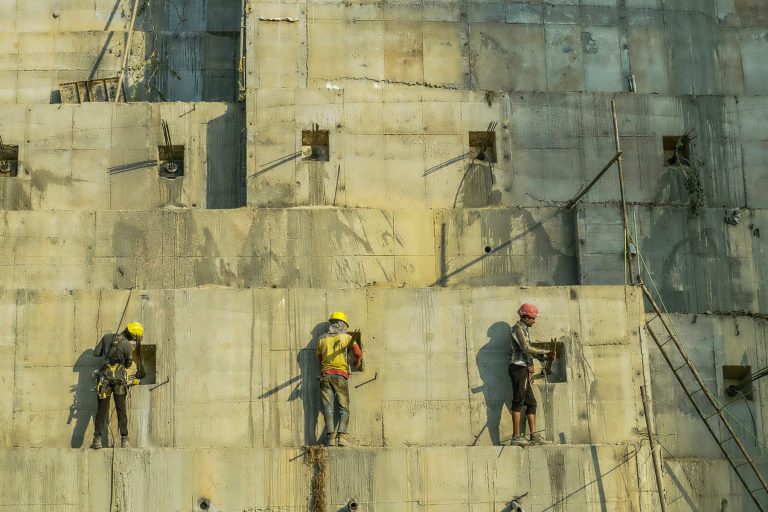
Throughout history, we know of very few materials that have antiquity, nobility, and the versatility of concrete. And even fewer are still as relevant today as they were centuries ago. Concrete remains a common material in the construction industry today, and it appears it will also be the material of the future.
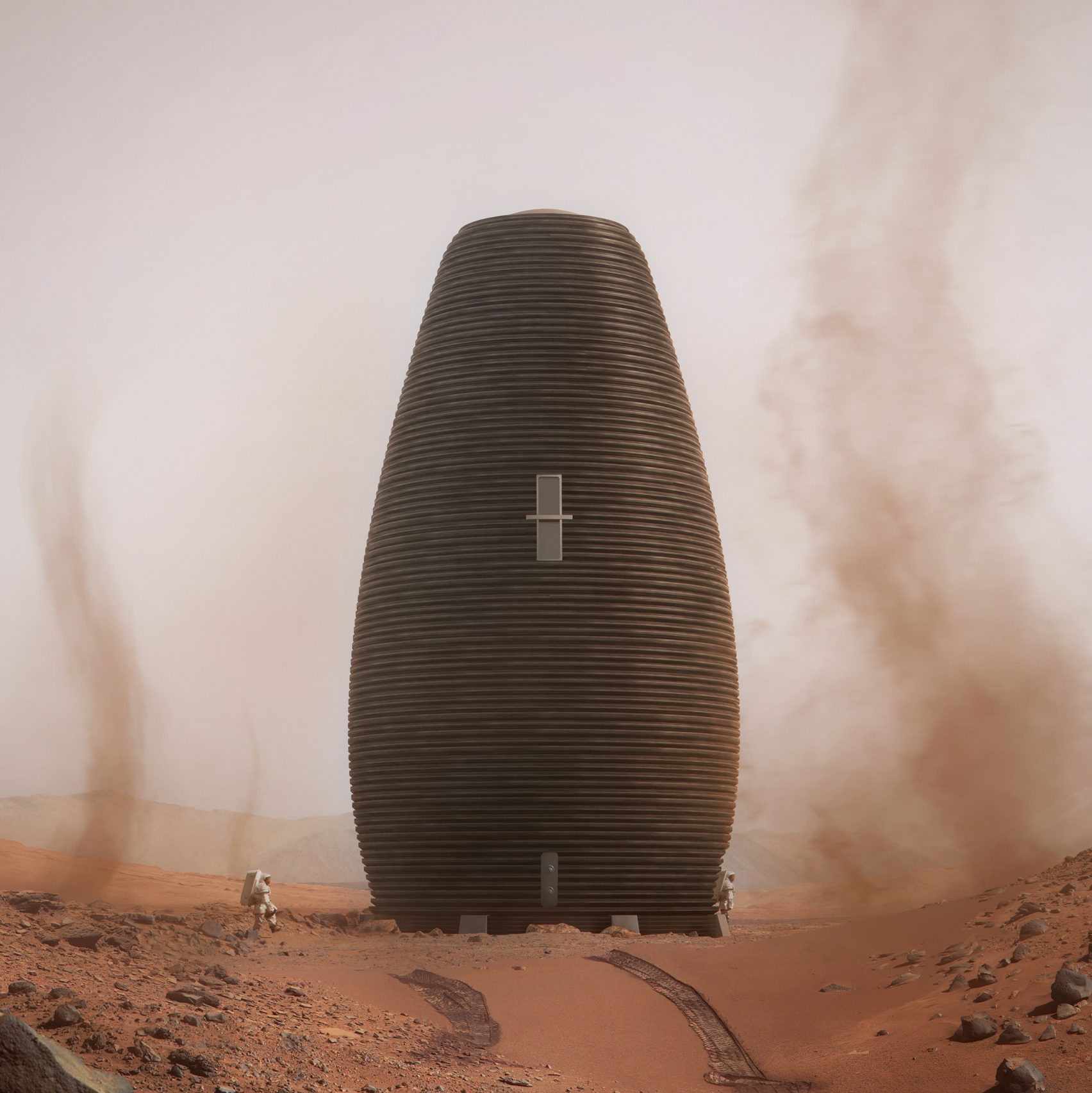 Each Marsha habitat stands alone as a separate structure – Dezeen
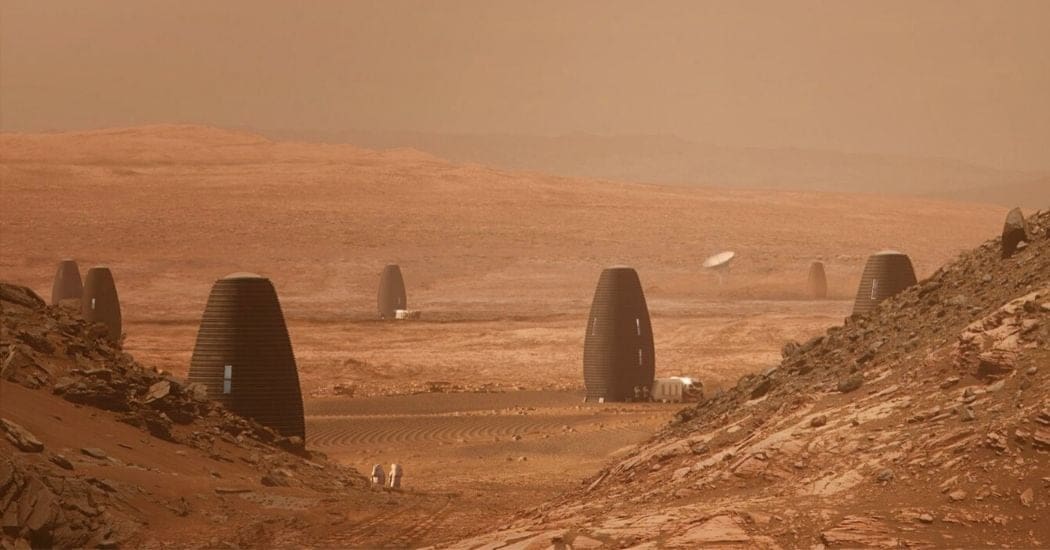
Every day we are getting closer to realizing the fantasy depicted in science fiction of reaching Mars, which is why the issue of how to to live in such a hostile environment. And it seems that the solution to this problem lies in one of the oldest building materials we know of, according to Nathan Gelino, NASA research engineer who works in the lab GMRO.
Gelino He states that before transporting a large number of parts, building components, and materials to another planet, it is much easier to transport a 3D printer; that allow the use of materials such as concrete to build exploratory bases on the Martian surface. 3D concrete printing is a technology we already know and use here on Earth, so it would be easier than developing a new technology for this purpose.
3D Concrete Printing
Perhaps one of the most important innovations of this digital age is 3D printing; this technology allows us to easily create objects and parts using various 3D printing methods. This principle has moved into the construction industry, making it possible to build walls very easily and quickly by stacking layers of extruded concrete.
Generally, 3D printing with concrete involves extruding the concrete material through a self-regulating nozzle that maintains a constant flow of the mixture, allowing the desired shape to be created. However, there are several methods of 3D concrete printing, but the most promising one for construction beyond Earth is the method known as D-shape, since it works with much thinner layers, which provides greater formal versatility.

Illustrative image of web server facilities - Israel News
Applications of Concrete: Concrete on Mars
Once the structural and technical issues have been resolved, the next step is to consider the raw material that will be used. It is true that, by default, 3D printers use a custom concrete mix, but Transporting raw materials from Earth to another planet would be very costly and complicated. Fortunately, scientists led by Lin Wan of Northwestern University They're putting a creative proposal on the table.
Lin Wan and her team have opted for a technology that has been in development since 1970: the sulfur-based concrete. This material has not been as successful on Earth, since it requires heating the sulfur to 240 °C; however, by adding a portion of Martian soil to the mixture, scientists have been able to produce concrete two and a half times stronger than the minimum strength required by regulations on land.
On the other hand, water could pose a problem, but fortunately Water is not as scarce off-Earth as we might think. According to Gelino, it is possible to collect water in the form of ice on Mars; another possibility is to synthesize water chemically from hydrogen and oxygen, both of which are abundant in Martian minerals.
And that is how a material as old as civilization itself, with the help of human creativity and ingenuity, can become the foundation for future colonization beyond Earth. The Applications of Concrete There are many: ideas like this one, with simple approaches, are what show that it is becoming more and more feasible to live on nearby planets like Mars, turning science fiction into reality.