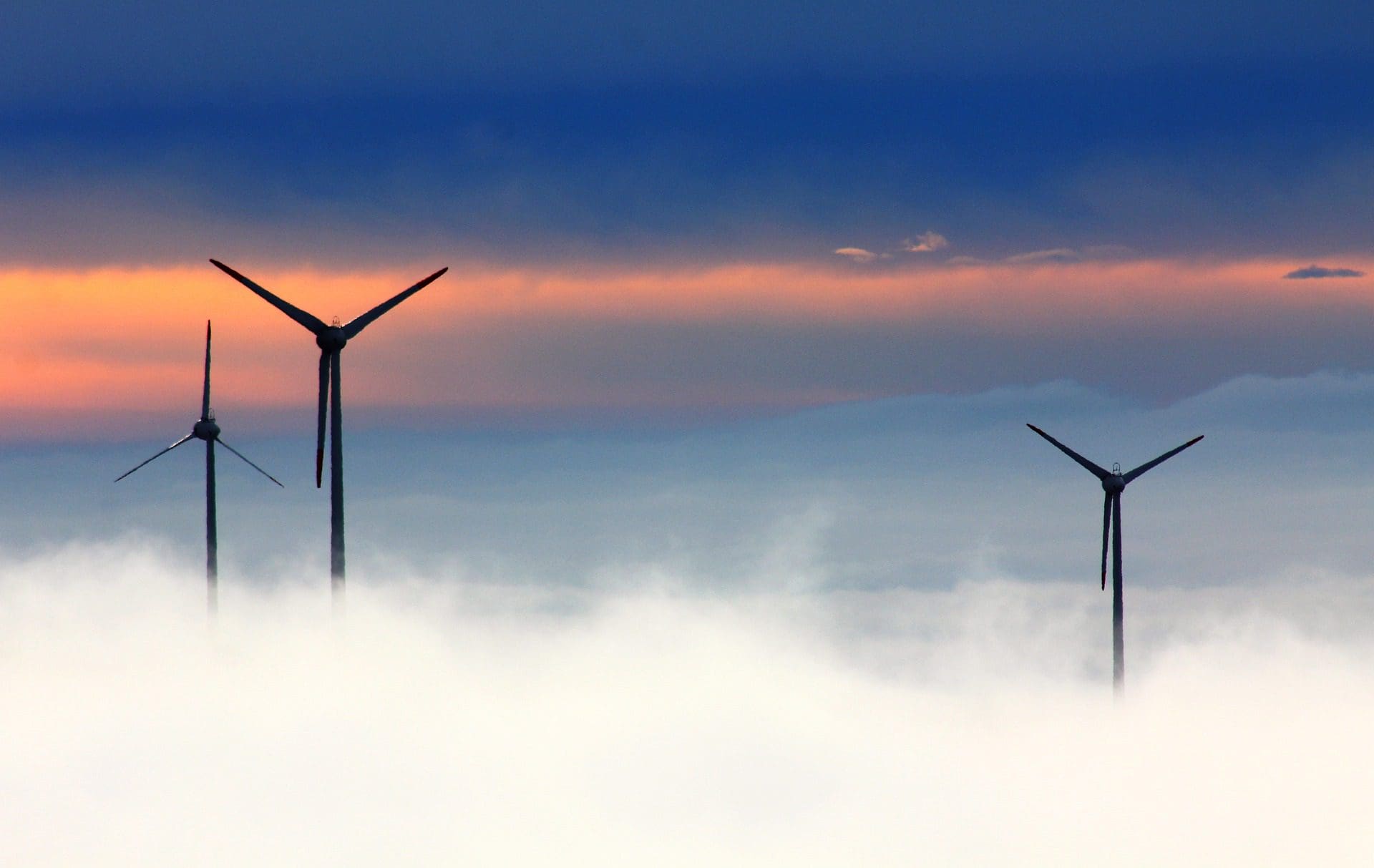
As you all know, a wind turbine is a device that captures the kinetic energy of the wind and converts it into mechanical energy, which is then converted into electrical energy by a generator connected to the grid. Today we’ll tell you a little more about the two types of wind turbines existing types based on the orientation of their axis: vertical or horizontal.
Vertical-axis wind turbines
In this type of vertical-axis wind turbine, the The blades rotate around a vertical central axis, thus offering three key advantages over horizontal-axis models, which are used more frequently:
-
The blade mounting system is simple in design and easy to install.
-
They do not require a tracking system to capture wind energy.
-
Easy access to the power train, generator, and transformer, all located at ground level.
In general, we can say that the The efficiency of vertical-axis wind turbines is less than half that of horizontal-axis wind turbines, a fact that has led the industry to focus on developing the latter rather than the former. Below are the main models of vertical-axis wind turbines:
Darrieus-type vertical-axis wind turbine
They are named after the engineer G.J.M. Darrieus, and consist of two or more blades arranged as shown in the following image:
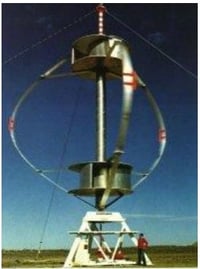
Darrieus wind turbine.
The main drawbacks The challenges of this design include the need for monitoring due to the aerodynamic profiles and symmetry of the blades do not allow automatic startup. Another major drawback is the the need to use tensioners to ensure the structural stability of the turbine.
Savonious-type vertical-axis wind turbine
Like the previous one, this one is named after its creator, S.J. Savonious. The arrangement and shape of the blades can be seen in the following image:
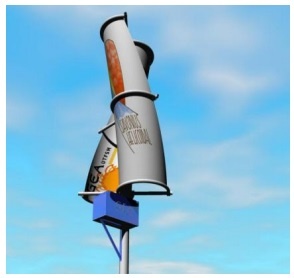
Savonious wind turbine.
In this case, the main ones The drawbacks are their low performance and slow rotation speed, although, unlike the previous model, this one does allow for automatic startup.
Horizontal-axis wind turbines
This type of wind turbine, with a horizontal axis, is characterized by Rotate the blades so they are perpendicular to the wind speed. They are further classified into slow- and fast-rotating wind turbines, depending on the rotational speed of their rotors. The latter are connected to the grid, while the former typically operate in “off-grid” mode.
The rotational speed of the turbines is inversely proportional to the number of blades they have. To be more precise, we will say that a A high-speed aeroturbine is one in which the lift component is greater than the drag component, resulting in high specific speeds. Next, we'll tell you a little more about these two types:
Slow-speed turbine engine
They usually have between 6 and 24 blades, which gives them high starting torque and low rotational speed. They are not intended for electricity generation but, traditionally, for applications such as water pumping. In these machines, the λ coefficient, relationship between linear velocity at the blade tip and wind speed, is equal to 1.
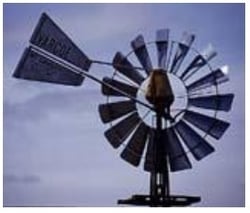
Low-speed aeroturbine.
High-Speed Turbine Aero
They usually have two or three blades—the latter being the most common—with an appropriate aerodynamic profile. They have a coefficient of λ greater than 4, reaching values as high as 12 and 14, which makes them well-suited for generating electricity because they require a smaller, less expensive multiplier.
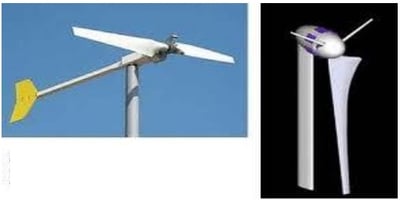
Two-bladed and single-bladed wind turbines.
These wind turbines They are further classified based on the rotor's configuration, showing a willingness to windward (the wind first hits the rotor and then the tower) or to leeward (The wind first strikes the tower and then the rotor.).
The most commonly used configuration in the energy sector, in terms of windward side and three-bladed rotors.
If you'd like to learn more about wind turbines, check out our master's program: