What are the main characteristics of a wind turbine rotor? Find out all the details in the following article:
The Rotor
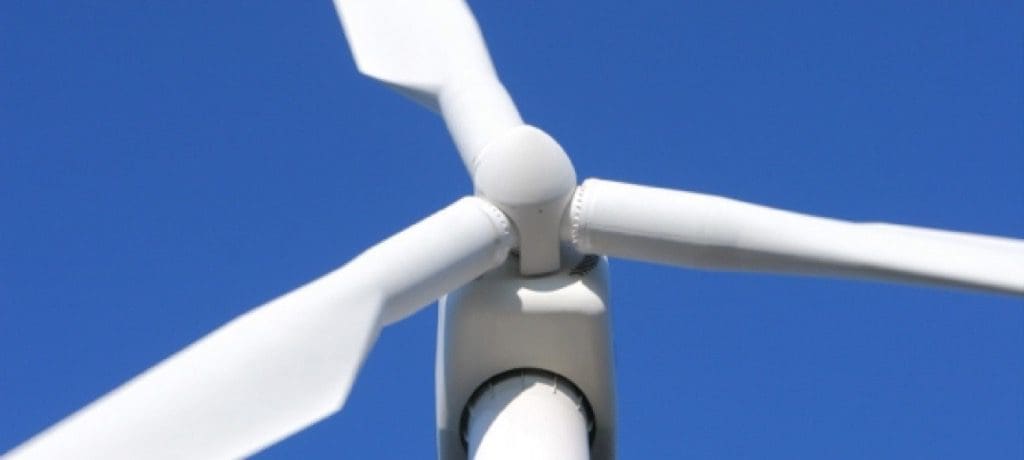
It is a part of the wind turbine that It consists of the blades, the hub, and the mechanism blade pitch adjustment. Its main features and components are as follows:
Position of the wind turbine's main shaft
Commercial wind turbines currently being built are horizontal-axis turbines (also known as HAWTs). Vertical-axis turbines have some advantages over horizontal-axis ones, such as not requiring a tower for installation or a yaw mechanism to turn the rotor into the wind, but for comparable efficiency, they have many more drawbacks than horizontal-axis turbines. Some of these disadvantages include: lower wind speeds near the ground and more difficult control, since the angle of the blades cannot be adjusted, among others.
Upstream or downstream
Upwind turbines have the rotor facing the wind, which prevents the wind from being blocked behind the tower in this type of configuration. Most wind turbines use this design. The main disadvantage is that the rotor must be rigid and located at a certain distance from the tower so that the blades do not pass too close to it. In upwind turbines, the main shaft is typically tilted by 2 to 5 degrees.
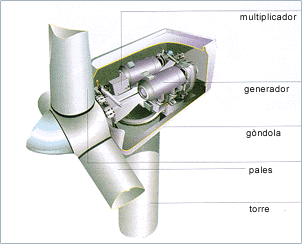
In downwind turbines, the rotor is located on the leeward side of the tower. The advantage is that they can be built without a yaw mechanism, since the nacelle (which is the compartment containing the gearbox, the main shaft, the control systems, the generator, the brakes, and the yaw mechanisms) passively follows the wind. The blades have a slight taper relative to the axis of rotation; thus, when the wind direction changes, an uneven moment is produced on the blades, generating a torque on the rotor that orients it. In downwind turbines, the rotor can be more flexible.
Aero bladesdynamic
One to three blades may be used, rotating gently. In the case of aerodynamic profiles with a small structural area and low vortex generation, higher energy levels and a higher power coefficient are achieved.
Another possibility would be wood-and-metal structures with a large number of blades—usually more than 6.
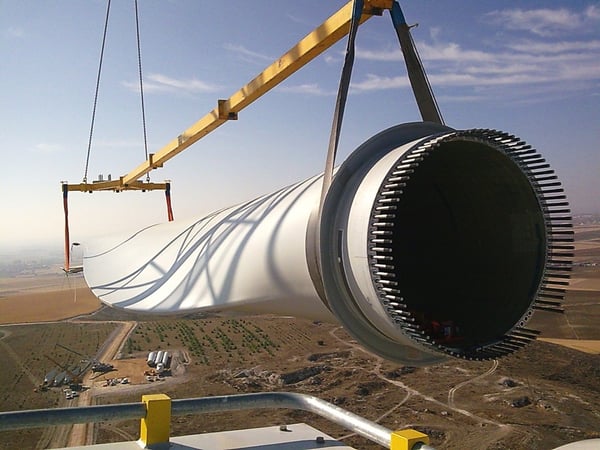
The most common designs today are three-bladed models with the rotor facing the wind, equipped with electric motors in their pitch control mechanisms.
The blade profile should be hyperbolic. Manufacturers use aerodynamic profiles on their blades, continually introducing improvements to reduce losses due to wake and vortices and to improve the efficiency of the profiles.
The hub
The blades are attached to the hub, which transmits all forces, moments, and vibrations to the tower. This hub is typically rigid, especially in small- and medium-power machines.
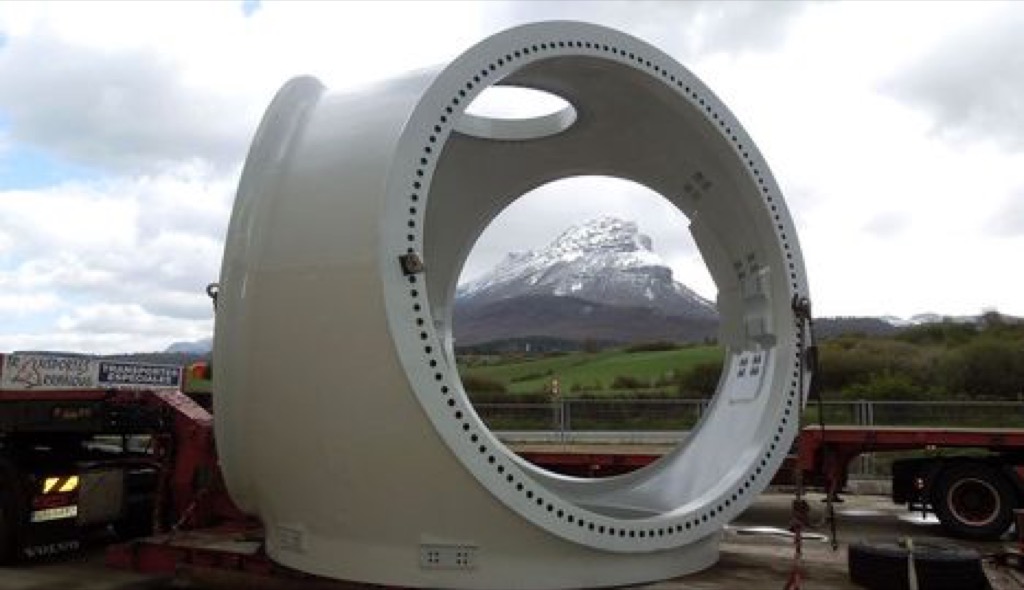
You can also choose to use a swivel hub in the design, thereby ensuring smoother operation and reducing the loads on the blades.
Tower
The tower is the structure that supports the wind turbine’s electricity-generating mechanism at a certain height. Raising the components allows for greater utilization of wind power, since wind speed increases with height above ground level, and consequently, so does the rotational speed of the blades. Its design typically consists of a hollow, conical or tubular steel shaft, inside which the ground-level auxiliary equipment is housed and which provides safe access to the nacelle via a ladder.
Gondola
It is the main frame of the wind turbine; it is located at the top of the tower and houses the electrical and mechanical components needed to convert the rotation of the rotor into electrical energy. It is connected to the tower by a toothed ring to allow the rotor to track the wind, and the rotor and blades are connected to the main shaft, which transmits the force of the wind to the gearbox and then to the motor. On its exterior, it is equipped with an anemometer and a wind vane connected to the wind turbine’s control systems, as well as vents to ensure proper cooling of the motor. It is constructed of forged steel and fiberglass panels.
Nose
It is an aerodynamic component located in the path of the wind, protruding from the junction between the blades and the hub. Its purpose is to redirect the wind from the front of the rotor to the nacelle vents while preventing turbulence at the front of the rotor.
Power train
It is responsible for transmitting the energy produced by the rotor’s rotation to the motor in a form that the motor can use to generate electricity. It consists of the main shaft, gearbox, and secondary shaft. The main shaft is a large-diameter solid steel tube that is integrally connected to the rotor and rotates at speeds between 22 and 64 rpm, depending on the wind turbine model and operating conditions. However, a standard electric generator requires rotational speeds of around 1,500 rpm, so a gearbox is needed to increase the transmitted rotational speed. The gearbox is a gear unit that converts the low rotational speed and high power of the main shaft into a rotational speed suitable for the motor’s operation, at the expense of power. Rotation is transmitted from the gearbox to the motor via the secondary shaft, which has a smaller diameter than the main shaft, in a manner similar to how rotation was transmitted between the rotor and the gearbox via the main shaft…
Generator
The generator converts the mechanical energy produced by the rotor into electrical energy. Squirrel-cage induction generators are typically used, along with capacitor banks to improve their power factor. The connection to the grid can be direct or indirect, depending on whether the turbine operates at a constant or variable speed. When connected indirectly to the grid, we can take advantage of wind speed peaks, but the generator produces variable-frequency power, so conversion equipment is needed to feed the energy into the grid. With a direct connection, the grid itself limits the generator’s rotational speed, so it does not take advantage of the peaks of higher wind energy.
Control Systems
The control systems in a wind turbine have two important functions: the first is to maximize the use of wind power by adjusting the rotor’s orientation, and the second is to protect the wind turbine from wind speeds that could damage the turbine.
For the purpose of orientation, the wind turbine is equipped with anemometers and wind direction sensors installed on the nacelle. The collected data is sent to the control computer, which, based on a specific algorithm, determines how to move the nacelle using the ring gear system and rotation motor installed at the base of the nacelle where it connects to the tower. It is important to note that control over the rotor’s orientation is not performed in real time; rather, the algorithm, using the collected data, must be able to verify that the wind has indeed changed direction in a stable manner before the nacelle rotates; otherwise, it would result in erratic movement of the system, which would reduce its efficiency.