In recent years, in response to the new technological reality we are experiencing, a new role has emerged in companies seeking to adapt to and implement new agile methodologies in its processes. This transition is handled by the agile coach And throughout this article, we'll describe their role within a company as well as the agile methodologies they need to know in order to perform their duties.
What is an agile coach?
As the name itself suggests, to define a agile coach We must focus on the terms that make it up.
The part coach, first of all, consists of the observation of one's surroundings, which, when applied to a professional setting, means observing the different departments that coexist within a company as well as the processes they implement to carry out their functions. Among the roles of a coach, we can highlight:
- Collaboration in setting individual or professional goals
- Provide a professional approach
- Motivation among team members and their ongoing training
- Discovering New Skills
Second, the part agile entails the Implementation of Agile Methodologies in each of a company's processes.
For all these reasons, in order to perform their duties properly, every agile coach You should be familiar with the agile methodologies most commonly used ones so you can choose the most appropriate one for each situation.
Agile Methodologies
We will focus on the four most commonly used agile methodologies.
Scrum
It is one of the leading agile methodologies, and one that an agile coach simply must be familiar with. It is a method for solving complex problems, delivering products that provide the greatest possible value. It is a methodology:
- Lightweight: It contains little theory; it merely defines certain gatherings or ceremonies, roles, and a few basic principles.
- Easy to understand: It is an open methodology that does not impose complicated or overly specific rules depending on the project.
- Hard to master: The key is to adapt it properly to the environment and the specific project.
It is based on empirical control processes; in other words, knowledge comes from experience, and decisions are made based on the information available. Its approach is iterative and incremental.
- Iterative: The goal is to continually refine and improve the product's properties as the project progresses.
- Incremental: This involves adding new capabilities or features to the product as the project progresses.
XP (Extreme Programming)
XP (short for «eXtreme Programming») is a proprietary agile methodology for software development.
Like Scrum, it assumes that changes during the project will be frequent—so much so that work may be carried out in iterations as short as a single day, with daily deliveries and deployments of results, or even more frequently.
Kanban
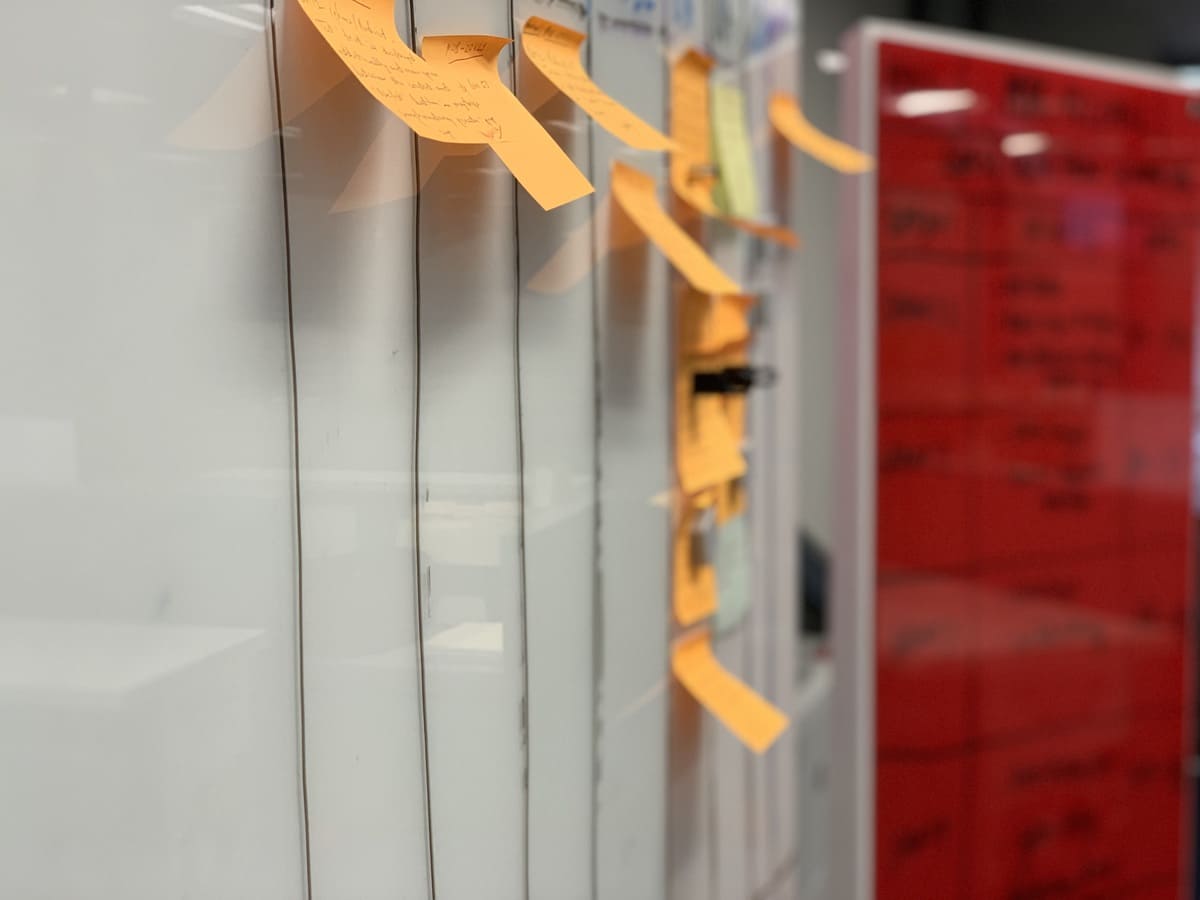
An agile coach can use a «Kanban» or «TaskBoard» to track status changes in the work, reflecting progress and work in progress.
This methodology consists of the organizing daily work based on a task board as follows:
.png)
Example of the Kanban Methodology
Kanban is a loose translation of the Japanese word for “cards.” It is designed to prevent overproduction and to ensure that components move from one subprocess to the next in the correct order.
The goal should be to small, incremental changes. The team must agree that their current circumstances warrant a gradual approach to development.
Without agreement that an evolutionary and incremental approach is the right way forward, there will not be the right environment for a Kanban initiative. The agile coach will keep in mind that Every team member is a leader, in the sense that they are expected to take the initiative to manage their own work, assign tasks to themselves, and share this information with other team members.
Read
More than just a methodology, Lean is a philosophy or approach to work.
It is based on the Lean Manufacturing Model—that is, as applied to «pull» manufacturing and production processes: only the product the customer needs is produced, exactly when they need it.
The main idea is maximize customer value and minimize waste. Simply put, “lean” means creating more value for customers with fewer resources. A “lean” organization understands customer value and focuses its key processes on continuously increasing it.
Therefore, for anyone interested in be developed with an agile coach or experts in agile methodologies, At Structuralia, we offer a wide variety of programs in this field, including our Master's Degree in Agile Project Management and Digital Transformation Methodologies.