
The sensitivity analysis in operations research It helps us understand the effects that occur in an optimal solution. This post explains what it is and its key aspects.
How is the analysis performed?
The analysis must address and verify each parameter in a way individual. The coefficients of the objective function and the bounds of the constraints will also be expressed. This will provide useful information for determining whether the solution is still optimal. Software can be used to perform this task. In addition, the following procedure will be followed to streamline the process:
- Model Review: This section outlines the changes to the parameters to be investigated. These changes will test the feasibility of the optimal solution and help identify the effects they produce.
- Conversion to the correct form of Gauss elimination: This methodology allows you to organize the data into a table that is suitable for identifying and evaluating the current solution.
- Feasibility Study: The feasibility of the solution is examined by checking all the basic variables that still have non-negative values.
- Proof that the solution is optimal: The solution is checked to determine whether or not it is optimal, since it has already been verified that it is feasible. The coefficients of the nonbasic variables in region Z that remain nonnegative are checked.
- Optimization: If the solution fails any of the specified tests, it will be optimized based on the results obtained. It will then be refined until the appropriate values are found—those that yield satisfactory results for key parameters.
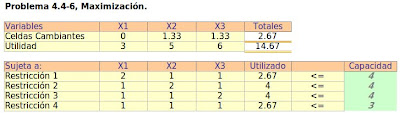
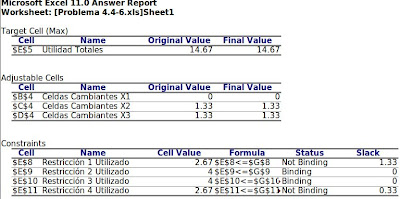
 Analysis Example. Source: 4.bp.blogspot.com
The ABC Method for Inventory Classification: An Example to Consider
The ABC method for inventory classification is an example of this analysis. It is used to find the optimal solution when segment and organize products in a warehouse. Importance is the key criterion for sorting them. Thus, factors such as relevance to the company, economic value, benefits provided, and turnover generated, among others, are taken into account.
When classifying items, three types of categories are established:
Category A
Group A includes those key products for the company. These typically account for 20 % of inventory and are also the ones that generate a high traffic or turnover. By prioritizing them, they are managed effectively, resulting in superior performance for the company.
Category B
Category B includes products with a moderate importance and turnover. They account for 30 % of the goods, although they generate no more than 20 % of revenue. This is an intermediate group that should be reviewed frequently, as some of its components could fall into Class A or Class C depending on the circumstances.
Category C
Finally, Category C is the largest category, although it is the one that lower income would contribute. The products that make up the line They aren't in high demand, so it is not necessary to allocate many resources to them. They account for only 5 % of profits, and their monitoring can be done sporadically, though their expiration or obsolescence must always be taken into account. They are located in secondary areas of the warehouse with poorer accessibility, since their priority is low.
How is it classified using the ABC method?
 ABC Classification Method. Source: Envato
There are four ways to classify goods using this method.
- The first takes into account the product turnover, the key factor when analyzing a warehouse's status. The most in-demand items will be classified as Category A, and the least in-demand as Category C.
- Another way is to pay attention to the unit cost, which leads to organizing inventory based on the investment made in the stored materials.
- A third method is based on using the total inventory value, which would be the unit cost multiplied by the number of units. It is a useful method, but it requires strict and continuous monitoring of the products in order to redefine the categories based on changes in value.
- Finally, the following factors can be taken into account:Use and Value to establish the categories. It is the most widely used and comprehensive of the four. It takes into account both demand and product value. Class A products are those that are most valuable to the company and are also in high demand among customers. Equations involving variables, such as product profitability, can be included to increase accuracy.
In short, the Sensitivity Analysis in Operations Research It is extremely useful for adapting to change. At Structuralia, we offer the training needed to make the most of these tools. This ensures that professionals are better equipped to handle the demands of today’s challenging professional environment.