
Discover the future through the predictive analytics and reveals how data is transforming decision-making.
Predictive Analytics: Powerful Predictions
In recent years, the unstoppable advance of technology has made it possible to manage enormous amounts of data become an amazing reality. In this context, a technology is rapidly emerging that is revolutionizing decision-making across multiple industries: predictive analytics. This approach, which combines the power of data analysis with advanced algorithms, gives us the ability to anticipate future events and trends with a level of precision that once seemed unattainable. In this article, we will explore predictive analytics, its applications, and how this technology is transforming the way companies and professionals make data-driven strategic decisions.
What Is Predictive Analytics and How Does It Work?
The predictive analytics is a field that uses advanced data analysis techniques (Big Data), statistics, and machine learning to predict future events or trends. Essentially, it is a method that uses historical data and patterns to perform accurate predictions about what will happen in the future. Through the use of sophisticated algorithms, predictive analytics seeks to uncover hidden relationships between variables and use this knowledge to predict outcomes with a high degree of reliability.
How Predictive Analytics Works
The process of predictive analytics It begins with the collection of relevant data, which may include a wide range of fonts, ranging from historical records and transactional data to real-time information from sensors or online systems. Once this data is accessible, we proceed to clean and prepare them for analysis.
Next, the following come into play: predictive analytics models. These models are algorithms mathematicians and statisticians who are looking for identify patterns in the data, such as cause-and-effect relationships or emerging trends. The models are trained using historical data and fine-tuned so that they can make accurate predictions.
Once a predictive model has been trained, it is used to analyze new data and make predictions, which can address a variety of scenarios. These models are capable of predicting demand for products at a store until anticipate potential failures in an industrial machine.
Predictive analytics is a powerful tool that has found applications in numerous fields, from marketing and finance to healthcare and logistics. As we continue to move forward into the data era, predictive analytics is emerging as a fundamental pillar for the informed decision-making and strategic.
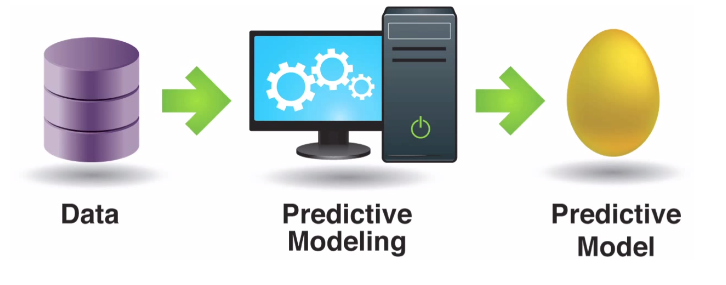
A visual representation of the process of building a model using predictive analytics. Eric Siegel
Types of Models in Predictive Analytics
The predictive analytics It is based on a variety of models and algorithms that enable accurate predictions to be made from data. The two fundamental types of models in this field are the supervised learning and the unsupervised learning.
1. Supervised Learning:
In supervised learning, the model is trained using a dataset of entry (input) and their respective outings (output) expected. In other words, the model «learns» based on examples with known labels or answers. This allows the model to make accurate predictions when provided with new information. Common examples of supervised learning applications in predictive analytics include classification and regression.
-
- Ranking: In classification, the goal is to assign a category or label to a new dataset based on specific characteristics. For example, a classification model could predict whether an email is spam or not based on its content and structure.
- Regression: In regression, the goal is to predict a numerical value—such as the price of a home—based on characteristics like square footage, the number of bedrooms, and location. Regression models are essential for predicting continuous values.
2. Unsupervised Learning:
In contrast, unsupervised learning is used when There are no known answers in the training data. The model explores the data in search of hidden patterns and structures without prior guidance. One of the most common uses of unsupervised learning in predictive analytics is the cluster grouping.
-
-
Cluster Association: In clustering, the goal is to divide a dataset into similar groups or clusters based on their common characteristics. This approach is useful for discovering market segments, consumer behavior patterns, and more. For example, in a dataset of online store customers, predictive analytics based on clustering could identify groups of shoppers with similar preferences.
-
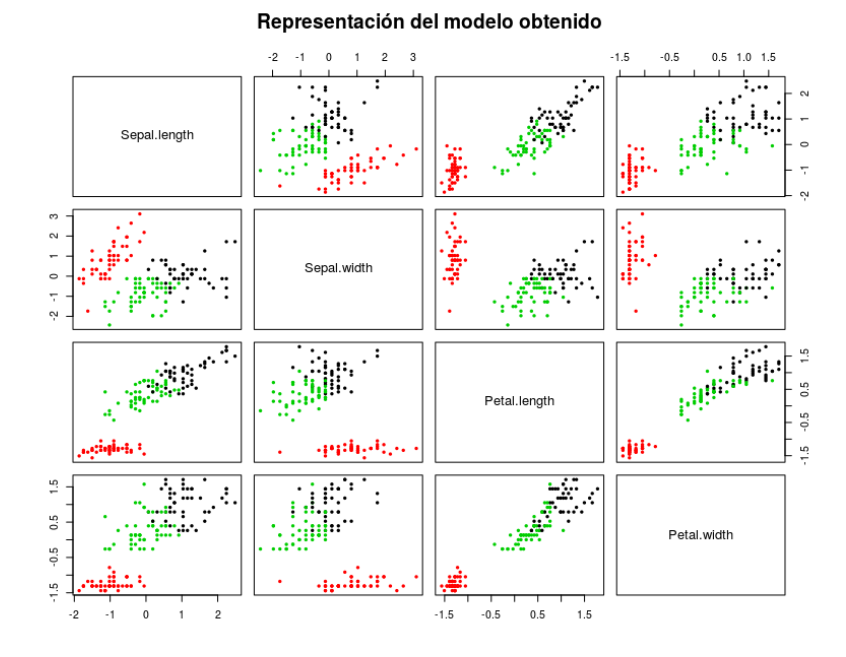
Example of the results of a model built using predictive analytics. UOC
In summary, both supervised and unsupervised learning play a crucial role in the predictive analytics, enabling organizations to gain valuable insights from their data and make informed decisions.
In a world increasingly driven by data, predictive analytics has become an essential tool for the strategic decision-making and anticipating future trends. If you're intrigued by the potential of predictive analytics and if you want to delve deeper into this exciting field, consider exploring training programs that will allow you to acquire the necessary skills and knowledge. In this regard, Structuralia offers options such as the Master's Degree in Big Data and Business Analytics, which will give you a solid foundation to stay at the forefront of the data revolution.