The Tokyo Bay Aqualine is a road designed for vehicular traffic that consists of a bridge and an undersea tunnel, which cross Tokyo Bay, connecting the cities of Kawasaki and Kisarazu in Japan; there is an artificial island at the junction of the two structures.
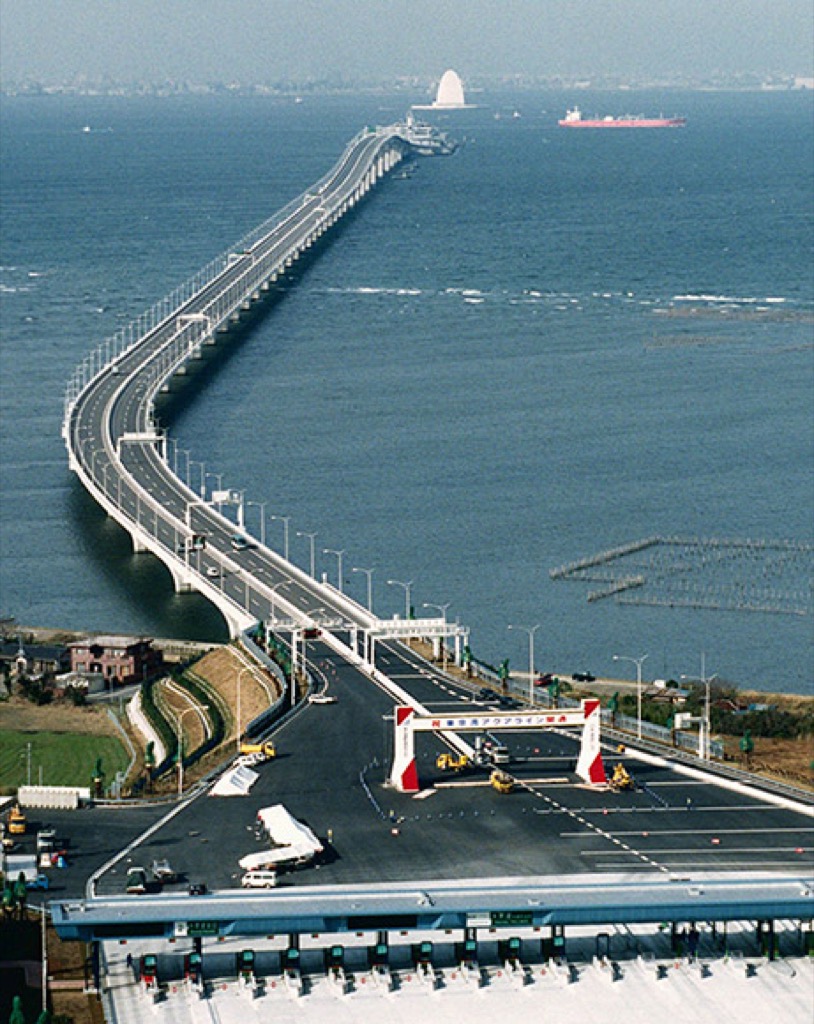
The The total length of this feat of civil engineering is about 15 kilometers, which results in a considerable reduction in travel time between the two points. If we were to take the alternate route, the distance traveled would be 100 kilometers. In addition to the obvious time savings, this helps relieve traffic congestion in the center of the Japanese capital.
The The bridge and tunnel are 4.4 and 9.5 kilometers long, respectively, respectively. The high volume of boat traffic was one of the reasons for building an undersea tunnel as part of this engineering marvel.
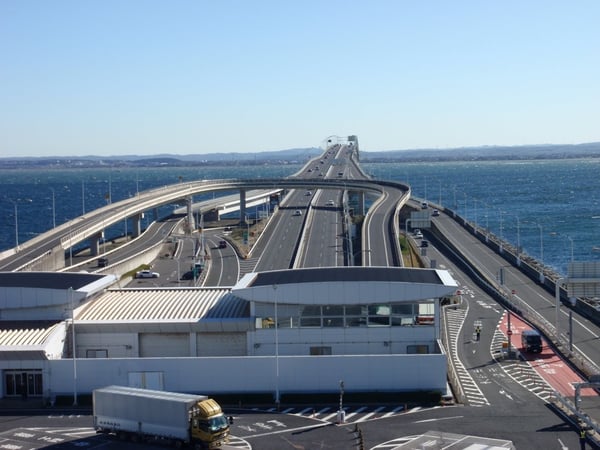
The The tunnel that is part of the Aqualine route is one of the largest in the world, based on the dimensions of its cross-sectional diameters. The tunnel's outer diameter is nearly 14 meters, and its inner diameter is just under 12 meters.
The artificial island is called Umihotaru, and it features rest areas, restaurants, shops, and other recreational facilities. The island also has an observation deck, from which Mount Fuji and Mount Tsukuba can be seen on clear days.
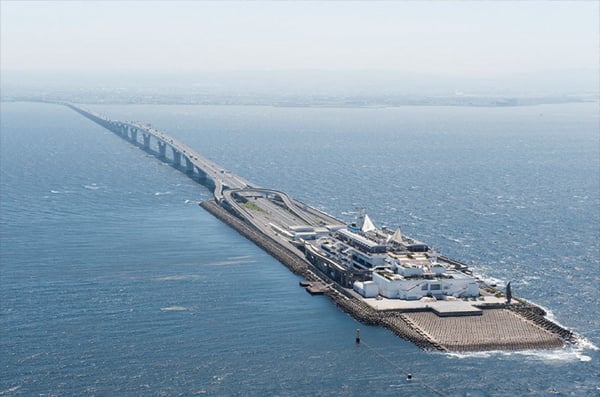
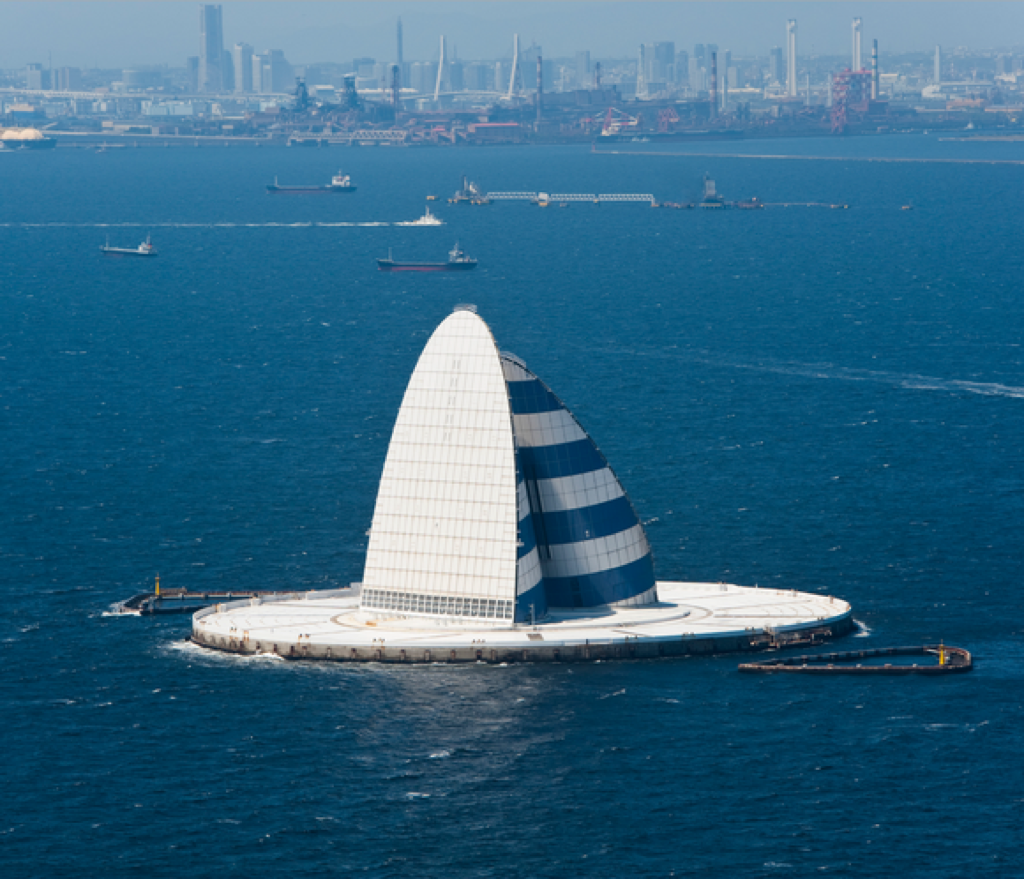
It also features another artificial island, known as the Torre del Viento, which serves as the tunnel's ventilation shaft.
Construction took 9 years. The opening ceremony was held in December 1997. The cost of building the Tokyo Bay Aqualine was approximately $11.2 billion, approximately.