Architecture has accompanied people throughout history, evolving to meet their growing needs. Its history dates back to the Neolithic period, when humans abandoned their nomadic lifestyle and settled in specific areas to develop agriculture.
It was during this period that the first dwellings began to be built to house people, along with other structures that would be used for ceremonies, for storing goods, or for raising livestock.
However, it was the Greeks and Romans who took this art to a new level, perfecting it and giving rise to what is known as classical architecture. In this style, arches and stylized columns began to be used in buildings, the first aqueducts and sanitation systems appeared in cities, and concrete was invented.
From its earliest days to the present, architecture has continued to evolve by incorporating new structural elements, materials, construction processes, and applied technology, which have made it possible to achieve milestones that were previously unimaginable.
With that in mind, throughout this post we’ll be reviewing various topics related to what is known as Architecture 2.0.
Architecture: What Can You Specialize In?
In general, we tend to associate architecture almost exclusively with the construction of buildings. However, there are many specialties and fields in which architects are active.
In the post The 6 Most In-Demand Specialties in Architecture We've already shown you some of the specializations with the best job prospects in today's job market, some of which are closely related to new technologies applied to architecture.
Next, we will focus on explaining what the broadest branches of architecture entail:
Building Construction
It is the best-known and most important specialty within architecture. Its scope of work involves the development of construction projects, which encompasses activities such as overseeing the execution of construction work, ensuring compliance with applicable technical requirements and regulations, and performing structural calculations.
Urban and Regional Planning
Also known as land-use planning or urban planning, it is an interdisciplinary field that combines applied science, politics, and administrative techniques, with the goal of promoting the balanced development of both urban and rural areas.
One example of the activities carried out in this field is the drafting of General Urban Development Plans (PGOU), which classify the land use categories within a given territory and specify which regulations apply to each one.
Interior Architecture
Although we may tend to think that architecture and interior design are the same thing, the reality is that they are two completely different disciplines. We define interior architecture as the discipline responsible for creating spaces through the manipulation of spatial volume and the treatment of surfaces in homes or buildings.
To this end, this field draws not only on architectural knowledge but also on disciplines such as psychology and product design.
Energy-Efficient Renovation
Energy consumption in buildings has become a particularly important consideration in recent years when it comes to their design and construction. Measures such as building orientation, the installation of solar panels, and wall insulation can significantly reduce energy consumption.
Therefore, architects specializing in energy-efficient retrofits are responsible for implementing the necessary measures in a building to achieve energy savings, such as improving the building envelope, upgrading heating and lighting systems, or replacing conventional energy sources with biomass.
If you haven't decided on a major yet, on our Master's Degree in Building Infrastructure Management and Operations We give you the option to configure it so that it fully meets your professional needs.
New Technologies Applied to Architecture
Now that we've covered the most important areas of architecture, we're going to focus on the growing importance of new technologies in the construction industry.
There have been many innovations in the construction industry in recent years, as we show you in our post “6 Innovations That Have Revolutionized the Architecture Industry”, with the primary goal of reducing costs and improving efficiency in construction processes.
To supplement the post mentioned above, here are some other applied technologies that are currently in use:
It encompasses all manufacturing processes that involve layer-by-layer production, such as 3D printing. This helps minimize waste generation and production times.
Some of the most commonly used related technologies include fused deposition modeling (FDM), photopolymerization, powder bed fusion, and directed energy deposition.
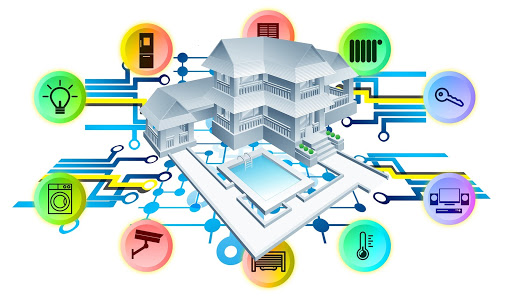
- Automation or Home Automation
Home automation—a concept that a few years ago was seen as something futuristic that would take a long time to become part of people’s daily lives—is now considered normal and has become an integral part of society.
Thanks to smartphones, tablets, and systems like Google Home or Alexa, we can very easily adjust both the conditions and the appliances in our home.
This allows us to turn on the heat before we get home, schedule the lights to turn on at a specific time, or turn electronic devices on and off remotely.
Thermoset materials are those reinforced with advanced fibers (thermoset polymers), achieving strengths 100 times greater than steel while also being very lightweight and easy to work with, which allows architects to create more complex shapes in their buildings.
Some of the buildings where this type of material has already been used include the Queens Doman multi-residential building and the facade of the Orbis building in Melbourne, Australia.
In short, there have been many advances in the construction industry thanks to new technologies. Don't wait any longer—take advantage of this opportunity to continue your education with the Master's Degree in Renewable Energy and Energy Efficiency and the Master's Degree in Energy Efficiency and Sustainability in Building Construction.
The Importance of BIM Methodology in Architecture
At this point, if you're involved in the construction industry and don't know what Building Information Modeling—better known by its acronym, BIM—is, you've got a problem.
Since its use is already mandatory in construction projects in many countries, it is seen as the future of the industry—and as we mentioned in this article, this methodology offers many advantages over the previous one.
Today we're going to focus on some lesser-known aspects of BIM methodology that are gradually becoming more important:
The cryptocurrency craze in recent years has brought attention to one of the technologies behind them: blockchain. Blockchain enables the creation of a synchronized, distributed ledger in which changes to the information are strictly controlled.
And this is what makes it so appealing for BIM methodology, as it involves collaboration among many independent parties and generates a large amount of information.
Finally, it is worth highlighting the benefits of using blockchain-based smart contracts, which are capable of automatically regulating and structuring exchanges within a project.
One of the most important aspects of BIM methodology is the reduction in project design and execution times, thanks to its countless tools and collaborative work.
One of these tools is programming applied to BIM software. Programs such as Dynamo and Grasshopper allow for highly visual programming, making them easy for architects to use.
Using these or other programs, it is possible to automate tasks that are repeated numerous times throughout a project—such as measurements—thereby drastically reducing the time required to complete them.
- Big Data and Machine Learning
During the Development of a construction project using BIM methodology An immense amount of information is generated. That is why the use of Big Data can help us collect, manage, and analyze data.
Furthermore, machine learning can help us optimize the collection and subsequent visualization of the extracted data, facilitating the creation of predictive methods that will make automation possible.
If you want to take advantage of the many job opportunities that will arise in the construction industry related to BIM, we recommend the Master's Degree in BIM Applied to Building Construction.
Architecture on Social Media

The widespread use of social media by a large portion of the population has encouraged professionals in the construction industry to start sharing their knowledge and concerns online.
After compiling the list of the 10 Instagram Accounts Every Architect Should Follow, this time we'll focus on the social media platform Twitter. Below, we recommend some of the most interesting architecture-related profiles in the Spanish-speaking world:
- Architecture Platform (@parq)
With more than 13.6 million monthly visits in 2018, Plataforma Arquitectura is one of the most-read websites in Spanish. On its Twitter profile, it shares all kinds of architecture news and projects with the aim of providing its readers with tools and knowledge.
With more than 100,000 followers on Twitter, The Arquitectura Viva profile shares news about construction projects, exhibitions, and opinion pieces related to the world of architecture.
On the profile of the In the *Ingeniería Real* magazine, we can find very interesting articles related to the world of engineering, architecture, science, and technology, covering a wide range of topics—from 10 tips for building a cyclopean foundation to the visual effects you can achieve in a space depending on the colors you use.
On this profile, you'll find both the blog posts by architect Darío Álvarez, which are will focus on design, urban planning, and innovation in architecture, such as links to current news stories in the industry.
Finally, you can also follow us on our Twitter profile @structuralia where we'll share the latest news of interest from the AECO sector and articles from our blog.
In conclusion, and to wrap up this brief overview of several of the aspects that make up Architecture 2.0, the professionals They are facing an industry transformation that threatens to change everything as we know it today.
To navigate the transition we're currently experiencing, the best option is to continue your training, which is why we recommend our new Master's Degree in Advanced Management of Infrastructure Development and Operations, with a Specialization in Large-Scale Construction Projects, from Alfonso X el Sabio University.