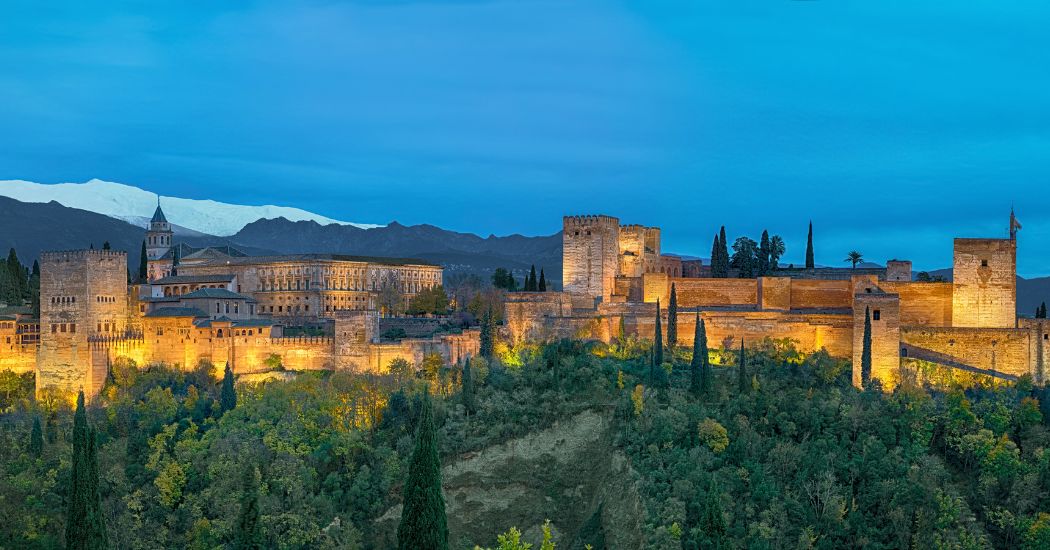
The Al-Andalus architecture It's one of the most evocative there is, and after reading this article, you'll have no doubt about it.
Al-Andalus Architecture and Its Spectacular Examples
Architecture is much more than just the arrangement of bricks and mortar; it is the tangible evidence of the creativity, innovation, and culture of past civilizations. We have already discussed more recent architectural styles such as the High Tech, but By studying the architecture of the past, we not only gain a deeper understanding of our historical roots, but we also uncover the foundations upon which they were built the foundations of modern cities. In this regard, the exploration of the Al-Andalus architecture It becomes essential—and it’s not just about looking back with nostalgia, but about understanding how this legacy continues to influence the way we conceive and design spaces today.
The Al-Andalus architecture Not only do they have a strong impact on Spain's urban landscape, but they also influence numerous architectural styles around the world, highlighting the importance of preserving and studying this invaluable cultural heritage.
What is Andalusian architecture?
The Al-Andalus architecture, also known as the Islamic architecture of Al-Andalus, is an architectural style that flourished in the region of Al-Andalus during the time of the Muslim rule on the Iberian Peninsula, which spanned from the year 711 to the end of the 15th century. This period saw the convergence of Arab, Berber, and Visigothic influences, resulting in a distinctive architectural style that reflected the cultural richness and technical sophistication of the era.
The Al-Andalus architecture It is characterized by a number of distinctive features, such as horseshoe arches, interior courtyards, intricate ornamental details, tile mosaics, fountains, and gardens. These characteristics They not only served aesthetic purposes, but also fulfilled practical functions, such as climate control, the creation of spaces for contemplation, and the promotion of community life. Andalusian architecture not only left its mark on the Iberian Peninsula but also influenced the development of Islamic architecture in other parts of the world, such as North Africa and the Middle East.
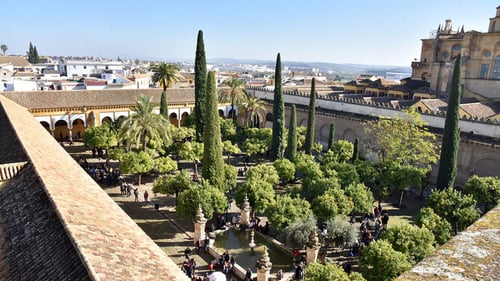 Aerial view of the “Patio de los Naranjos” in Córdoba, a particularly notable example of the patios found in Al-Andalus architecture. Córdoba Day.
Characteristics and Distinctive Features of Andalusian Architecture
As we have mentioned previously, Andalusian architecture is distinguished by a series of characteristic elements that make it unique and recognizable:
1. Horseshoe arches
One of the most iconic elements of Al-Andalus architecture is the horseshoe arch, which is characterized by its elongated horseshoe shape. These arches were frequently used in doorways, windows, hallways, and other structures, adding elegance and sophistication to the spaces.
Inner courtyard:
Al-Andalus buildings were already designed with the principles of today's sustainable architecture in mind. This open space not only provided light and ventilation to the surrounding rooms, but also served as a place for residents to gather and relax.
2. Ornamental details
Andalusian architecture is distinguished by its intricate ornamental details, which include decorative tiles, carved stucco, wooden latticework, and complex geometric patterns. These decorations not only embellished the buildings but also reflected the artistic skill and cultural refinement of the era.
Tile mosaics:
Tile mosaics are another distinctive feature of Al-Andalus architecture. These mosaics, which often featured geometric and floral patterns, were used to decorate walls, floors, and ceilings, creating visually striking and colorful spaces.
3. Fountains and Gardens
Gardens and fountains were common features in Al-Andalus architecture, found in palaces, mosques, and private homes alike. These features not only provided an oasis of coolness and tranquility amid the heat of southern Spain, but also symbolized the connection between water and life—an important metaphor in Islamic culture.
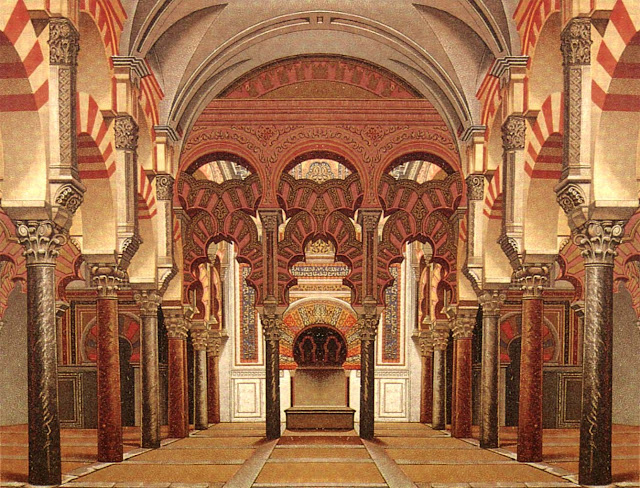
An example of horseshoe arches characteristic of Al-Andalus architecture. sombrasdetinta.blogspot
Taken together, these distinctive features contribute to define Andalusian architecture as a unique and distinctive style which has left a lasting mark on the history of architecture both in Spain and in the Islamic world.
Notable Examples of Al-Andalus Architecture
The Al-Andalus architecture It is full of outstanding examples that showcase the grandeur and beauty of this unique architectural style. Among the most notable are:
1. The Mosque of Córdoba
Considered to be one of the world's most impressive architectural gems, the Mosque of Córdoba is an iconic example of Islamic architecture in Al-Andalus. Originally built in the 8th century, it was expanded and modified several times in the centuries that followed. Its interior features an impressive arcade of columns and horseshoe arches, as well as rich decoration featuring tile mosaics and ornamental details.
2. Almohad Seville
The city of Seville is home to several notable examples of Almohad architecture, a dynasty that ruled Al-Andalus during the 12th century. Among its most notable monuments is the Giralda, the minaret of the old Almohad mosque, which today forms part of the Seville Cathedral. With its brick structure and geometric decoration, the Giralda is an iconic symbol of the city and a testament to the influence of Islamic architecture in the region.
3. The Alhambra in Granada:
Perhaps the best-known example of Al-Andalus architecture, the Alhambra in Granada is a palace and fortress that was built during the 14th century by the Nasrid rulers of Granada. With its intricate stucco decoration, its lush courtyards, and its breathtaking views of the city, the Alhambra stands as a testament to the artistic and cultural refinement achieved during the era of Al-Andalus. Its influence extends far beyond Spain’s borders, and it is recognized as one of the most outstanding examples of Islamic architecture in the world.
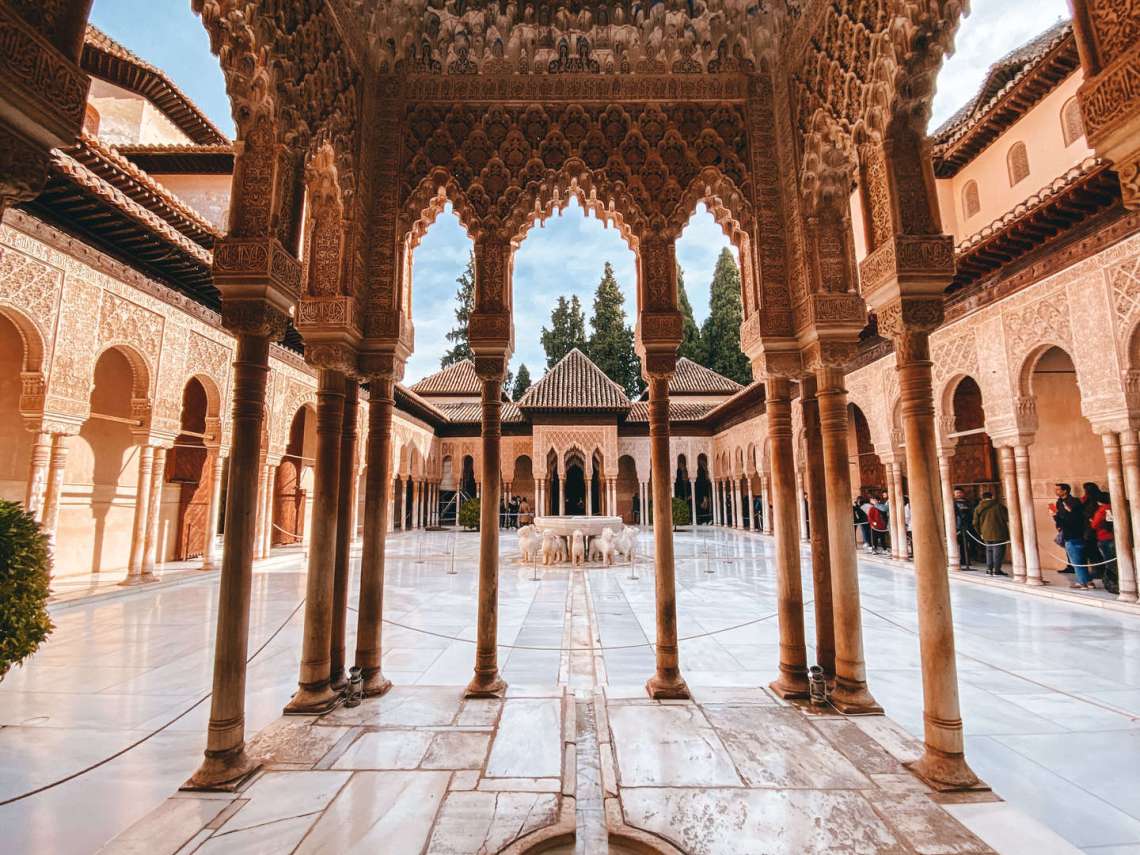
Image of one of the courtyards of the “Alhambra” in Granada, illustrating the characteristic spaces of Al-Andalus architecture. PassporterApp
In conclusion, exploring the richness of Al-Andalus architecture It allows us to build a bridge between the past and the present, deepening our understanding of architectural evolution and enriching our appreciation of cultural diversity. Preserving and studying this architectural legacy is not only an act of reverence toward the civilizations that created it, but also an inexhaustible source of inspiration for contemporary architects and designers. As we marvel at the wonders of the past, it is essential to look toward the future with an open mind and a solid background in architecture.
For those who wish to delve even deeper into the fascinating world of architecture and engineering, we invite you to explore the courses and master's programs offered by Structuralia. These programs, which keep pace with the latest technologies in the field, never lose sight of the importance of understanding and appreciating architectural history. Through a solid, multidisciplinary education, we can to build a future where innovation and tradition come together in harmony, creating spaces that are not only functional but also meaningful and beautiful.