
Many insist that the Data Architecture It's the profession of the future. Here's why.
In the age of the digital revolution, Data has become highly valuable, and even today they can be considered a bargaining chip. This value stems from their potential for identification, analysis, prevention, and even influence on a massive scale. In fact, the proper management of a good database It can ensure the success of a project, the efficiency of a service, or the impact of a political campaign.
We can end up with a very large amount of data, but if we don't structure and organize the way we store and manage that data, we won't be able to realize its full potential. This is where the “data architecture,“, which provides clarity and integration on every aspect and feature of the data, so that it can be handled, processed, and analyzed efficiently.
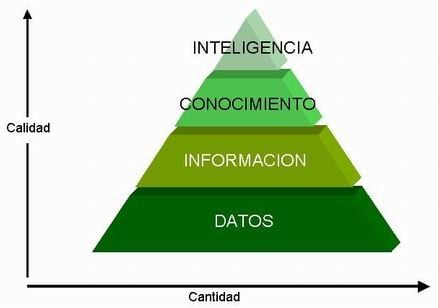
No matter how essential the data architecture, is an aspect that, until not long ago, remained an overlooked part of managing large amounts of data. However, it has been gaining importance day by day because, as the amount of data handled by companies has increased, significant errors and inefficiencies in managing that data have become apparent.
Problems Arising from a Lack of Structure in Data Management
Due to the lack of the importance placed on data architecture, most companies generally exhibited the following issues:
- Among the companies that manage their own data, there were several IT departments , each with its own internal standards and philosophy regarding the structure of the data they handle.
- The application and data usage processes were created based on the business requirements and as we went along, without any standards or data architecture to follow.
- Those responsible for data management were limited to a very short-sighted view, due to the lack of a role dedicated to providing an overview.
- There was no consistent management process data integration during the design phase of IT projects, enabling data engineers to collaborate and integrate efficiently.
All of these factors combined drastically reduce performance, resulting in systems with numerous data transfers, longer troubleshooting times, greater difficulty in finding solutions, and a significant shortfall in the ability to assess the impact of changes—and, consequently, the results.
The Role of the Data Architect
As the volume and complexity of data increased day by day, the role of the [...], emerged to prevent more serious consequences of the aforementioned issues. Data Architect. Which is the figure that is responsible for creating the technology architecture what is needed to support a process of Big Data, including the collection, reading, and output of data.
The specific responsibilities of a data architect include:
- Define the data structuring, that is, it designs, creates, oversees, manages, and implements that structure as part of the company's overall data management process.
- Create logic models for data and establishes standards so that it serves as a common source of information for all those involved in data management.
- Develops and implements strategies for the architecture of all databases.
- Perform connections, data flows, and ETL processes for the various datasets.
- It is data governance officer, ensuring the system's scalability, security, and performance.
These functions have become a vital part of data governance within any company that has the goal of getting the most out of their databases. And that is why it is essential for the Data Architect database knowledge such as SQL, Oracle PL/SQL o Apache Cassandra, and also in Big Data systems (Hadoop, Hive).
Job Outlook for Data Architects
With the Big Data With the focus on expansion and growth for many companies, the demand for data architects continues to grow exponentially. In fact, the analyst firm Deloitte ranks data architecture third on its list of the 17 professions of the future, and currently offers a salary range of between 50,000 and 60,000 euros per year.
Without a doubt, these These professionals are expected to have a very bright future in the IT sector, It is one of the sectors expected to experience the most significant growth in the very near future. This is in line with the growth in the volume of data being handled—a trend that shows no signs of slowing down.
Training for Data Architects
Obviously, given its function, a Big Data Architect must have extensive knowledge of databases, and, of course, be an expert in Big Data. This also involves knowledge of programming, statistics, mathematical analysis, and computer science; but communication skills should not be overlooked, since, as the person responsible for the overall vision for structuring data management, you must be able to convey that vision and implement it throughout the entire team.
To further increase your chances of finding job opportunities, it’s always a good idea to pursue training and education focused on the professional field you’ve set as your goal. Structuralia offers a a significant amount of training material in this sector, as well as a variety of master's degree programs in Big Data related to various sectors, such as, for example, engineering, architecture, urban planning, marketing, and digital transformation.