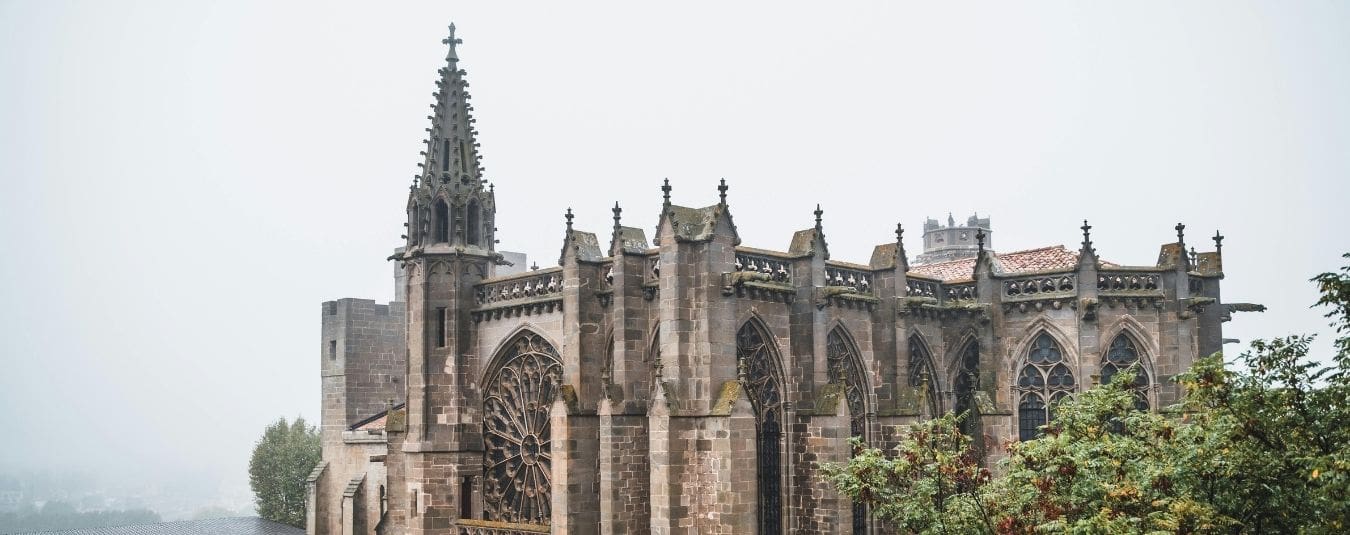
The Gothic architecture marked a turning point in European art between the 12th and 15th centuries. Spain was no exception: its cathedrals, monasteries, and secular buildings became landmarks of the Gothic Art in Spain, leaving a legacy that still attracts tourists, historians, and architecture enthusiasts today.
In this article, we invite you to discover the History of Gothic Architecture in Spain, which characterizes this type of architecture, and some of its most iconic examples.
History of Gothic Art in Spain
The Gothic art It originated in France in the mid-12th century as an evolution of the Romanesque style. The Gothic Art in Spain It developed between the 13th and 15th centuries, having been introduced mainly from France via the The Cistercian Order and the Way of St. James. Despite its trans-Pyrenean origins, the style adapted to the specific characteristics of the Iberian Peninsula, giving rise to a Gothic style with its own distinct identity. The development of Gothic art in Spain can be divided into several main stages:
Early Gothic (late 12th century – 13th century)
This period is characterized by the transition from the Romanesque to the Gothic style, with a strong Cistercian influence that emphasizes austerity and functionality.
The first great cathedrals of this period, such as those in Toledo, Burgos, and León, they closely follow French models (Notre Dame Cathedral, for example). However, distinctive elements are beginning to appear.
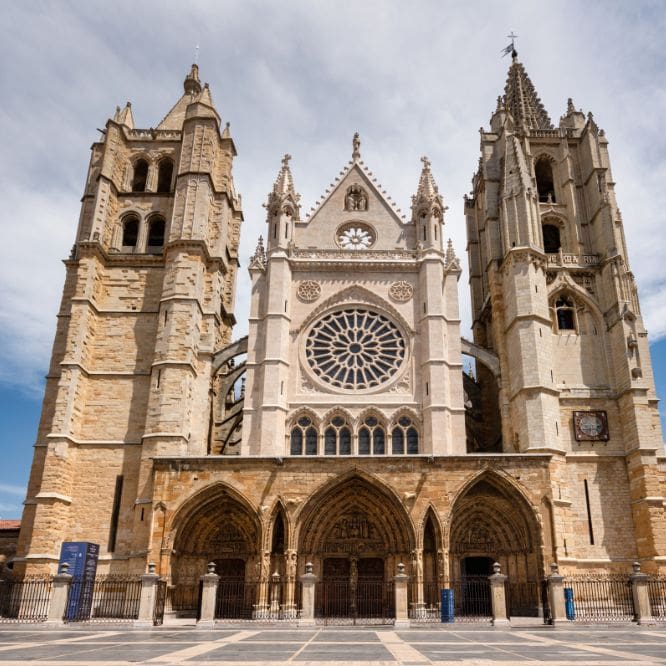
The León Cathedral It is an exceptional example of Classical Gothic architecture in Spain, known for its «architecture of light» thanks to its impressive collection of stained-glass windows—the largest in Europe.
High Gothic (14th century)
The Gothic style became established and adapted to regional characteristics, giving rise to distinct styles:
- Castilian Gothic: The monumentality and verticality are preserved, along with a wealth of decorative elements.
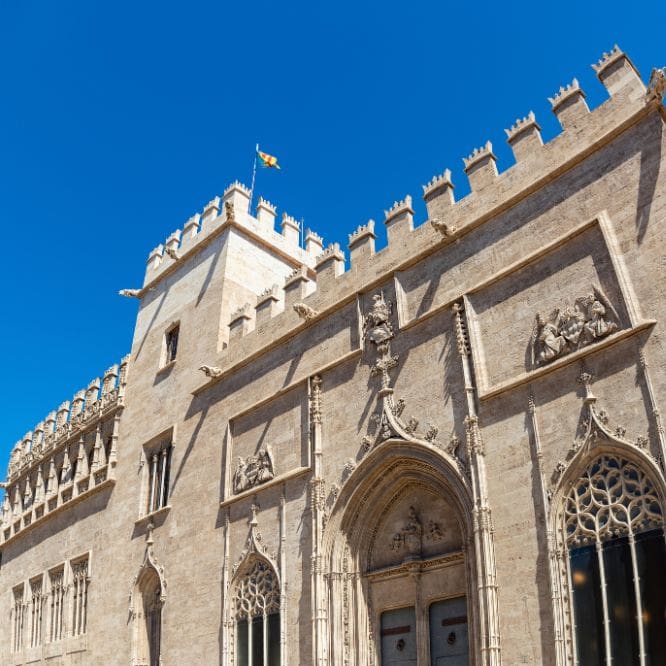
- Catalan or Levantine Gothic: This style, which developed in the Crown of Aragon, is characterized by its horizontal layout and the creation of a unified interior space. Large cathedrals are built with a single nave, or with three naves of similar height, featuring chapels between the buttresses. Outstanding examples include the Barcelona Cathedral y Santa María del Mar. Also worth noting are the fish markets, such as the one in Valencia, which demonstrate the importance of the Gothic style in civil architecture.
Late Gothic (15th century – early 16th century)
This is the most decorative and exuberant stage, featuring a profusion of shapes reminiscent of flames.
Styles unique to Spain are emerging, such as the Elizabethan Gothic, characterized by a blend of Gothic, Mudejar, and Renaissance elements. A prime example is the Monastery of San Juan de los Reyes in Toledo, commissioned by the Catholic Monarchs.
During this period, the last great Gothic cathedrals were built, such as the one in Seville, the world's largest in its category.
Characteristics of the Spanish Gothic Style
The Spanish Gothic art It is characterized by a majestic style, designed to impress visitors with its beauty. Although it shares key elements of the International Gothic style, such as the pointed arch, the ribbed vault and the towering, has its own characteristics, such as:
- Vertical Architecture: Gothic buildings are designed to soar toward the sky as a symbol of spirituality and a connection to the divine.
- Pointed arch: This is another distinctive feature of Gothic architecture in Spain. This pointed arch allows the weight of the structure to be directed downward, which allows for greater height and the construction of large windows.
- Stained-Glass Windows: The stained-glass windows create an atmosphere of colored light that symbolizes the “divine light” inside the churches, which depicted biblical stories. The León Cathedral It is an exceptional example of this use of light.
- Detailed sculptures: Far from being mere ornaments, these works of art told religious stories through detailed scenes, human figures, and elements of nature. This wealth of detail not only added beauty but also conveyed a clear and instructive message to the faithful.
Examples of Gothic Architecture in Spain
The richness of the Gothic Art in Spain This is reflected in the wide variety of buildings that still stand today and allow us to appreciate the evolution of the style over the centuries. From majestic cathedrals designed to impress with their height and light, to civic buildings that showcased the economic power of the cities, the Gothic architecture in Spain He left behind a diverse and fascinating legacy. Below, we highlight some of the most representative examples, and we invite you to visit them to appreciate the scope of this style.
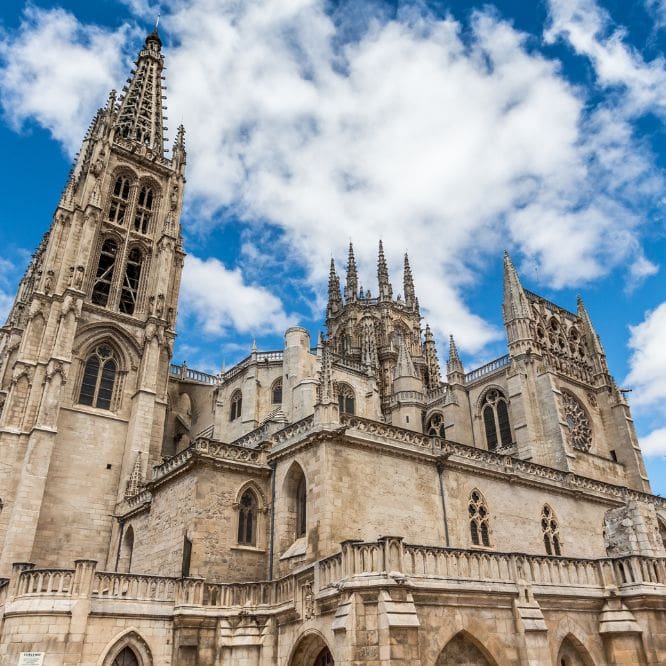
Burgos Cathedral
The Burgos Cathedral is one of Spain's most impressive and iconic Gothic monuments. It is a perfect example of the Classical French Gothic at the time of its construction, but with significant later additions. Its facades, especially the main one, are lavishly decorated with sculptures. Of particular note are the two slender openwork needles the towers, built in the 15th century by Juan de Colonia, which give it an unmistakable silhouette and are an example of Flamboyant Gothic architecture.
León Cathedral
Known as the “Pulchra Leonina”, the León Cathedral It is famous for its stunning stained-glass windows, which cover more than 1,800 square meters and fill the interior with color. Built between the 13th and 14th centuries, it was inspired by the French cathedrals of Reims and Amiens, but adapted to the Spanish tradition.
Its light, airy structure and abundance of large windows make it a perfect example of the Characteristics of the Gothic style, where light symbolizes divinity. For students and tourists, it is one of the most harmonious and beautiful Gothic cathedrals in Europe.
Seville Cathedral
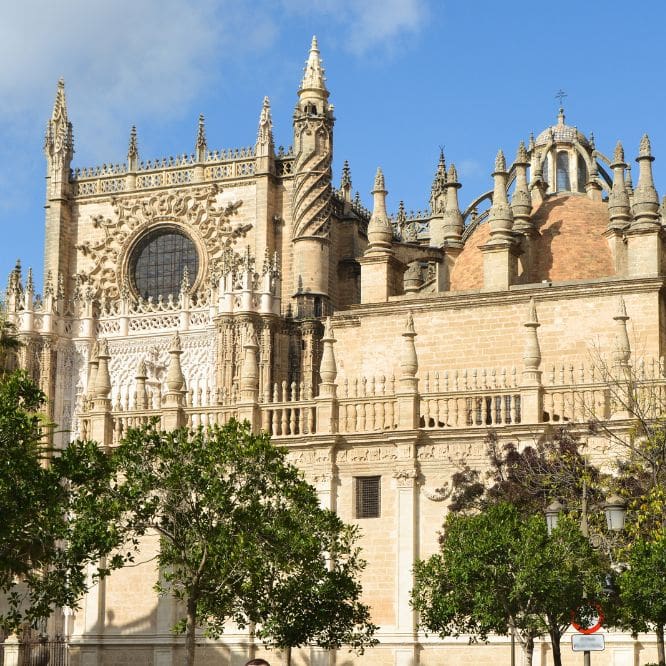
Seville Cathedral is the largest Gothic cathedral in the world and the third-largest cathedral of any style. Construction began in 1401 on the site of the city’s former Aljama Mosque, of which the following remain: Patio of the Orange Trees and the minaret, now the bell tower known as the Giralda. It is an example of the late Gothic and monumental. Its design is magnificent, with five high naves and a rectangular floor plan. The absence of external buttresses and visible flying buttresses gives it an appearance of solid, massive strength. Inside are the remains of Christopher Columbus, a fact that attracts visitors from all over the world.
Valencia Silk Exchange
The Silk Exchange, declared UNESCO World Heritage Site, is the best example of Civil Gothic in Spain. Built between 1482 and 1548, it reflects the economic power of 15th-century Valencia, one of the most important commercial centers in the Mediterranean. Its Trading Hall, with its spiral columns that resemble stone palm trees, is an icon of the Late Gothic architecture. This building demonstrates that the Gothic style was not limited to religious architecture, but was also used to celebrate commerce and urban life.
Conclusion
The Gothic architecture in Spain shows how architectural quality and innovation made a difference in the history of art. Centuries later, the Spanish Gothic art It continues to be studied by architects and engineers.
In the Middle Ages, Gothic builders already faced major challenges related to structural stability, workplace safety, and the proper selection of materials. Have you ever wondered how those same principles of quality, environmental protection, and safety are applied in modern projects today? Find out with our Master's Degree in Quality, Environment, and Safety in Construction.