The Kappa Architecture It fills the gaps left by lambda architecture in the environment Big Data.
The Kappa Architecture in a Big Data Environment
In the fascinating world of Big Data, the ability to adapt to and master new technologies is essential for remain relevant and competitive. One of these innovations that has gained traction is the Kappa Architecture, an evolution of the Lambda architecture that promises to simplify the real-time data processing. Understanding and mastering the Kappa architecture is not only crucial for Big Data professionals, but also opens up new job opportunities in an increasingly demanding market specialized technical skills.
In this article, we will take an in-depth look at the Kappa architecture and its relationship to the Lambda architecture, as well as offer recommendations and highlight the advantages it provides in the field of large-scale data analysis.
The Kappa Architecture and Big Data
The Kappa Architecture is closely related to the Big Data, since it addresses one of the greatest challenges in this field: real-time data processing. A data architecture is a structured framework that defines how data is collected, stored, processed, and used within an organization. This structure provides guidance for designing information systems that meet business and technological needs, while ensuring data integrity, security, and availability.
In a world where speed and precision are key, the Kappa architecture offers an elegant solution that enables continuous analysis of real-time data streams, without the need to maintain two separate systems for batch and real-time processing, as the Lambda architecture does. This means that organizations can gain valuable insights and make quick decisions based on up-to-date data, which is essential in competitive and ever-changing business environments.
 Graphical representation of nodes and blocks in the Kappa architecture. Datahack.es
What is the Kappa architecture?
The Kappa architecture, as we have already mentioned, is an evolution of Lambda architecture in the field of Big Data, designed to address the limitations and complexities inherent in managing systems that require both batch and real-time processing. One of the distinctive features of Kappa architecture is its focus on real-time data stream processing in an efficient and scalable manner, without the need to maintain two separate systems.
This is achieved by using a distributed data processing engine which can efficiently handle both real-time data streams and batch processing. In addition, the Kappa architecture is based on the concept of data immutability, which means that once data is written, it is never modified, making it easier to develop and debug data analysis applications.
1. Kappa Architecture vs. Lambda Architecture
Although the Kappa architecture represents an evolution of the Lambda architecture, both share some fundamental concepts. Both architectures are designed to address the need to process large volumes of data in distributed and scalable environments. However, Where they differ significantly is in the way they handle real-time processing. Whereas the Lambda architecture uses two separate paths For batch and real-time processing, the Kappa architecture unify these data streams into a single system, which simplifies the infrastructure and reduces operational complexity. Although the Kappa architecture represents a shift in the data processing paradigm, Both architectures remain relevant In the context of Big Data, the choice between one or the other will depend on each organization's specific needs and use cases.
Batch and Streaming in the Kappa Architecture
In the context of the Kappa architecture, the term “Batch”refers to the batch data processing, where large amounts of data are collected and processed on a regular basis, usually at predefined time intervals. This approach allows you to analyze complete sets of historical data, which is useful for tasks such as training machine learning models and generating retrospective reports. On the other hand, the “Streaming”refers to real-time data processing, where Data is processed as it comes in, which enables the detection of and immediate response to events in real time.
The Kappa architecture unifies these two approaches, enabling both batch and real-time data processing within a single system, which simplifies the infrastructure and reduces operational complexity. This is achieved through the use of a distributed data processing engine that can efficiently handle both real-time data streams and batch processing.
Applications Where the Kappa Architecture Shines
The Kappa architecture excels in a variety of real-world use cases, especially in environments where Speed and accuracy in data processing are critical. For example, in the financial sector, the Kappa architecture is used for real-time analysis of financial transactions, fraud detection, and risk management. By combining batch and real-time processing, financial institutions can identify suspicious patterns and take immediate action to mitigate risk.
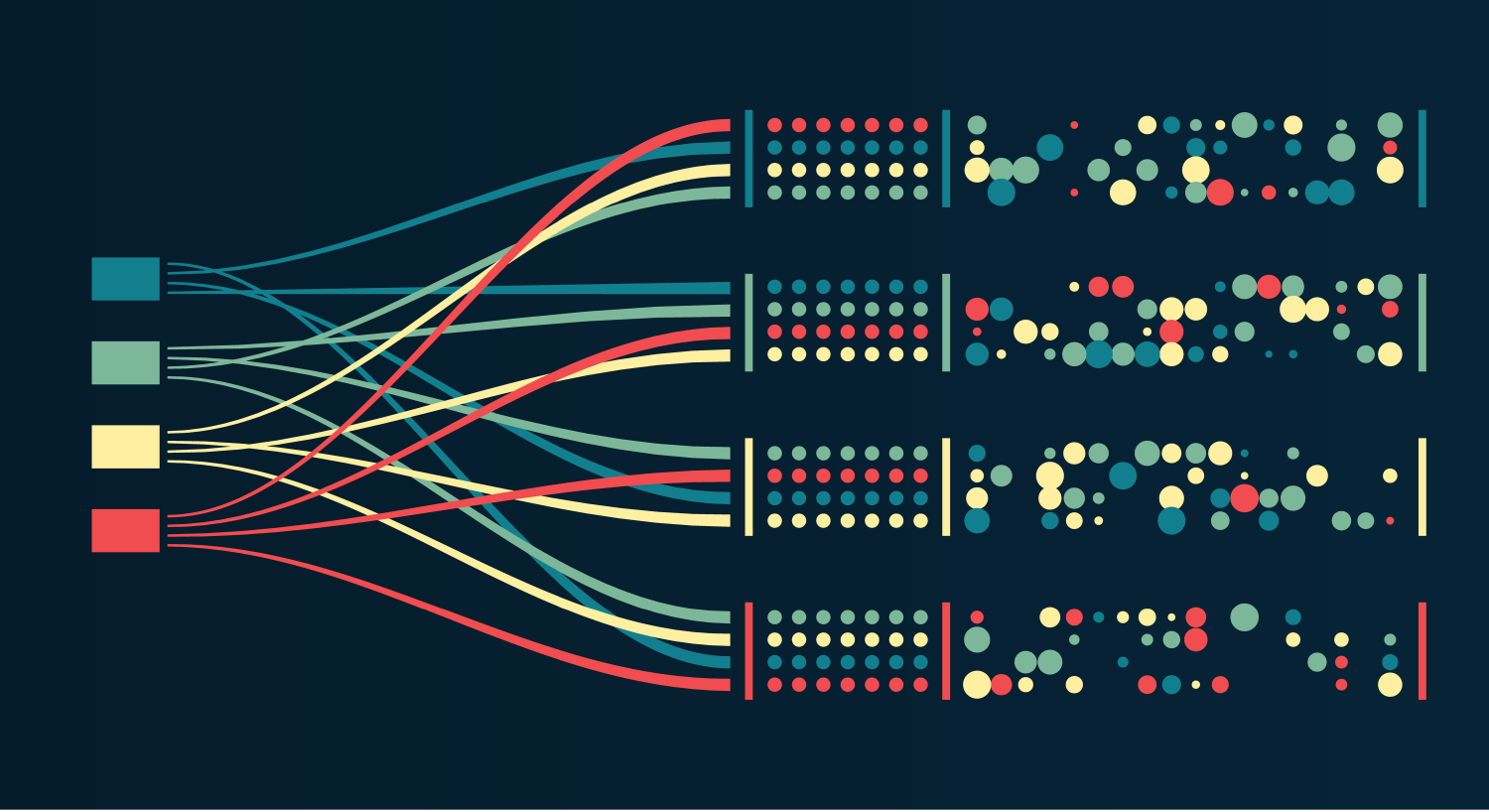
A graphical representation of Kappa architecture. pradeepl
Another notable example is in the field of Internet of Things (IoT), where the Kappa architecture is used for the continuous processing of large volumes of data generated by connected devices. This allows for real-time monitoring of device performance, predict potential failures and optimize operational efficiency. Essentially, the Kappa architecture provides a solid foundation for a wide range of real-world applications, enabling organizations to make the most of their data to gain valuable insights and make informed decisions quickly.