The organic architecture It seems to go beyond a passing trend and represents a timeless architectural style.
Organic architecture continues to be influential today
The construction industry's environmental footprint continues to worsen, making the search for sustainable and environmentally friendly solutions more urgent than ever. Organic Architecture It emerges as a crucial response to this contemporary challenge, offering an approach that not only seeks to create livable spaces, but also prioritizes harmony with nature. In this context, the term «organic architecture» evokes a promise of design that blends harmoniously with its surroundings, minimizing its environmental impact and maximizing well-being of those who live there. Focus on organic architecture It's more than just an aesthetic choice; it's a statement of commitment to the health of the planet and to future generations.
What is organic architecture?
Organic architecture is first attributed to the architect Frank Lloyd Wright In the early 20th century, it embraced a design philosophy inspired by the patterns and shapes found in nature. This architectural style seeks to create buildings that harmonize with their surroundings, adopting fluid, organic forms that mimic the beauty and functionality of the natural elements.
Although Wright popularized the concept, the idea of architecture that blends with nature has existed throughout history, with its roots in ancient cultures that built their homes and temples in harmony with the landscape adjacent. However, it was in the 20th century that the term «organic architecture» began to be used to describe this a specific focus on architectural design, thus marking the beginning of a movement that is now back in the spotlight as an alternative in the search for sustainable solutions for the modern world.
.jpg)
The Fallingwater House, designed by Frank Lloyd Wright, is one of the most influential examples of organic architecture. RevistaAD
Characteristics of Organic Architecture
Organic architecture stands out for a number of characteristics that make it unique and significant in the contemporary architectural landscape. First, organic architecture seeks to harmonious integration with the natural environment around it, incorporating forms and materials that reflect and complement the landscape. This integration is achieved through the use of fluid lines and gentle curves that mimic nature, in contrast to the straight lines and sharp angles typical of more minimalist architecture.
In addition, organic architecture prioritizes sustainability and energy efficiency, using local materials and construction techniques that reduce the building's environmental impact. This may include the use of recycled or locally sourced materials and the implementation of renewable energy systems and the incorporation of passive design strategies to maximize natural ventilation and lighting.
Another distinctive feature of organic architecture is its focus on user experience and human well-being. Spaces designed using this approach seek to create environments that promote connection with nature, promote the health and comfort of occupants, fostering creativity and emotional well-being. This is achieved through attention to detail in the selection of materials, the layout of the space, and the incorporation of natural elements.
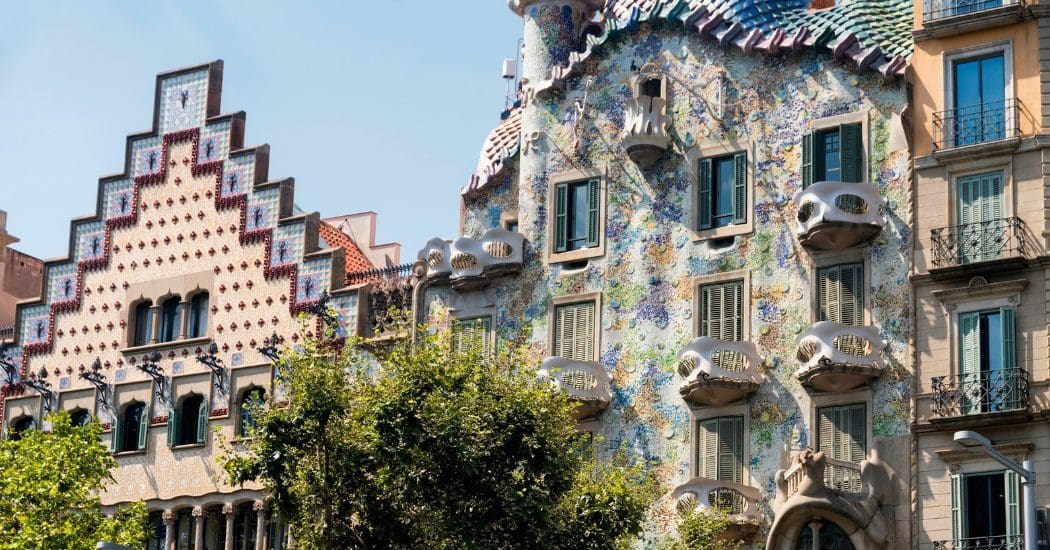
 A prime example of Antoni Gaudí's organic architecture. Yale.Edu
Leading Architects of Organic Architecture
1. Frank Lloyd Wright
Considered one of the pioneers of organic architecture, Wright was a visionary who distanced himself from the more academic branch of the field, and whose work profoundly influenced the development of this architectural movement in the United States. His most iconic works, such as Fallingwater and the Robie House, stand out for their ability to blend into the natural environment, their revolutionary use of materials, and their attention to detail in interior design.
2. Antoni Gaudí
Known for his masterpieces in Barcelona, such as the Sagrada Familia and the Park Güell, Gaudí is another architect considered rebellious and independent for his time. His structures are characterized by their curved and sinuous forms, inspired by natural geometry and organic elements such as plants and animals. Gaudí is also noted for his masterful use of decorative and symbolic elements in his designs, creating spaces that evoke a sense of movement and vitality.
3. Renzo Piano
Although Renzo Piano is known for a variety of architectural styles, his holistic approach to sustainability and integration with the environment has led him to be recognized as a champion of organic architecture in its most contemporary form. Projects such as the Pompidou Center in Paris and the California Academy of Sciences Building in San Francisco They demonstrate their commitment to using eco-friendly materials, maximizing natural light, and creating spaces that blend harmoniously with their urban and natural surroundings.
Exemplary Buildings of Organic Architecture
1. Fallingwater – Frank Lloyd Wright (1935)
Located in Pennsylvania, United States, Fallingwater is perhaps the most quintessential example of organic architecture. Designed by Frank Lloyd Wright, this residence was built atop a natural waterfall, blending beautifully with its surroundings. Wright used local materials such as stone and wood, and created wide overhangs that give the impression that the house emerges from the rock and blends in with the surrounding nature. Fallingwater is an icon of modern architecture.
2. Sagrada Familia – Antoni Gaudí (construction began in 1882)
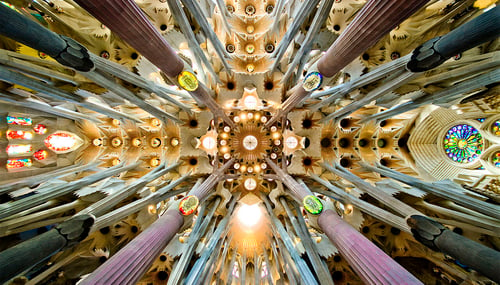
This monumental Catholic church in Barcelona, Spain, is a masterpiece of organic architecture designed by Antoni Gaudí. Inspired by nature and Gothic architecture, Gaudí designed the Sagrada Familia with curved, organic forms that mimic trees and natural shapes, and the structure is filled with ornamental details representing elements of nature, such as leaves, flowers, and sea creatures.
3. Guggenheim Museum Bilbao – Frank Gehry (1997)
Located in Bilbao, the Guggenheim Museum is a contemporary example of organic architecture. Designed by architect Frank Gehry, the museum is characterized by its undulating form and titanium cladding, which reflects light in ever-changing ways throughout the day. Gehry drew inspiration from the shape of a ship and the topography of the surrounding landscape to create this innovative structure, which blends harmoniously with the river flowing alongside it and the industrial city that surrounds it. The Guggenheim Museum Bilbao has become a symbol of urban regeneration and a world-renowned architectural landmark.
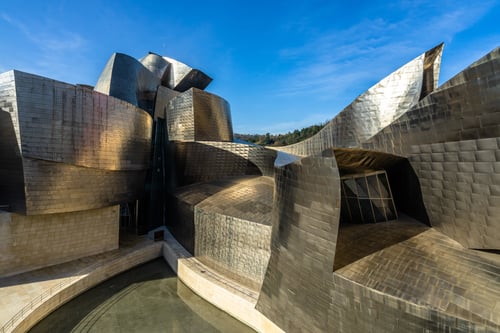 The Guggenheim Museum in Bilbao: Frank Gehry's interpretation of organic architecture.
In a world where concerns about the environment and sustainability are becoming increasingly urgent, organic architecture is emerging as a beacon of guidance and hope for the future of the sustainable construction. This architectural movement shows us that it is possible to design and build structures that are not only functional and aesthetically appealing, but also respectful of the environment and beneficial to those who live in them. At the embrace the principles of organic architecture, the architects of tomorrow can aspire to create spaces that not only meet human needs but also promote harmony with nature and the health of the planet.
For those who wish to explore the principles and practices of organic architecture in greater depth, we invite you to discover the extensive catalog of high-quality online training courses available at Structuralia. From courses to specialized programs, these learning opportunities offer the chance to broaden your horizons and acquire specific knowledge that can enrich and strengthen professional practice. By investing in continuing education, Architects can stay up to date on the latest trends and techniques in the field of architecture, thereby making a significant contribution to the creation of a more sustainable and livable built environment for everyone.