The postmodern architecture He set out to challenge the modern ideas of the 20th century; here are his main points of reference.
Postmodern Architecture and Its References
For professionals in the construction and architecture industries, Reflection on architectural styles is essential. In a constantly evolving world, where technical and functional needs are continually changing, understanding and appreciating the legacy of various architectural movements is essential to informing and enriching our current practices. Among these movements, Postmodern Architecture highlights a phenomenon worthy of study and analysis. In this article, we will explore the historical context, the main characteristics, and notable examples of Postmodern Architecture, with the goal of inspiring and enriching our professional perspectives.
The Emergence of Postmodern Architecture
Postmodern architecture emerged as a reaction to the harsh conditions of the Modernism and the stylistic uniformity that characterized much of the 20th century. In the late 1960s and early 1970s, architects and theorists began to question the premises of modernism, seeking alternatives that respected cultural, historical, and social diversity. This period It was characterized by greater formal freedom, an appreciation for ornamentation, and a renewed appreciation for historical architectural styles, all within a context shaped by globalization, the information explosion, and technological advances. Postmodern architecture, as a result, becomes a reflection of this complex and ever-changing reality, blending elements from the past with the demands and expressions of the present.
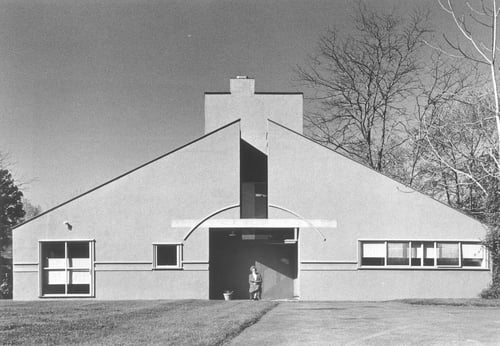 The Vanna Venturi House, designed by Robert Venturi in 1964, is a landmark of postmodern architecture. ArchDaily
Characteristics of Postmodern Architecture
Postmodern architecture is distinguished by a series of characteristics that set it apart from the principles of Modernism. First, stylistic diversity is one of its most distinctive features; unlike Modernism, which sought a universal and homogeneous aesthetic, postmodern architecture embraces the diversity of styles and historical references, allowing traditional and contemporary elements to coexist within a single work. This stylistic blend is reflected in the a combination of simple geometric shapes with ornamental details, the integration of traditional and modern materials, and experimentation with scale and proportion.
Another key feature of postmodern architecture is its focus on Contextualization and Narrative. Postmodern architects are concerned with the surrounding area and the history of the place where it stands a building. They often seek to incorporate elements that reference local culture, geography, or historical memory, thus creating an emotional and visual connection with the context. This attention to the surroundings is evident in the use of local materials, the reinterpretation of vernacular architectural styles, and the creation of spaces that invite reflection and contemplation of the place’s identity.
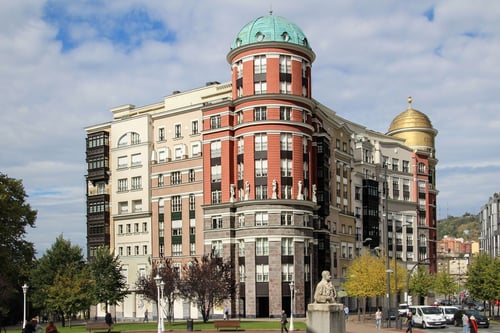 The Artklass Building in Bilbao by Leon Krier. Bilbao Architecture
4 Iconic Buildings of Postmodern Architecture
1. Artklass Building in Bilbao – Leon Krier (1993)
Located in Bilbao, Spain, the Artklass Building is a prominent example of postmodern architecture. Designed by the architect Leon Krier, this building is characterized by its reinterpretation of classical forms and its integration into the urban environment. With an ornate facade and a spatial layout that evokes the scale and proportion of historic architecture, the Artklass Building It stands out as an architectural landmark in the city's revitalization.
2. Fontivegge Business Center – Aldo Rossi (1982)
The Fontivegge Business Center, designed by the renowned Italian architect Aldo Rossi, is another notable example of postmodern architecture. Located in Perugia, Italy, this urban complex is characterized by its emphasis on monumentality and symmetry, as well as its use of simple geometric shapes and vibrant colors. Rossi incorporated historical and cultural elements into the design of the Business Center, creating a space that reflects the city's identity and character.
3. Vanna Venturi House – Robert Venturi (1964)
The Vanna Venturi House, designed by the American architect Robert Venturi, is a pioneering example of postmodern architecture. Located in Philadelphia, Pennsylvania, this single-family home challenges the stylistic conventions of modernism by incorporating ornamental elements and historical references into its design. With its asymmetrical façade and ironic use of classical elements, the Vanna Venturi House has become a symbol of the stylistic diversity and formal experimentation that characterize the postmodern movement.
4. The Cathedral of Our Lady of the Angels – Rafael Moneo (2002)
This cathedral, located in Los Angeles, California, is a contemporary example of postmodern architecture. Designed by Rafael Moneo, the structure combines elements of the Catholic tradition with a modern and functional aesthetic. Its design features a marble and bronze façade that reflects sunlight, as well as a bright and welcoming interior that invites contemplation and spiritual reflection. The Los Angeles Cathedral thus exemplifies postmodern architecture’s ability to reinterpret and revitalize sacred architecture in a contemporary context.
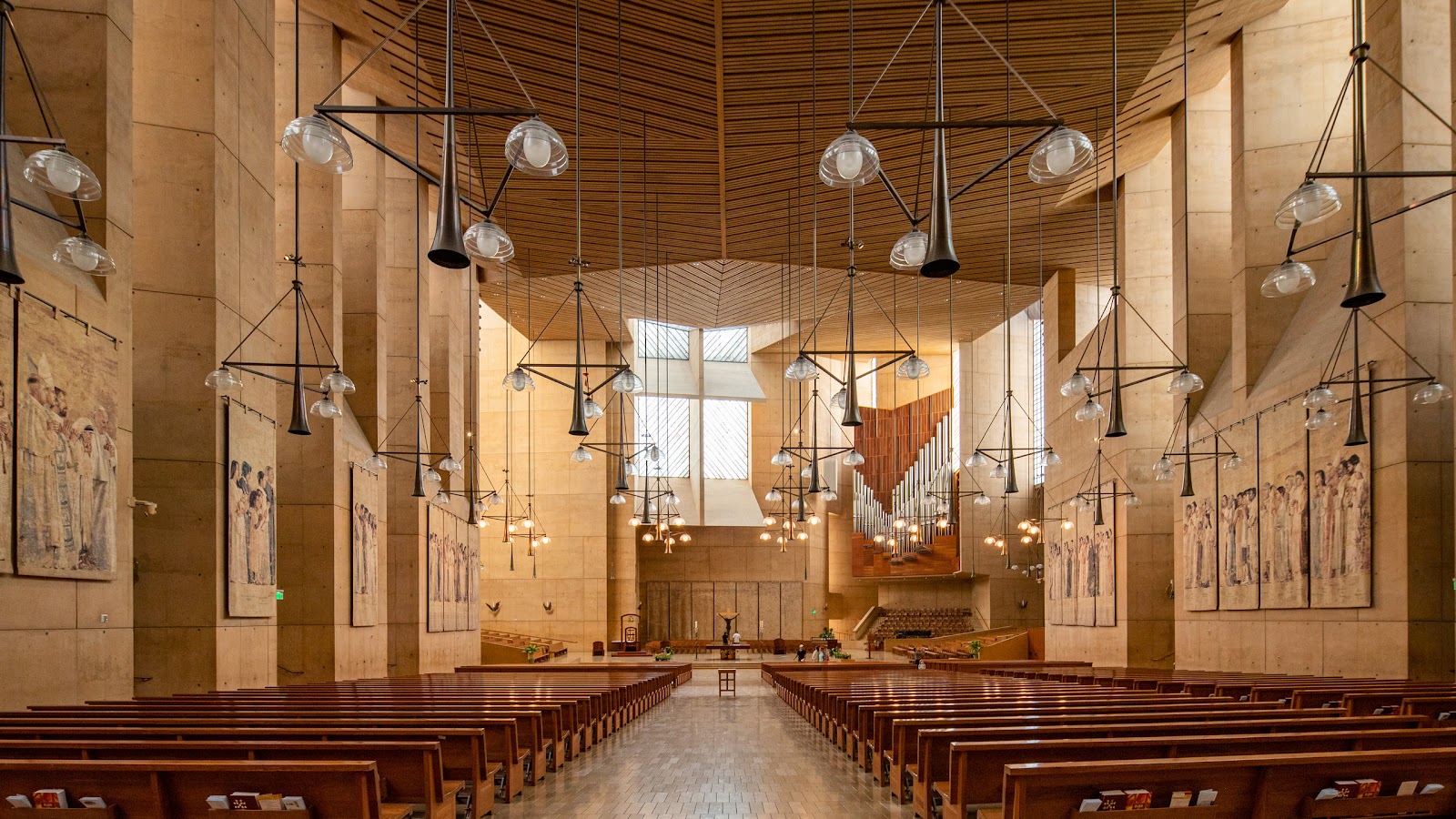 Cathedral of Our Lady of the Angels, designed by Rafael Moneo in 2002, is another fine example of postmodern architecture. Expedia.es
In the practice of architecture, recognizing the historical evolution of our field is essential. Understanding Understanding how architectural movements of the past have influenced and shaped the present allows us to innovate in an informed and thoughtful way, creating spaces that not only meet functional needs but also tell stories and connect with the communities they serve. Furthermore, in an ever-changing world, Continuing education becomes an invaluable tool for gaining access to the best job opportunities and stay up to date with the latest trends and technologies. We invite all professionals in the field to explore the extensive catalog of architecture courses and master’s programs offered by Structuralia, a platform dedicated to educational excellence in the fields of construction and architecture. Let us always remember that, as architects, Our commitment to excellence and innovation never ends, and that the pursuit of knowledge is the path to realizing our creative and professional potential.