The Andes Mountains form a natural barrier between Chile and Argentina, which share one of the longest borders in the world. Until recently, there was only one commercial connection via a highway, which is why the Agua Negra Tunnel stands as one of the most important infrastructure projects in recent times for Latin America.
Agua Negra has always been a pass used by civilizations on both sides of the Andes; as early as the 19th century, it was an important cattle-driving route for Chile and a source of income for the various manufacturing businesses established in the port of Coquimbo. In the 1960s, the highway was inaugurated; today, both Argentina and Chile are transforming it into a modern road that will form part of the Latin American megaproject known as Bioceanic Corridor and whose main focus is at the Agua Negra Pass.
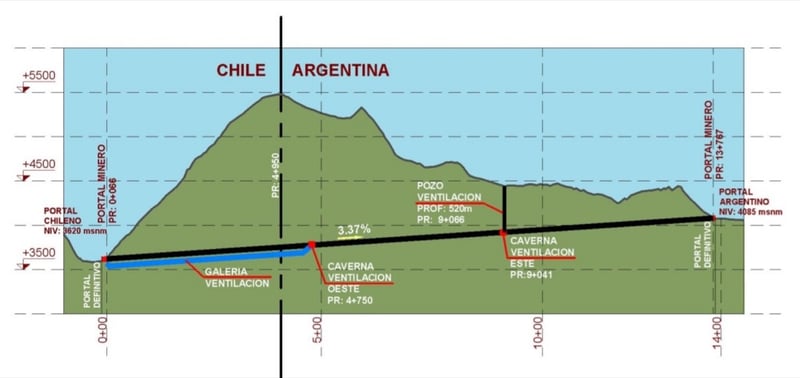
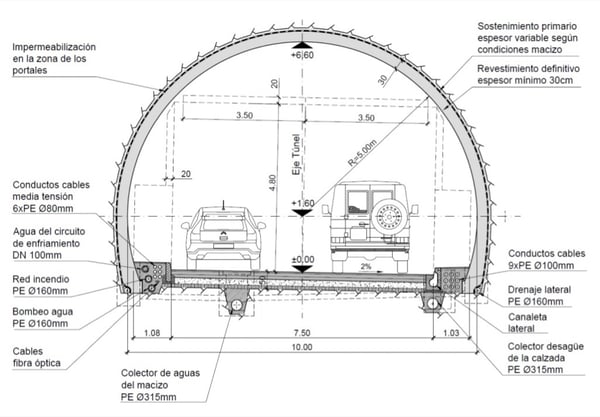
The project calls for two parallel tunnels of 13.9 kilometers long y 11 meters in diameter each, which will run at an average elevation of 3,800 meters above sea level above sea level.
Recently, the first round of bid openings took place, during which the 10 consortia—comprising 29 companies interested in carrying out the construction of this major project—were announced, including Spanish construction firms such as ACS, FCC, Sacyr, OHL, and Ossa.
{youtube}v=QGVRjWt7f9E{/youtube}
Preliminary studies indicate an approximate implementation budget of more than $1.2 billion and also provide for a 9-year implementation period where construction will be carried out according to the following construction schedule:
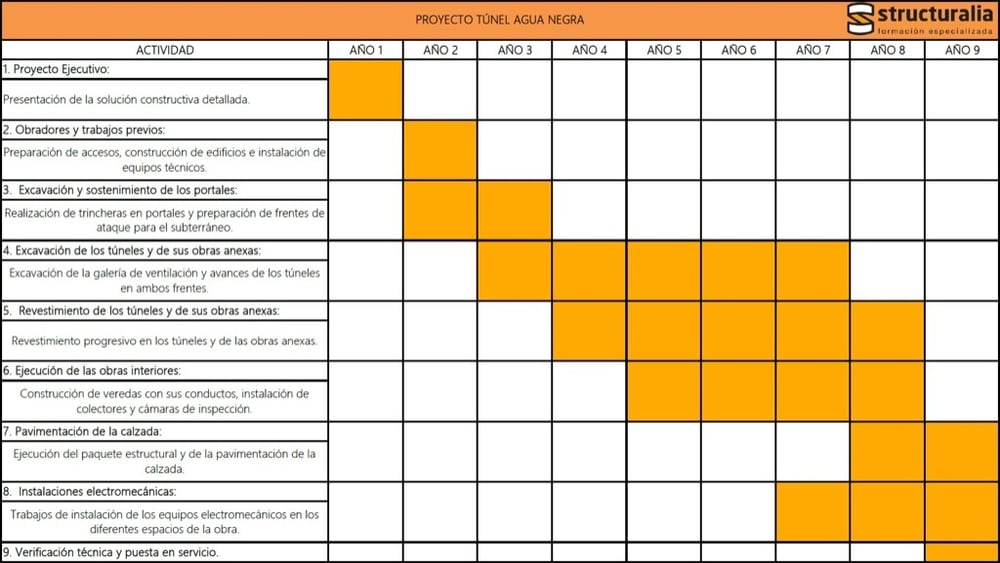
- Presentation of the constructive solution detailed, specifying the procedures, techniques, materials, and equipment to be used in the execution of the project, including project descriptions, drawings, calculations, specifications, cost estimates, and schedules.
- Surface Preparation and entrances construction sites, implementation of measures to protect against natural hazards, construction of the buildings, and installation of technical equipment at the entrances.
- Excavation of the trenches in the portal areas and preparation of the lines of attack for the underground tunnel.
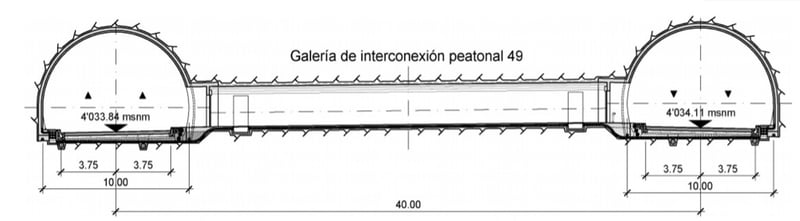
- Start of excavation of the ventilation shaft (Chilean side) and the subsequent start of tunnel excavation on both fronts, with progressive excavation to the meeting point (Meeting Point, PK 6+500). Progressive excavation of ancillary works (interconnection tunnels, power stations, ventilation shafts).
- Progressive implementation in sections (of 1,500 m) of the construction work on tunnel lining Starting at the portals with the installation of the drainage system, pouring of the foundation, and subsequent lining of the vault. Progressive lining of the ancillary structures (interconnecting galleries, control centers, ventilation shaft). Lining of the ventilation tunnel is being carried out starting from the West control center toward the Chile portal.
- Once the exterior cladding is complete, interior construction work begins. This work consists mainly of the sidewalk construction including their conduits (cables, fire hydrants, etc.), the installation of the collectors and their respective inspection chambers. In the interconnection tunnels and at the power plants, the slabs and partition walls are constructed, along with other civil engineering elements (duct installation, cable chambers, painting, false floors, etc.).
- After completing the sidewalks and other work in the tunnel floor area, construction will proceed on the structural package and the road paving which will be carried out in phases, depending on availability.
- Once the civil engineering work is complete, installation of the electromechanical equipment at the various sites and locations along the project. To optimize construction time, installation work is carried out from both portals and simultaneously in the North and South tunnels by two independent but coordinated teams.
- Finally, after installation, the electromechanical components will be verified and put into service. After the road opens to traffic, a period of comprehensive testing is planned to verify and optimize the performance of the various electromechanical systems that have been installed.