
Originally published on July 13, 2020; updated on July 28, 2022
The Path of the digital innovation and Big Data It's the future, but it's worth being prepared to embrace it with as few obstacles as possible.
Big Data For Businesses: Things to Consider
These days, we as citizens are constantly generating data: transactions, geolocation data, photographs, communications, etc. This data may or may not be structured, but Thanks to Big Data, companies can organize and analyze these massive and volatile amounts of data data to achieve significant business benefits.
.jpg)
Source: Onetomarket.es
These days, it's hard to find a company that isn't—or doesn't want to be—on the path to digital innovation given that information and data have become a highly valuable and crucial asset in the industry. On a large and medium scale, within this Fourth Industrial Revolution we are currently experiencing, there is no room for analog data acquisition systems, if you want to be truly competitive, you need to turn to the Big Data for Businesses.
Big Data and Business Intelligence
These two concepts are inseparable in the business world. On the one hand, the Business Intelligence is the information that a company can obtain about its production, its competitors, its market… This data is processed and filtered to make decisions or predictions based on the various data points. When these numbers are reached on a large scale, that is when it becomes essential to have a system Big Data for Businesses. This makes it possible to manage them in such a way that the information that you want to extract is as reliable as possible.
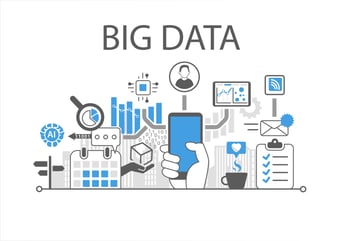
Studies on Big Data in the Harvard Business Review, they state that e-commerce companies that have adopted big data analytics have managed to increase their productivity by between 5% and 6% compared to their competitors. In fact, they say that the key is compile all this information into a program that is easily accessible to all members of the work team.
The Master's Degree in Big Data and Business Intelligence Structuralia provides an overview of the new paradigms that must be taken into account in corporate Big Data projects.
Which companies use Big Data, and how have they improved their results?
Thanks to this type of “artificial intelligence” Companies such as Netflix, Amazon, Spotify, and Google are able to dominate their respective markets. Although it may seem that Big Data is only useful to technology companies, the truth is that the e-commerce It is one of the sectors that has been most successful at capitalizing on these tools and, above all, on its users' data.
Ultimately, big data helps companies make the best decisions about their future. That’s why we want you to learn about these companies that owe their success to this technology:
-
-
Amazon. This company uses big data with the goal of to make it easier for its customers to find products. How does it do that? By analyzing data from the Purchase and product search history.
-
Apple. This technology company owes its success, in part, to Big Data, as it is responsible for providing a better user experience to its customers through a wide range of applications.
-
Coca-Cola. The world's most famous soft drink company is no exception to the Big Data craze and uses it in various ways, such as, for example, to to understand how consumers perceive the brand, how they consume it, where and how, and so on.
-
Starbucks. Before opening a new store, the coffee company uses big data to to have information about the area, traffic, and consumer behavior and ensure success.
-
Netflix. The platform of streaming uses Big Data to achieve retain their customers conducting a consumption analysis to create personalized recommendations.
-
Facebook. Through Big Data, it enables the advertising campaigns reach the right audience.
-
Spotify. Just like Netflix, the music platform on streaming enables its customers to access content tailored to your musical preferences.
-
Benefits of Big Data for Businesses
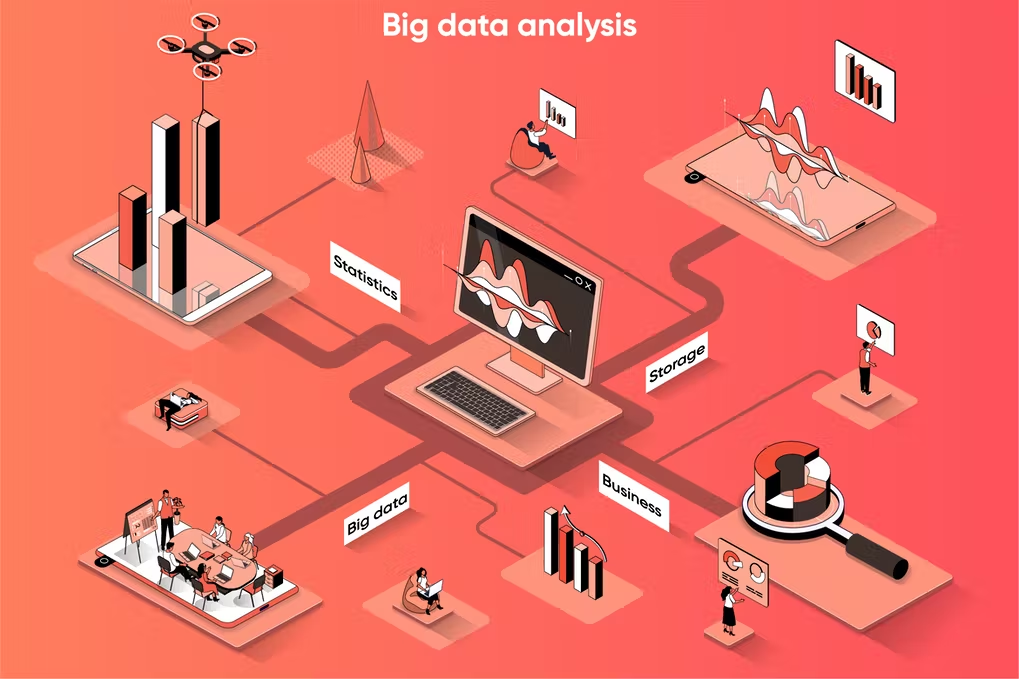
The data analysis o Big Data in Businesses allows them to learn about What's the next step? what steps they should take, identify consumption patterns and correlations, and, above all, it gives them a clear understanding of the market to drink smart and safe decisions. The benefits that these types of systems offer companies can be summarized as follows:
-
Streamlines decision-making, since information is the foundation of decision-making, and even more so when we can handle large amounts of it in such a dynamic and clear.
-
Thanks to its ability to broaden the market landscape, it enables the creation of much smarter strategic marketing plans, as it facilitates the analysis and prediction of complex scenarios.
-
Allows you to create products or more efficient services and lower costs because it is easy to analyze how that product is performing in the market, while also providing a clear picture of the costs and processes involved in its production.
-
It has been shown that a highly effective in building customer loyalty, since it offers the ability to personalize customer service and communication with extensive customer or prospect databases.
-
It's very useful when it comes to identify and model the possible variables in an environment market conditions, factors that may, for example, affect customer behavior during certain times of the year
-
One of the greatest advantages is the ability to obtain feedback and instant feedback, in response to any change or action.

Challenges of Big Data
However, working on the Big Data in Businesses requires a lot of strategic planning, investment and, above all, a radical paradigm shift, in order to truly “to govern” any data that is collected. The term used for this is “Data Governance”, and it means that the data must have the necessary permits, be authorized, up-to-date, and accessible at a database, with the fewest errors, and always maintaining security and privacy. This means we need to carefully consider the following challenges:
-
Achieve integrate so many sources and types of data with complex structures
-
Processing such a large volume of data within reasonable timeframes
-
To be able to respond to high volatility of the data
-
The lack of quality standards unified and sufficiently mature data

Once these challenges posed by the systems have been overcome Big Data for Businesses, it will be possible to unlock their full potential the immense amount of data that we generate individually and in our interactions with others, and which is on the rise. So it’s not far-fetched to start getting used to the idea that Big Data is not only the present, but also The Future of Small and Large Businesses.