It's important to know what options we have for to condition spaces, among which the following stand out: heat storage units.
Condensing boilers: Europe is promoting their use
In the ongoing search for solutions that promote energy conservation and environmental protection, Air conditioning systems play a vital role in our homes and workplaces. These devices not only provide us with thermal comfort, but also offer an opportunity to optimize energy consumption, and the condensing boilers They stand out as an option that offers efficiency and reduced emissions. In this article, we will explore in detail what condensing boilers are, how they work, their advantages, and how European regulations affect them, thereby contributing to a deeper understanding of this key technology in the field of climate control and energy conservation.
What are condensing boilers, and how do they work?
A condensing boiler is an advanced type of boiler that optimizes energy efficiency by recover the waste heat generated during combustion. Unlike conventional boilers, these units take advantage of the latent heat of water vapor present in the exhaust gases through a condensation process.
In the first stage, the combustion of the fuel generates heat and hot exhaust gases that pass through a heat exchanger, transferring energy to the water in the heating system. Then, in the second stage, the exhaust gases are cooled, condensing water vapor and releasing even more heat, which is used to further heat the water in the system, thereby improving overall efficiency and reducing pollutant emissions.
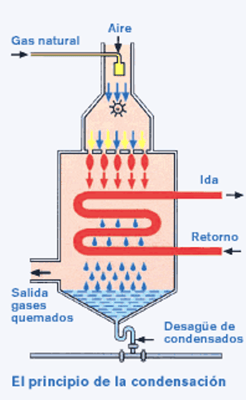 How a condensing boiler works. Matmax
Benefits of Using a Condensing Boiler
1. Greater energy efficiency
Condensing boilers recover waste heat from flue gases, making them considerably more efficient than conventional boilers. This increased efficiency translates into lower fuel consumption and, therefore, significant long-term savings on energy costs.
2. Reduction of Pollutant Emissions
By recovering and utilizing the latent heat of the water vapor present in exhaust gases, condensing boilers reduce the amount of pollutants released into the atmosphere. This contributes to a smaller carbon footprint and helps mitigate the environmental impact associated with heating and cooling buildings.
3. Greater thermal comfort
The ability of condensing boilers to provide more uniform and consistent heat compared to other heating and cooling systems ensures greater thermal comfort for building occupants. In addition, because they operate more quietly than conventional boilers, these units also contribute to a quieter and more pleasant environment.
4. Versatility and Compatibility
Condensing boilers are compatible with a variety of heating systems, including underfloor heating, conventional radiators, and water-based air conditioning systems. This versatility makes them an ideal choice for a wide range of residential and commercial applications, adapting to the specific needs of each project.
Disadvantages of a condensing boiler
1. Higher initial cost
Although condensing boilers offer significant long-term energy cost savings, their initial purchase price is typically higher than that of other conventional heating and cooling systems. This factor can be a barrier for some consumers who are looking for more affordable options in the short term.
2. They require professional installation
Installing a condensing boiler is usually more complex than installing other heating and cooling systems, and in many cases requires the assistance of a specialized technician. This can result in additional costs and a longer installation time, which may be inconvenient for some homeowners or businesses.
3. Need for regular maintenance
To maintain the optimal performance and efficiency of a condensing boiler, regular maintenance is necessary, including cleaning and unclogging components, as well as checking and adjusting operating parameters. This maintenance may result in additional costs and require the hiring of professional services on a regular basis.
4. Sensitivity to environmental conditions
Condensing boilers may experience operational issues under extreme environmental conditions, such as very low temperatures or fluctuations in gas pressure. While these situations are rare, they can be a concern for those who live in areas with harsh climates or variable environmental conditions.
European Regulations on Condensing Boilers
In the European context, condensing boilers are subject to various standards and regulations designed to promote energy efficiency and reduce pollutant emissions. One of the most important standards is the Ecodesign Directive (ErP) of the European Union, which establishes minimum energy efficiency and emissions requirements for a wide range of products, including condensing boilers. This directive sets standards that boilers must meet in terms of energy efficiency, performance, and emissions, and provides a regulatory framework to ensure that only those units that meet these requirements are sold on the European market.
In addition to the Ecodesign Directive, there are other relevant European regulations and standards that apply to condensing boilers, such as the Energy Labeling Directive, which provides information on the energy efficiency of products, and harmonized technical standards, which establish the specific technical requirements that boilers must meet in order to be sold on the European market. These regulations play a crucial role in the promoting energy efficiency and reducing emissions in the HVAC sector, ensuring that condensing boilers meet the highest standards of quality and sustainability.
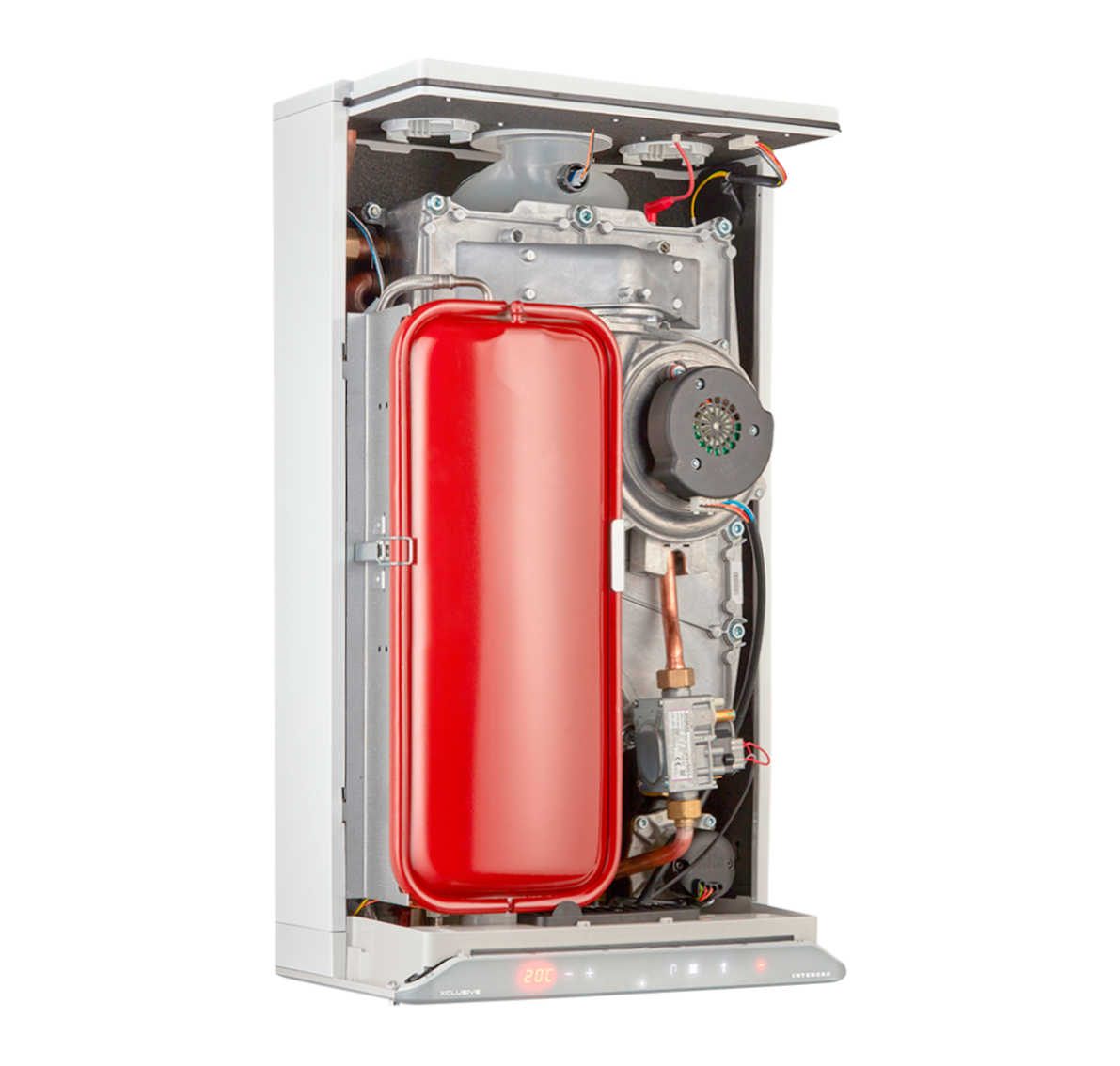
Interior of a condensing boiler with micro-accumulation. . Caseragua
In a world increasingly focused on energy efficiency and environmental sustainability, it is crucial for professionals to have a thorough understanding of how the various systems available on the market work, including condensing boilers, offering significant benefits in terms of efficiency, comfort, and environmental friendliness. However, to help professionals in any field reach their full potential, it is essential to have a ongoing and up-to-date training. For this reason, we invite anyone interested to explore the catalog of online courses and master's programs offered by Structuralia, in particular the Master's Degree in Energy Efficiency and Renewable Energy, which provides the knowledge and skills needed to excel in this constantly evolving field. Together, we can move toward a more sustainable and energy-efficient future.