Originally published on July 30, 2021, updated on February 29, 2024.
Construction is one of the most polluting activities, and the sustainable construction That is the response from industry professionals.
Sustainable Building and New Technologies in Construction
In the dynamic world of construction, the sustainable construction It emerges as an imperative response to the environmental challenges we face. The construction sector has traditionally, has been a significant contributor to the global ecological footprint, causing significant impacts in terms of greenhouse gas emissions and resource consumption. The need to rethink our approaches to construction is clear, and this is where technology emerges as a key ally. That is why it is so important for us, as professionals in the sector, to understand how new technologies can reshape construction processes, promoting sustainable building and paving the way for a future where construction and the environment coexist in harmony Let that be the fundamental premise.
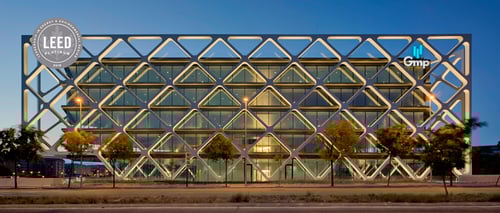 Image of the OXXEO building in Madrid, which has LEED Platinum certification—the highest level for buildings meeting sustainable construction criteria. Construible.es
The Main Characteristics of Sustainable Construction
The sustainable construction It encompasses everything from the selection of materials to demolition, with the goal of reducing its environmental impact. We will explore key techniques in sustainable architecture that characterize sustainable building:
1. Site Selection
The location of a sustainable home is crucial. Polluted and geologically unstable areas should be avoided. Reusing existing buildings also minimizes the environmental impact.
2. Efficient Guidance
Proper orientation contributes significantly to energy efficiency. In sunny areas, a south-facing orientation—which avoids shadows—ensures thermal comfort without additional costs.
3. Renewable Energy
The adoption of renewable energy sources, such as solar and wind power, reduces dependence on polluting sources. Photovoltaic systems enable energy self-sufficiency.
4. Thermal Insulation
Effective insulation, using double-pane windows or SATE systems, minimizes energy loss, resulting in significant energy savings (60%-90%).
5. Sustainable Materials
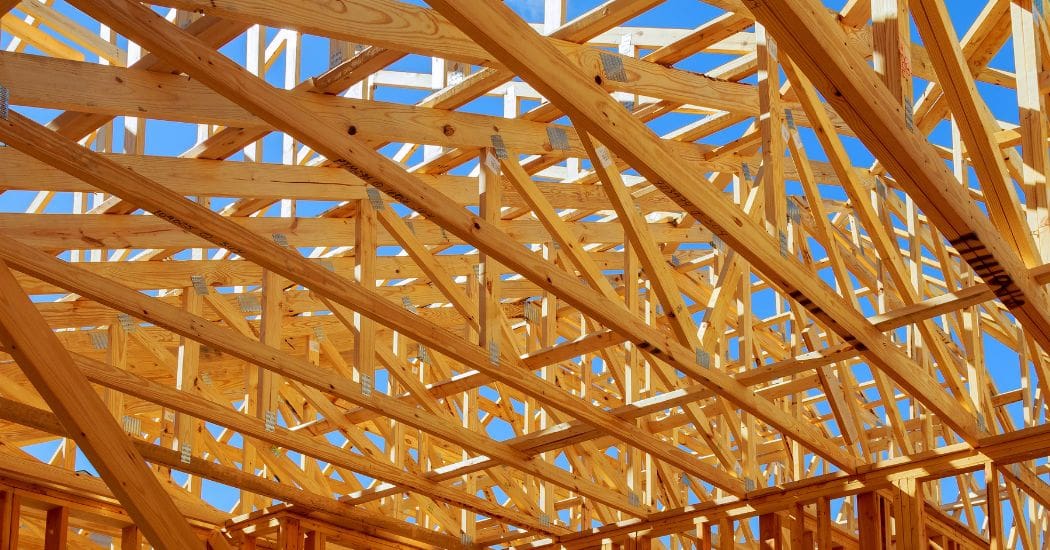
Choosing natural, recycled, or recyclable materials—such as ceramic bricks, stone, and wood—reduces your environmental footprint. Plastic products should be eco-friendly and non-toxic.
4. Monitoring Systems
The installation of monitoring and verification systems for electricity consumption and environmental conditions enables precise control, facilitating the early detection of problems and the implementation of corrective measures.
National and European Policies Related to Sustainable Construction
The Ministry of Public Works is the body that promotes and regulates the basic criteria that guide the course of action in response to the sustainable construction, and at the same time, they define the main areas in which it takes place: the promotion of energy efficiency and from the sustainable development, the guarantee of the accessibility to prevent discrimination against people with disabilities and promote their mobility, as well as the implementation of innovations and new technologies.
The Technical Building Code (CTE) is the regulatory framework that establishes the standards buildings must meet regarding the basic safety and habitability requirements set forth in the LOE.
Industry 4.0 Technologies and Sustainable Construction
In the digital age and the Industry 4.0 revolution, emerging technologies are transforming sustainable construction, establishing it as an increasingly viable and effective option. The convergence of digitalization and sustainable construction is opening up new frontiers, driving significant progress in various areas:
1. Building Information Modeling (BIM)
The implementation of BIM facilitates comprehensive project planning and management, enabling detailed three-dimensional visualization. This optimizes efficiency and reduces errors throughout all phases of a building’s life cycle, from design to demolition.
2. Artificial Intelligence (AI)
AI is revolutionizing process optimization and decision-making in sustainable construction. From predictive analytics for energy efficiency to smart waste management, AI drives operational efficiencies and reduces environmental impact.
3. Internet of Things (IoT)
Device connectivity via the IoT enables real-time monitoring and control of assets. Sensors in sustainable buildings manage energy consumption, air quality, and other parameters, automatically adjusting them to maximize efficiency and comfort.
4. 3D Printing:
The technology of 3D printing It offers innovative possibilities in sustainable construction by reducing material waste and streamlining the construction process. This enables more efficient and customized structures with a lower environmental impact.
5. Virtual Reality (VR) and Augmented Reality (AR)
They facilitate the visualization and simulation of projects, improving decision-making and team communication. These technologies are crucial for effectively designing and presenting sustainable concepts.
6. Blockchain
Blockchain technology ensures transparency and traceability in the materials supply chain, promoting the use of sustainable and ethically sourced resources.
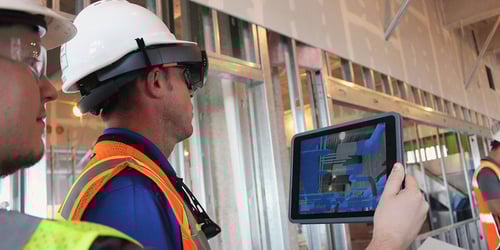 The Use of Augmented Reality Technology in Sustainable Construction. Qualisoptima
In the realm of sustainable construction, the synergy between advanced technology and highly skilled professionals is emerging as the key to a greener future. The ability of technological innovations to optimize processes—from design to waste management—is undeniable; however, the true driving force behind this change lies in specialized training for engineers and architects, who, with their advanced knowledge, will lead the transition toward a more environmentally friendly built environment.
In this context, we invite our readers to explore the training opportunities offered by Structuralia. In particular, the Master's Degree in Energy Efficiency and Sustainability in Building Construction, a comprehensive path to acquiring the necessary skills and actively contributing to the sustainable development of tomorrow. Embracing advanced technical knowledge is the beacon that will guide professionals—along with continuing education—toward positive transformation that our environment and future deserve.