Learn more about the Characteristics of the Internet of Things and how they apply to the concept of Smart Cities. The future awaits you!
Urban Transformation: Characteristics of the Internet of Things in Smart Cities
In an increasingly interconnected world, technological advances have changed the way we live and work. The integration of the Internet of Things (IoT) into our cities is one such advance that promises to transform our urban lives in ways we could never have imagined.
In this article, we will explore how the characteristics of the Internet of Things relate to smart cities and how smart cities are set to change the way we live.
Characteristics of the Internet of Things
The Internet of Things, also known by its English name “Internet of Things” or IoT, It involves connecting various elements that we encounter in our daily lives, enabling the exchange of information between them and people.
The IoT refers to everyday objects that are connected to the internet and to one another via networks, enabling them to communicate with each other and share data in real time for subsequent analysis from remote locations.
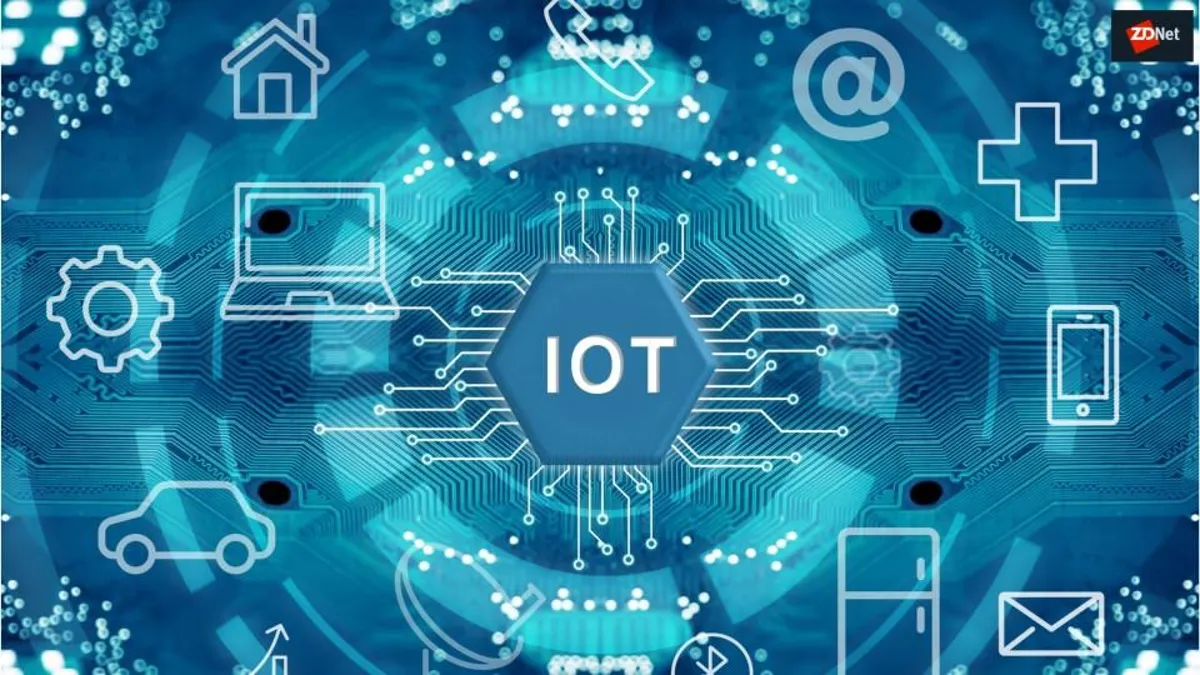
Source: ZDNet
However, the IoT is much more than just smartphones or smart TVs: it’s the idea of turning devices that aren’t currently smart—such as light bulbs, thermostats, or refrigerators—into smart devices, so that everything is connected.
Its applications are vast, even more so when combined with the implementation of artificial intelligence software. These systems learn from human behavior, enabling them to make predictions and anticipate our needs.
So… What Are Smart Cities?
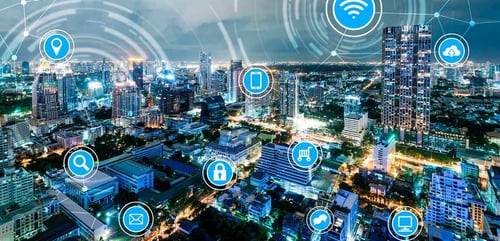
Before we can understand how the characteristics of the Internet of Things fit in with the Smart Cities, but first we need to understand exactly what they are. Put simply, “Smart Cities” refers to a group of municipalities that implement innovative technologies and policies to improve the quality of life of their residents.
 Source: Endesa
A clear example is energy savings, which are achieved through the automation and digitization of municipal services. This reduces energy consumption and, consequently, pollutant emissions.
Another example is traffic control. The implementation of traffic lights and smart cameras makes it possible to manage traffic, reducing traffic jams and improving traffic flow on the streets.
IoT Applied to Smart Cities
Smart cities require a high degree of connectivity, as they rely entirely on the use and exchange of information. As a result, the Internet of Things is a fundamental component of smart cities.
The characteristics of the Internet of Things in a smart city mean that this technology can be classified primarily into three types of devices: fixed, dynamic, and participatory.
-
Fixed devices are installed at specific locations throughout the city to monitor factors such as traffic and water flow.
- Dynamic devices are installed on moving objects, such as vehicles, and must include a GPS to transmit the device's location along with the data collected.
-
Citizen-driven sensors are designed to turn citizens into sensors, allowing them to generate and share information.
The Role of the IoT in Smart Cities
The IoT plays a crucial role in smart cities, as it automates and streamlines certain everyday processes and improves various aspects of citizens' lives.
For example, when it comes to the sustainable use of resources, IoT systems can determine whether they are being used properly and connect with the necessary components to identify deviations in usage, make consumption predictions, and take action based on that data.
Transportation systems also benefit from the IoT. Thanks to the IoT, users can plan their routes and detect any breakdowns or delays caused by incidents on the road. With a connected system, you can find out if your bus is running late, where it’s currently stopped, and even find other modes of transportation that might be more efficient that day.
The IoT also plays an important role in the repurposing of spaces. By using sensors at access points, it would be possible to measure peak hours, identify which parking lot receives the most visitors, and pinpoint the factors contributing to that situation. Once the data is processed, we could determine whether it makes sense to renovate one of these parking lots, repurpose that space for another use, or even notify users of alternative parking options.

Source: Valencia Plaza
Finally, the IoT can ensure access to all services. Let’s imagine we have to go to a doctor’s appointment. If the facility in question had access sensors, it would be possible—using our health insurance card—to detect that we arrived at the scheduled time, tell us which floor to go to, let us know if appointments were running late, and so on.
The Value Chain in Smart Cities
The development of IoT activities that generate value within smart cities follows a specific process. First, suppliers and manufacturers of IoT devices enable low-latency, low-power communications.
The information obtained is then integrated into large databases in real time. Next, the data is consolidated and aggregated to facilitate its processing. The data is then processed, analyzed, and used to generate insights.
Ultimately, data is presented to facilitate decision-making, and professional services add value through the data provided.
But what about the data?
The processing of personal data is one of the key aspects of the Internet of Things that requires attention. Thus, we can identify four phases when analyzing the information received from devices:
-
Description: Data is collected, displayed in dashboards, and reports are generated.
- Predictive: Its purpose is to generate statistical models to predict the future.
- Streaming: Look for patterns, events, and data to take immediate action.
-
Prescriptive: models that focus on providing solutions to events.
In addition, these phases can be implemented at three levels: on the device, at the gateway, or centrally in the cloud. Currently, the most widely used is the latter—in the cloud—although the trend over the years will be toward implementation on the device and at the gateway.
The Transformative Impact of the Internet of Things on Smart Cities
Given the characteristics of the Internet of Things that we have discussed throughout this article, we can see that it is transforming our cities into Smart Cities, increasing efficiency, convenience, and the quality of life for citizens. As more devices connect and share data, our cities become smarter and better adapted to our needs.
As a result, smart cities rely heavily on the Internet of Things, and conversely, the Internet of Things finds its fullest expression in urban applications. Thanks to this relationship, we are able to make the most of urban centers, increasing citizen participation and improving the quality of our daily lives.
However, to fully understand how the IoT is transforming our cities into Smart Cities, it is essential to explore how this revolutionary technology is integrated into the field of urban management, and this is where the Master's Degree in Smart City Management from Structuralia comes into play. This graduate program provides professionals with the tools and knowledge needed to lead the transformation of cities into smarter, more livable environments. One of the program’s fundamental pillars is the understanding and application of the IoT in an urban context.